




Benchmarking Program Helps Office Depot Cut Truck Fleet Costs
ARFs Premium TruckServe program offers benchmarking and cost analysis services in addition to the traditional maintenance services. Office Depot's tire expenses have decreased by about 12 percent.
When a fleet operates trucks out of 20 major distribution centers, it is possible to benchmark best and worst practices between each center, since the fleets are usually so similar.
Office Depot in Delray Beach, FL, did just that with its fleet, and cut overall costs about 20 percent. Office Depot actually operates out of 160 locations, but 20 of those locations are major distribution centers that operate 300 or more trucks that deliver office products to customers.
Office Depot Director of Transportation Sam Freni, who oversees a fleet of 2,200 Isuzu NPRs and NQRs, formerly used a national account program for maintenance. The program charged a fixed rate per mile.
"If batteries or brakes went out, we didn't know what was happening because it was part of the guaranteed service," Freni said.
The fleet switched its maintenance program over to the TruckServe program of ARI, a fleet management company based in Ml. Laurel, NJ. About six months ago. the program became known as Premium TruckServe, which offers benchmarking and cost analysis services in addition to the traditional maintenance services. ARI began supplying the Office Depot fleet with computer reports that showed items such as maintenance cost per vehicle at each distribution center every month. If it's $200 per vehicle, per month, Freni can see what percentage of that $200 is by each facility, and it is broken out by component, $20 per truck for brakes, for example.
"The monthly reporting allows me to look at cost per vehicle, and because our fleet is so similar across the country, it allows me to say, 'Why are costs so different in Southern California than they are in Northern California? Are they putting too much weight on the trucks?'" Freni said. "You can quickly catch trends based on comparisons within our locations and distribution centers. If I have locations that are consistently performing at a high cost per vehicle, we dig into it and find that this particular location isn't using retreads as much as they should, or they don't have the right depth on the brakes, and you can find out systematically what's going on."
Using spreadsheets produced by ARI, Freni said he has found inconsistencies in preventive maintenance schedules from facility to facility. In one instance, ARI recommended the use of retreads on the "non-drive" or rear tires on some vehicles, instead of all-new tires, and Freni said his company's tire costs have been reduced about 12 percent.
Also by benchmarking between facilities, Freni found out that Office Depot facilities with a higher cost per vehicle were getting repairs clone without consulting ARI. "The lower-cost-per-vehicle facilities had none of that," Freni said. "The ones that ran repairs by ARI get the benefit of them critiquing the repair and cost. We standardized that."
Warranty work was another area that was standardized after Office Depot went to the new program. The higher-cost-pet-vehicle facilities that were not calling ARI for repair approval were not marking repairs as warranty items as much as the other facilities. As soon as a facility calls ARI for repair approval, ARI marks it as a warranty item and works to collect warranty money from Isuzu.
Premium TruckServe Targets Distribution Center Fleets
ARI's repair management program, TruckServe. has been around for about seven years, and offers services such as determining whether certain repairs are necessary, whether the repairs are under warranty, and whether labor and parts costs are appropriate.
The Premium TruckServe program evolved out of the TruckServe program. Bob White, director of fleet management services for ARI, said the Premium TruckServe program evolved out of customer need. One such customer was Office Depot.
"We started a program with just basic trucks needing repairs, but as we got into it, we noticed repair costs were stubbornly high," White said. "We began to build some reports on our end and do some analysis to understand why that was happening. What came out of that was not only why it was happening, but it evolved into ways to begin to drive out costs."
ARI began making recommendations to Office Depot in areas such as the use of retreads instead of new tires on some trucks. The recommendations are different for every unique fleet.
Program Benchmarks Distribution Centers from Within
White says everyone wants to benchmark against something.
The problem is that with a truck fleet, there are so many variables, such as routes, weight capacities, and idle limes, that it can be difficult to benchmark against other fleets.
When a fleet is benchmarked against others, a comment often heard from that fleet is, "but our fleet is different."
But if a fleet is benchmarking within its own company, with the exact same trucks carrying the exact same product and performing the same function, it's difficult to disagree something is wrong when another distribution center has 50 percent lower costs than yours.
"So many things are specific to a certain company that it's hard to find a good apples-to-apples comparison." White said. "We've found that the best comparisons are the internal cost centers against each other. The most like fleet of any fleet is the other vehicles within the fleet." White says that when comparisons are made internally, it often has the positive effect of promoting competitiveness between distribution centers to keep costs down. No one wants their location to be the one with the highest costs.
Using the benchmarking numbers between internal fleets, ARI works with the various managers of each distribution center, studying routes and the product that is transported, and working with the local vendor network.
"So there is a lot of hands-on participation to not only manage the repairs, but also to assist in managing the fleet," White said.
ARI uses about 25 different reports in reviewing each fleet. A truck coordinator from ARI is assigned to each account, and a truck manager oversees the account from a higher level. A group of ARI technicians manages the individual repairs.
White said one concern of fleets considering outsourcing their maintenance programs is that once they let go of the maintenance duties, they might lose the level of service and vehicle uptime they had before.
"We spend a lot of time and resources to give them the support they require, and then we can bring them additional things like 24/7 coverage, which they probably aren't getting today," White said.
Fleets Get Volume Deals & Process Changes
Other fleets on the Premium TruckServe program have cut costs in different ways. ARI worked with one fleet to identify regional and national vendors to supply specific components at a reduced cost.
Another fleet was spending more money on brake pads than it should have been. "We were able to identify that they were paying a high price, so we worked out a reduced national volume deal." White said.
Another fleet was seeing too many instances of incidental damages such as mirrors and taillights. "Most of it was happening in their own yard," White said ARI remedied that by suggesting that one single driver maneuver the tracks at his company's distribution center.
More Operations

Top 50 Executive Fleets
It is that time of year again! Time for the 2026 list of the Top 50 Executive Fleets, presented by Automotive Fleet and Volvo as part of its annual Fleet 500. Download now to see this year's list of companies!
Read More →
Gary Van Orden Retires After Nearly Four Decades in Commercial Fleet
From answering customer calls at Ford Motor Company to leading fleet sales across multiple OEMs and a fleet management company, Gary Van Orden's career reflects nearly four decades of leadership in commercial fleet.
Read More →
How Stellantis Plans to Get Ahead of Fleet Downtime
Vehicle acquisition may grab the headlines, but fleet uptime increasingly determines operating success. Darren Bradshaw of Mopar North America gives the details.
Read More →
Hyundai Releases 2027 Commercial Program Incentives
The 2027 Model Year "Fleet Street Incentives" are available to commercial and government fleets.
Read More →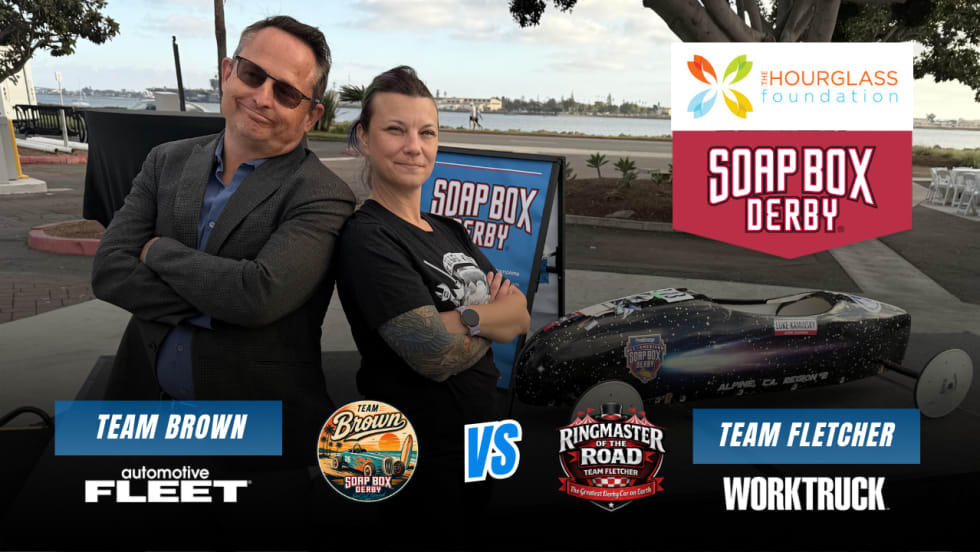
It's All Downhill from Here! Fleet Industry Raises $22,000 for Skilled Trades Scholarships
Work Truck’s Lauren Fletcher and Automotive Fleet’s Chris Brown turned a friendly racing rivalry into $22,000 for automotive technology and skilled trades scholarships.
Read More →
The Top 300 Commercial Fleets
The Top 300 Commercial Fleets: See the List
Read More →
Your Local Dealer Knows More Than You Think
Your local dealer can provide an information advantage that extends well beyond courtesy deliveries.
Read More →
Fleet Meets: Austin Schutte
Here are some industry insights, personal touches, and words of advice from the CEO and Founder of Anew Solutions.
Read More →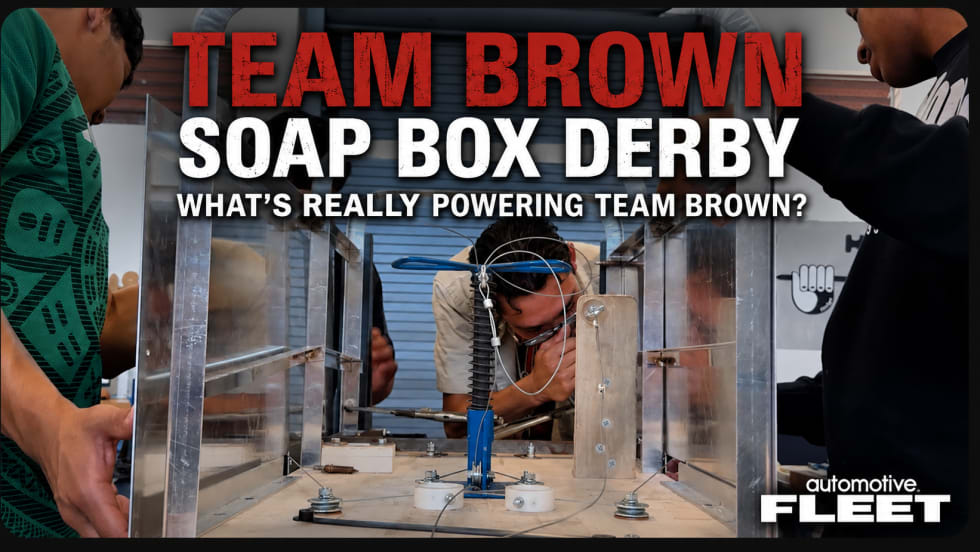
Soap Box Derby Challenge: What’s Powering Team Brown
The car is coming together, the students are solving real build problems, and the fleet industry is helping push Team Brown toward the starting line.
Read More →