




Being a Predictive Fleet Manager
Utilizing predictive modeling and analytics can help reduce accidents and provide a clear picture of a fleet’s safety needs.



Predictive analytics is a powerful tool that requires strong management commitment in order to succeed. While it is tempting to say that everyone should use predictive analytics, the most successful users are companies that involve all departments in the process at an early stage, including operations, safety, HR, and technology.
“Successful users include companies that have traditionally very strong safety and turnover performance, as well as companies that want to improve in those areas,” said Chris Orban, technical services for FleetRisk Advisors. “The key thing is that all areas of the company have a desire to improve, regardless of the starting point.”
From FleetRisk’s perspective, predictive analytics is predicting the future with as much accuracy as possible.
“When we provide a model, it tells the customer with as much accuracy as possible what will happen in the next 28 days,” Orban said. “Not what has happened in the past, but what the most likely outcome for a specific driver is in the future, and why we believe that to be the case. While historical analysis can tell us a great deal about driver behavior, it cannot tell us with the same degree of accuracy what will happen next. That is our goal.”
To successfully utilize predictive analytics, a few key steps should be adhered to. “The fleet should have a good, solid set of data to work with, which can be accessed for the predictive modeling activity,” Orban stated. “It is critical that good quality data is available, which can be associated with a particular driver, in order to make the predictive modeling most effective.”
Unfortunately, many companies underestimate the quality of their data. It is important to balance the frequency of a predictive model with the resources available to take necessary action.
“A model that is accurate, but is run too often, can lead to liability when the fleet is unable to take action on those predictions,” Orban cautioned. “The best balance between accuracy and timeliness is to run the models every four weeks. This gives the safety and operational groups enough time to take action, while still accurately reflecting the changes in a driver behavior that indicate risk.”
Reducing Accidents
Predictive analytics has been most successful in reducing accident frequency. “While our models more heavily weigh more severe accidents, and, thus, predict them at a higher rate than other, less severe accidents, our overall goal is to reduce accident frequency,” Orban said. “It is difficult to use cost as a model input because the same driver behavior that results in a $5,000 accident in rural Texas could be a $500,000 accident in Manhattan, N.Y. We focus on predicting and preventing as many accidents as possible, with the knowledge that we will prevent some of these high-dollar accidents, regardless of where they would occur.”
Fleets looking to utilize predictive analytics must buy into the process. Start by choosing the area of greatest need (e.g., safety, retention, or workers’ compensation). Next, a data assessment is required, identifying the key elements that will make up a customer-specific predictive model. Next, the necessary data is extracted for the models, which are built and validated by the fleet, to gain insight into what the data shows.
According to Orban, the best way to convince senior management that the technology is effective is to actually try it out. However, this does require commitment from the operations and IT groups, which will need to spend at least some time working to identify data sources and review the model results. “Once management sees the results, it is usually easy to move forward rolling the system out company wide,” Orban noted.
A fleet’s drivers are not often told that a predictive model is in place, but will see an increase in personal communication. “After using the program for several months, one client reported that drivers were now calling in to discuss safety proactively, looking for conversations when, in the past, safety had only been a source of punishment for a driver,” Orban noted. “This truly changed how safety was viewed by the driver population.”
More Safety

Does Your Fleet's Culture Encourage Distracted Driving?
What happens when the people responsible for enforcing safety rules are the ones setting the wrong example? The answer may reveal why some of the biggest risks to fleet drivers have little to do with what's written in the employee handbook.
Read More →
Fleet Manager’s Ultimate Playbook: Navigating the New Standard in OEM Connectivity
Rising operating costs, driver safety concerns, and unplanned downtime are putting unprecedented pressure on modern fleets. Discover how fleet managers use embedded OEM connectivity and real-time vehicle data to cut TCO, prevent downtime, and protect drivers without aftermarket telematics hardware.
Read More →
From Driver Well-Being to EV Charging | AF News Recap
Mental health belongs in the fleet safety conversation. This week, we’re looking at five ways fleets can support employee well-being before a crisis, plus Holman’s expansion in Mexico, new one-day Fleet Forward passes, and why EV charging demand is outpacing infrastructure growth.
Read More →
Nexar-Nauto Merger Aims to Give Fleets Better Safety Intelligence Through Larger Driving Dataset
Stefan Heck tells Automotive Fleet that combining more than 10 billion miles of driving history with Nexar's AI models will give fleets deeper insights into driver risk and roadway conditions than either company could provide independently.
Read More →
Don't Wait for a Crisis: 5 Ways to Build Mental Health Into Your Fleet Safety Program
For Suicide Prevention Month, fleet and safety leaders have an opportunity to put mental health where it belongs: at the center of workplace safety.
Read More →
How Camera Data Can Strengthen a Fleet’s Insurance Renewal
Insights from a commercial insurance carrier and a broker show how fleets can turn video telematic data, driver coaching, and improved claims results into a stronger case at insurance renewal.
Read More →
The Safest Fleets Aren’t the Ones with the Most Technology
You’ve made the telematics investment. Here’s how to capture the other half of its value and build the safest fleet on the road.
Read More →
Hidden in Plain Sight: Fleet Compliance Risks
Fleet compliance isn't just about having policies — it's about consistently enforcing them. This practical guide reveals six hidden compliance risks common in public sector and shared fleet operations and outlines proven strategies to improve visibility, accountability, and audit readiness
Read More →
NETS Sets 2026 Fleet Safety Benchmark Conference for Indianapolis
The Sept. 15–17 program will feature fleet benchmarking data, case studies, emerging technologies, and implementation strategies while running alongside the NSC Safety Congress & Expo.
Read More →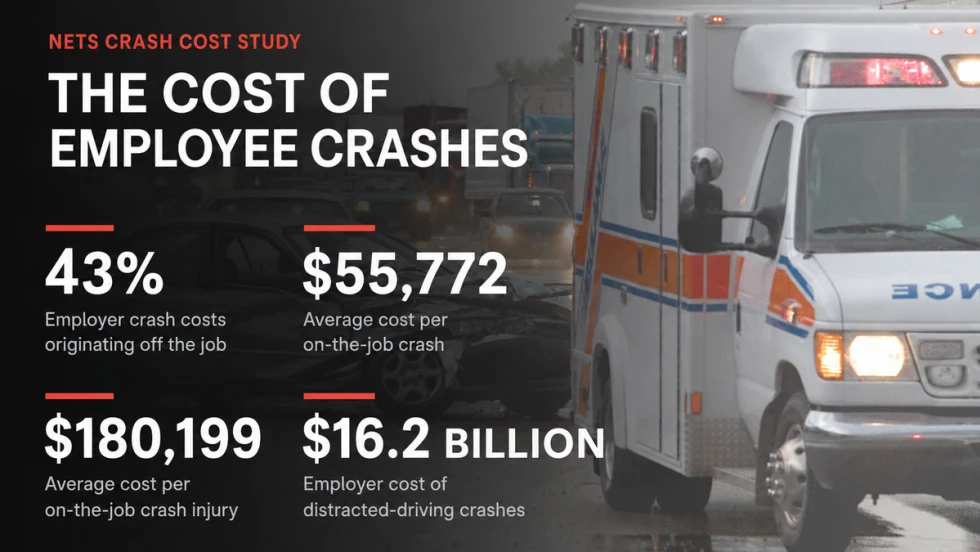
Off-the-Job Crashes Account for 43% of Employers’ $61.7 Billion Crash Burden
NETS quantifies costs dispersed across fleet, risk, HR, and other departments while providing new per-crash benchmarks for employers.
Read More →