




Beetle Squad
When Mamaroneck, New York, a small suburban community on New York City's doorstep, decided to motorize some of its foot patrolmen, it found that "thinking small" not only saved tax dollars but also had the effect of adding needed manpower to its police department.
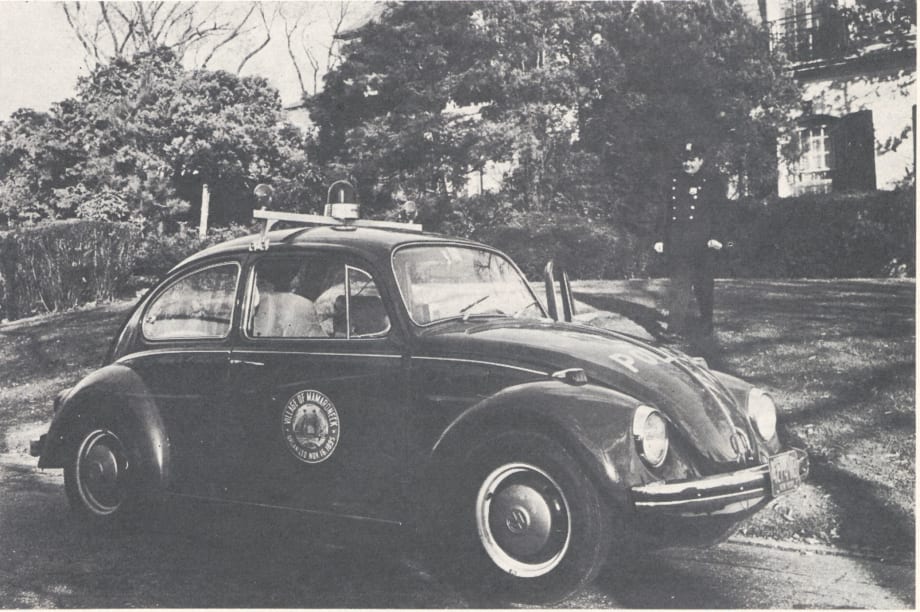
When Mamaroneck, New York, a small suburban community on New York City's doorstep, decided to motorize some of its foot patrolmen, it found that "thinking small" not only saved tax dollars but also had the effect of adding needed manpower to its police department.
The only problems with Mamaroneck's "small thought" have been the looks of surprise and wonder on the faces of some strangers in town. That is because few people are accustomed to seeing Volkswagen "beetles" wearing special domes, emergency light fixtures, and police insignias.
It took a little time, too, for the village "fathers" to adjust to the concept when they advertised for bids for three "compact" cars with which to motorize officers previously assigned to foot patrol duty. These officers regularly check both commercial and industrial areas of the village, including a major state section and dozens of docks along Long Island Sound where a fortune in pleasure boats is tied up.
After all the bids were in, a fleet of three VW sedans proved to be the most economical "buy" for the village and the beetles went into service. Moreover, according to Police Chief Jeremiah Geary, the Beetle-Squad concept has caught on throughout Westchester County since it was initiated by Mamaroneck. "There aren't too many towns and villages in the county that don't have at least one VW in their fleet at the present time," he told AF.
Geary also reports that the purchase has been a happy one because the cars not only give officers greater efficiency in covering their wide-ranging beats, but also increase the frequency of their patrols in all sections and permit them to be called quickly to other parts of town in the event of emergency.
"We couldn't reach them when they were on foot patrol in the past," the Chief said, "and even if we had been able to get in touch with them on a moment's notice they had no way to get to where we needed them."
Now, however, emergency calls are received by the "beetle" drivers just as they are by those officers assigned to standard size cars - by radio. This is done with relatively inexpensive portable equipment which carries the word back and forth from the dispatch office at Police Headquarters to the prowling VWs so that the small cars get their occupants to any place in town within a matter of minutes.
More Operations
Here's When You Should Make an Exception to Fleet Policy
Fleet policies are designed to create consistency, but not every driver or situation fits neatly within standard rules.
Read More →
AI-Native or AI-Acquired: What Should Fleet Managers Look for in an AI Platform?
Six questions can help fleet managers look beyond AI marketing claims to evaluate integration, data access, and real-world operational performance.
Read More →
A buyer's guide to fleet management software in 2027
Buying fleet management software in 2027 means looking beyond features and price. As fleet operations, technology and expectations evolve, this guide explores what today’s fleet professionals should consider when choosing a system that can deliver value now and adapt to what comes next.
Read More →

What Will Shape the Next Era of Fleet Management?
EVs, AI, and autonomous vehicles are reshaping fleet management. Discover what’s ahead—and how fleet leaders can prepare for the next era.
Read More →
How Fleets Can Recruit and Train Veterans for Technician Roles
Here's how the technician shortage has affected uptime for fleets, and what to do about it.
Read More →
Avis Budget Group Deploys Neology Toll Management Technology Across Major Brands
Neology’s neoFleet platform will manage toll transactions and toll-authority operations for vehicles across Avis, Budget, Payless, Budget Truck and Zipcar.
Read More →
Fleet Personal-Use Charges Edge Higher in 2026
Nearly eight in 10 surveyed fleets allow personal use of company vehicles, while just over half of respondents report charging employees for the privilege.
Read More →
The Future of Fleet + What’s Changing Right Now | AF News Recap
Could developments overseas offer a preview of what’s coming for U.S. fleets? This week, we’re looking at the future of AI, autonomy, and electrification, plus Ford Pro’s new certified pre-owned program, smarter vehicle offboarding, and a new way for fleets to manage toll expenses.
Read More →
How to Handle Vehicle Offboarding
What do fleet managers need to do when a driver leaves?
Read More →
Fleet Manager’s Ultimate Playbook: Navigating the New Standard in OEM Connectivity
Rising operating costs, driver safety concerns, and unplanned downtime are putting unprecedented pressure on modern fleets. Discover how fleet managers use embedded OEM connectivity and real-time vehicle data to cut TCO, prevent downtime, and protect drivers without aftermarket telematics hardware.
Read More →