




Balancing Small Fleet Responsibilities
Managers of small fleets oftentimes hold other positions within their companies, too. In this article, five managers of small fleets discuss the changes and challenges they face when balancing their roles and responsibilities.
"Fleet manager" is a title given to an individual charged with administering a fleet of company vehicles. A fleet can be comprised of thousands of vehicles. Or, it can be made up of as few as 10 vehicles. While the size of a fleet determines the amount of responsibility a fleet manager has, the job still requires the same type of responsibility, except that managing a small fleet is often a part-time duty. Sometimes a small fleet manager even holds another job title and responsibility.
This is true in Harold Bergman's case. Bergman works for United Suppliers, an Eldora, IA-based company which sells feed, fertilizer, and chemicals to a network of dealers in six Midwestern states. He is the company's accounting manager, a position he has held for nine-and-a-half years. About three months ago, Bergman was approached by upper management with an offer to assume the added responsibilities of the company's 60-vehicle fleet.
"It's a challenge," Bergman claims. "I'm still getting my feet wet and getting better acquainted with the systems." As accounting manager, he is responsible for monthly financial statements, inventory control, and all company payables, so administrative work is nothing new. "It's been an easier transition for me than it would have been for someone else," he says.
Through the accounting department, Bergman knows all of United Suppliers' salesmen personally. "I deal with them on a large-scale basis as well as with fleet management," he says.
While there was a time when it was favorable for the company to own its vehicles, Bergman explains that leasing is more advantageous. "Leasing locks in the interest rates, and we don't have to use working capital to finance cars." Bergman says the company's cars are in service for approximately 65,000 miles, and trucks are in service a little longer. "We're starting to rotate out the '86s," says Bergman. In regard to fleet disposal, Bergman first tries to sell the cars to salesmen. The remaining vehicles are sold through auctions.
Maintenance of the United Suppliers fleet is the responsibility of each driver, says Bergman. "In rural Iowa, maintenance has to be done in a driver's hometown."
Brenham, TX-based Blue Bell Creameries is a complete ice cream and frozen snacks company. Wayne Winkelmann is the company's fleet maintenance manager, charged with maintaining cars, pickup trucks, freight trucks and trash trucks, plus delivery vehicles.
Winkelmann joined Blue Bell on a part-time basis in 1974, then attended automotive school in Waco, TX for two years. He returned to Blue Bell in 1977, and has been fleet maintenance manager for nine of the last 11 years. Blue Bell's fleet consists of light-duty trucks and cars and heavy-duty trucks. There are 127 cars and 20 light-duty pickups, with the remainder of the vehicles in the heavy-duty range.
There are 12 Blue Bell branches across Texas and Winkelmann works with each branch manager to keep the fleet's vehicles in good condition. "We try to maintain our service as well as possible," Winkelmann says. "We occasionally have a problem with the control of our trucks at outlying branches, though." After service work is done, he says, bills come into him for review. "I compare the price of the work done with service manuals to see if we were able to get the best price. Sometimes it's hard to coordinate," he adds.
Winkelmann has a support staff consisting of foremen in three separate shops - truck and tractor, paint and body, and trailer. "All the branches have the same system," he says. "Service orders come in from the main computer with details on what work is needed. Each order includes a date, the mileage on the specific vehicle, and the work that needs to be done. At the end of each week, a schedule is planned, prioritizing vehicles that need service."
Ralph Fleming is the fleet manager for San Francisco-based Rose Exterminator Co. As fleet manager, he handles all purchasing, service, and repair assignments for a fleet of 80 cars and 425 half-ton and three-quarter-ton Ranger pickups and vans. The fleet never used to be this large, though. "We used to have 20 trucks," he explains.
Fleming has been with Rose for 19 years, the last five as fleet manager. Fleming used to work in Rose's chemical department, managing the fleet on a part-time basis. "The fleet grew," he says, "and we stopped manufacturing our own chemicals. My job has changed completely."
All Rose service personnel use pickup trucks with spray rigs on the back, Fleming says. The conversion is done in-house, and he is responsible for overseeing that procedure. "This has made my job more complex," he says.
The company is now one of 16 firms owned by American Building Maintenance, and has 27 offices in seven Western states. Fleming tries to visit all the offices at least twice a year. "During those visits, we put on fleet programs for safety and maintenance," he says. "We can relay to the drivers our guidelines on caring for the vehicles."
Phoenix, AZ-based O'Malley Lumber Co. is a supplier of building materials for an area stretching from Yuma, AZ to El Paso, TX. O'Malley sells products in special-order packages for private, do-it-yourself jobs, but does not do wholesale business. "It's mostly retail," says D. Wayne Hallford, fleet manager for O'Malley. The vehicles Hallford is responsible for include 18 small trucks, and 78 larger trucks for large deliveries.
Hallford has been with O'Malley for one year, and he came aboard in an unusual way. "I had originally been hired as part of a fleet analysis program," he explains. "That was a six-week job. After that was completed, I was offered the full-time position of fleet manager."
About the same time Hallford took over O'Malley's fleet responsibilities, the company did away with their policy of owning the vehicles. "We now lease the trucks," says Hallford. "When I started, the fleet hadn't been recycled since 1975. Now, we recycle the trucks every 60 months."
Paul Cazian is an assistant vice president for First Interstate Bank of California. He joined First Interstate over 30 years ago as a teller in the cash vault. He has held numerous positions, including supervisor, assistant manager, and then manager of the cash vault. After that, he moved into operations, where he administered the armored carriers for the bank. Eight years ago, when the bank's commercial fleet manager left the job, Cazian was asked to take over those responsibilities. The armored carriers were transferred to a different section of the bank, and Cazian took charge of the commercial fleet. Included in the 200-vehicle fleet are minivans, pickup trucks, executive cars, plus various passenger cars driven by salespeople and real estate appraisers.
"We also have pool cars," says Cazian. "They are used for short periods of time throughout the state."
As a financial insitution, First Interstate prefers to buy their fleet vehicles as opposed to leasing, says Cazian. "Owning gives us more control. With leasing, there is third-party involvement. We used to lease, and even then we were just as involved administratively."
Cazian says the company keeps fleet vehicles in service for 75,000 miles and/or 48 months. "I'd like to see that reduced to 30 or 36 months, though," he says. "And with the pool cars, after 50,000 miles we can get good quotes on the resale value." The disposal method used by First Interstate is quick and simple, Cazian explains. "The bank has its own auction lot. We have a closed bid system for dealers only. We've been getting good prices on all of our vehicles, and I think that is a credit to the drivers. They maintain their vehicles in good shape."
Both Bergman and Cazian hold down dual roles for their companies. Balancing fleet responsibilities with accounting responsibilities poses few problems, claims Bergman. "Sometimes I'll stay a little later one night or work through a lunch hour," he reports. Bergman works with Associates Leasing, Inc. and Sterling Leasing, and credits their expertise with helping his fleet management duties go smoothly.
In the accounting department, Bergman has an assistant who is responsible for all day-to-day work on payables for the company. As far as fleet responsibilities, she assists Bergman with the processing of vehicle expense reports.
Cazian has a rather unique responsibility with First Interstate besides fleet management. He also heads the food services department.
Managers of small commercial fleets face the same essential questions as any large commercial fleet manager. Leasing or owning? When to replace vehicles? Method of disposal and more. As Hallford says, "We still have to maintain the vehicles in the best possible way. They're a vital part of the company's success."
More Operations

Moventum Fleet Management Names Mark Iorillo Head of Sales
Iorillo brings nearly 20 years of fleet management and sales experience to the role, including previous positions at Element Fleet Management, CEI, Donlen and Ryder.
Read More →
Fleet Has a Talent Pipeline Problem. What Comes Next? | AF News Recap
Where will fleet’s next generation of leaders come from? This week, we’re looking at the industry’s talent pipeline, what certification can add to a fleet career, how to build an award-worthy track record, and the return of Automotive Fleet’s Personal Use Survey.
Read More →
Smith System Launches Driver Risk Management Program
Fleets have more driver data than ever, but identifying risky behavior doesn't necessarily correct it. Smith System's new Driver Risk Management program combines monitoring, training, and follow-up coaching to help fleets connect risk signals with driver intervention.
Read More →
Automotive Fleet Opens 2026 Personal Use Survey for Commercial Fleet Managers
Less than two weeks left! Commercial and corporate fleet managers are invited to share how their organizations handle company vehicle personal-use policies, charges, and driver eligibility.
Read More →
From AI Prompts to AI-Generated Safety Songs | AF News Recap
Can better prompts make AI more useful for fleet managers? This week, we’re breaking down smarter fleet analysis, an AI-assisted experiment that turned safety training into music, and what happened to fuel prices in August.
Read More →
How to Write Better AI Prompts for Fleet Analysis
Include these six elements in your fleet prompts to generate more relevant analysis and accurate answers.
Read More →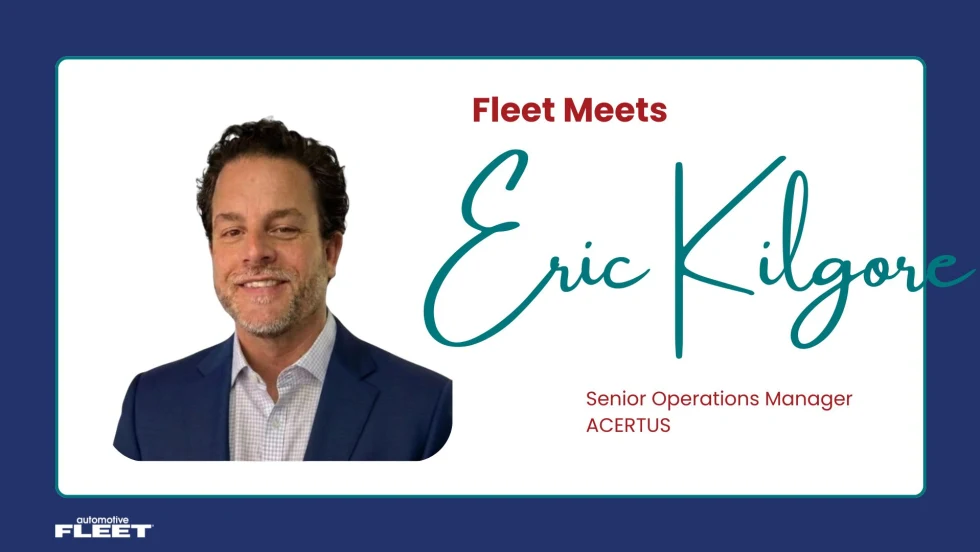
Fleet Meets: Eric Kilgore
This edition of the Fleet Meets series features one of the industry's best leaders driving multi-market and national operations.
Read More →
Why Reactive Fleet Management Is Becoming Too Expensive to Sustain
Research highlights a growing need for proactive management strategies to address rising costs in fleet operations effectively.
Read More →
What Your Fleet KPIs Aren’t Telling You
Tracking fleet metrics is only useful when the data leads to better decisions. This guide helps fleet leaders assess cost, utilization, and downtime more accurately, identify performance gaps, and prioritize the actions that can improve operational results.
Read More →
Hidden in Plain Sight: Fleet Compliance Risks
Fleet compliance isn't just about having policies — it's about consistently enforcing them. This practical guide reveals six hidden compliance risks common in public sector and shared fleet operations and outlines proven strategies to improve visibility, accountability, and audit readiness
Read More →