





Fleet Managers Battle Escalating Cargo Theft with Advanced Tech
Avoid Identity Theft Risk During New-Vehicle
Discover why photocopying driver’s licenses at dealerships could lead to identity theft, and how to protect your employees from this growing risk.
August 1, 2007

Learn the hidden dangers of allowing dealerships to copy your employee's driver’s license and steps to prevent identity theft in your fleet.
Photo: Bobit
4 min to read
When your fleet driver picks up a new vehicle, how does the delivering dealer know your employee is who they say they are? Typically, the employee receives paperwork from the leasing company (acknowledgement of order), which they bring to the dealership. While at the dealership, the driver is often required to show a driver’s license with photo to verify his or her identity. In some cases, the dealership makes a copy of the driver’s license.
This has been done routinely in our industry for many years. However, this practice should stop. Never allow your employees to have their driver’s licenses photocopied by a dealership when picking up a new vehicle. The reason is identity theft.
Consider some recent examples. A Nissan dealer in the City of Orange, Calif., was raided July 9 by investigators from the Orange County District Attorney's Office and the Orange police department as part of a month-long investigation into alleged identity theft at the dealership. The investigation revealed that thousands of fraudulent loans may have been processed with stolen identities taken from driver licenses, pay stubs, and Social Security numbers.
In another case, a salesman at a Chrysler dealer in Florida was arrested for allegedly using a customer's identifying information to get credit cards, purchase cell phones, and to buy a new Mercedes in another state. The customer's information was stolen from his driver’s license and a car loan credit application.
I am not impugning anyone’s integrity. Delivering dealers are highly reputable companies, but there is no such thing as being too cautious about identity theft. All the experts will tell you likewise. Photocopying an employee’s driver license is a high-risk practice that you should warn your drivers not to allow. In the wrong hands, the information contained on a driver’s license can be used to commit identity theft just as easily as a Social Security number or the information on a credit card.
Some fleets, as a precaution, use employee ID numbers instead to verify identity at a dealer. However, while investigating this editorial, I discovered that even employee numbers, in the hands of a sophisticated criminal, can be fraudulently used to steal someone’s identity.
Consequences of Identity Theft
Identity theft occurs when someone takes another’s personal data – such as driver’s license number or Social Security number – and uses it to commit fraud. The thief might apply for credit cards or loans, buy merchandise, lease cars or apartments, or apply for a mortgage – all in someone else’s name. Victims of identity theft often do not realize they have become victims until they attempt to obtain financing on a home or a vehicle. Only then, when the lender tells them that their credit history makes them ineligible for a loan, do they discover what has occurred.
If someone has fraudulently obtained a driver’s license or photographic identification card in a victim’s name, the local DMV should be contacted and a fraud alert should be placed on the license. The driver can order a certified copy of their driver’s license record to review for discrepancies.
For instance, the imposter may have fraudulently obtained a duplicate license under the victim’s name and license number, but has his or her photograph on the license. Or the imposter may have applied for a new driver’s license in one state, while the driver lives in another state.
In California, if a victim can substantiate that their license number has been used fraudulently, they are entitled to a new license number. Visit the California DMV’s fraud assistance website for more information. A directory of DMVs in all 50 states can be found at the American Association of Motor Vehicle Administrators Web site – www.aamva.org.
If a victim’s driver’s license number was used fraudulently by an imposter in a scheme to issue bogus checks, the license number may have been recorded and flagged by one of the various check cashing verification companies, for example, Telecheck. In this case, it is recommended the victim request a new license number. The victim should contact the appropriate check verification service to clear the erroneous record.
Fleet Department’s Responsibility
In the workplace, much of our personally identifiable information is not controlled by us. Instead, we must rely on our employer to be the gatekeeper. A fleet manager is one of the corporate gate-keepers.
Your vigilance can help prevent identity theft. Never use an employee’s Social Security number as a vehicle ID number. Dispose of documents and information appropriately. Guard personal information, such as Social Security numbers, driver’s license numbers, addresses, birth dates, mother maiden name, healthcare data, and employee numbers, as if it were your own.
If you don’t, you could be an unwitting accessory to identify theft.
Comment below and let us know what you think!
Subscribe to Our Newsletter
More Operations
Managing Fleet Costs in an Era of Permanent Volatility
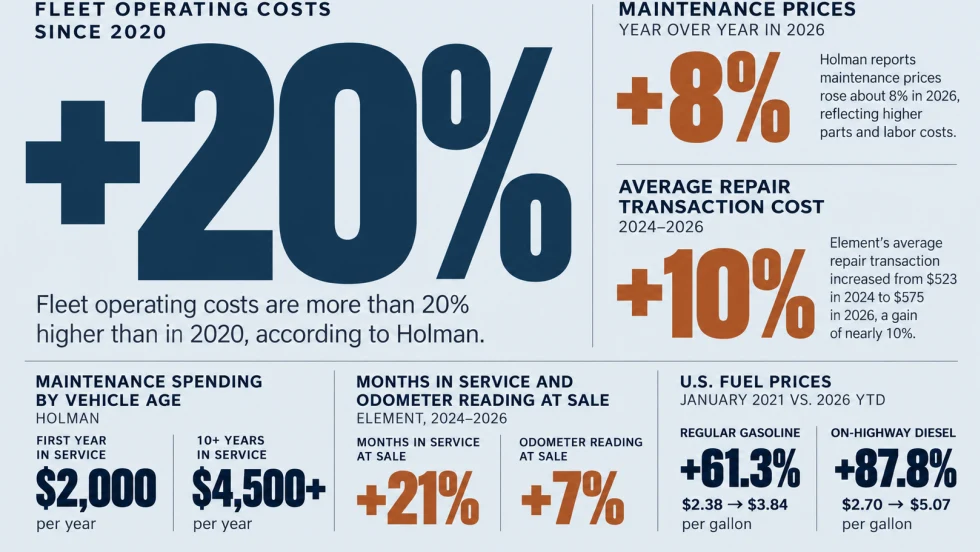
Fleet operating costs have risen more than 20% since 2020, raising a key question: When does extending a vehicle's service life stop making financial sense?
Read More →
The Next Evolution of Fleet Management: Autonomous Operations
This opening keynote session at the Fleet Forward Conference highlights the future of autonomous driving for fleets.
Read More →
How to Reduce the Total Cost of Risk From Catalytic Converter Theft
A stolen catalytic converter can cost fleets far more in downtime and lost productivity than in repairs. A total-cost-of-risk approach can help fleet managers quantify their exposure and prioritize theft prevention.
Read More →

Personal-Use Charges Rise as Vehicle Values Fall | AF News Recap
Personal-use charges are climbing, wholesale used-vehicle values are declining, and commercial fleet sales growth is slowing. This week, we're breaking down the latest fleet data, plus how Element Fleet Management is helping Waymo prepare for its first Canadian robotaxi market.
Read More →
Here's When You Should Make an Exception to Fleet Policy
Fleet policies are designed to create consistency, but not every driver or situation fits neatly within standard rules.
Read More →
AI-Native or AI-Acquired: What Should Fleet Managers Look for in an AI Platform?
Six questions can help fleet managers look beyond AI marketing claims to evaluate integration, data access, and real-world operational performance.
Read More →
Sponsored•October 14, 2026
A buyer's guide to fleet management software in 2027
Buying fleet management software in 2027 means looking beyond features and price. As fleet operations, technology and expectations evolve, this guide explores what today’s fleet professionals should consider when choosing a system that can deliver value now and adapt to what comes next.
Read More →
What Will Shape the Next Era of Fleet Management?
EVs, AI, and autonomous vehicles are reshaping fleet management. Discover what’s ahead—and how fleet leaders can prepare for the next era.
Read More →
How Fleets Can Recruit and Train Veterans for Technician Roles
Here's how the technician shortage has affected uptime for fleets, and what to do about it.
Read More →
Avis Budget Group Deploys Neology Toll Management Technology Across Major Brands
Neology’s neoFleet platform will manage toll transactions and toll-authority operations for vehicles across Avis, Budget, Payless, Budget Truck and Zipcar.
Read More →