




Asleep in a Tesla? Combating Complacency with Advanced Safety Systems
In this new era of vehicles taking over human tasks, fleet operators need to adjust driver education, training, and policies to maximize the effectiveness of advanced driver assistance systems.


What started with the vehicle beeping at you to get back in your lane has evolved into proactive systems that nudge the vehicle back into the lane and brake for you. It’s incumbent on fleet managers to know advanced driver assistance systems’ (ADAS) functionality before putting them in their drivers’ hands.
Photo courtesy Mercedes-Benz USA
Someday, vehicles will drive themselves. However, getting there will take a long time and it’s going to be messy. Not only will autonomous vehicles occupy roadways with non-autonomous vehicles, but those driven by humans will also have increased levels of autonomous capabilities that still require regular driver intervention.
With vehicles taking over human tasks, are we heading into a new era of driver complacency on the road? It’s already started. If you’ve seen the video of the guy asleep while at the wheel of his Tesla, you know what I mean.
What started with the vehicle beeping at you to get back in your lane has evolved into proactive systems that nudge the vehicle back into the lane and brake for you. Those systems are now being combined with adaptive cruise control to offer Level 2 autonomous functionality — Tesla’s Autopilot leading this adoption.
No doubt, these advanced driver assistance systems (ADAS) are mitigating accidents and saving lives. But as they become more sophisticated and widespread, fleet operators will need to adjust driver education, training, and policies to maximize their effectiveness.
First, it’s incumbent on fleet managers to know ADAS functionality before putting them in their drivers’ hands. The fact that manufacturer’s systems vary widely doesn’t make this task any easier.
Some functions, such as adaptive cruise control, may serve driver comfort more than safety. Other systems are designed to only be used in certain road circumstances (i.e. highway use, flowing traffic) and avoided in others (heavy traffic, at intersections).
A J.D. Power study reveals that drivers are turning off technologies such as lane departure alerts because they produce too many false positives or find them annoying. Meanwhile, some manufacturers’ systems experiencing a higher disable rate than others, according to a study by the Insurance Institute for Highway Safety (IIHS).
If you manage a fleet, do you know if or how many of your drivers have turned off any of these safety functions? Have you considered if a manually disabled system would result in increased liability exposure in the event of a crash? Should prohibiting tampering with a system be written into the fleet safety policy?
With names such as Autopilot, Traffic Jam Assist, Super Cruise, Driving Assistant Plus, and ProPilot Assist, Level 2 systems on the market today are convoluted and causing confusion, according to IIHS.
Tesla’s Autopilot feature seemed to foster the most complacency. By wide margins, drivers thought they could perform maneuvers safely such as “hands off the steering wheel,” “Talking on cellphone/texting,” “watching a video,” and even “taking a nap” when using Tesla’s system.
Like any initiative, drivers will take a greater stake in compliance with company objectives if they’re involved in the process.
Gaining driver feedback to understand their competencies with these systems will help fleet managers maximize their functionality. This is a time-consuming process — perhaps a driver survey will yield insights that can be addressed individually as needed.
As Level 2 systems become ubiquitous, an increasingly important discipline will be to monitor drivers’ fitness to drive. Measuring driver fatigue or illness will begin before the vehicle is started, similar to the concept of the breathalyzer ignition interlock device to measure blood alcohol levels.
In-cab driver monitoring using computer vision and algorithms to analyze sleep behaviors are becoming more widespread and increasingly sophisticated. On-the-road interventions, either automatically or by humans (“Bob, wake up!”), will grow.
Another increasingly critical area of focus is analytics. (As if another action item was needed to interpret the firehose of data coming out of our vehicles.) Telematics data such as hard cornering combined with ADAS events such as lane departures can tell powerful stories on driver safety.
Ironically, the tenets of traditional driver safety education and coaching — delivered consistently — will take on greater importance as ADAS permeates fleets.
It’s time for fleet operators to formulate an action plan on how to manage the increasing amount of safety tech. That video of the guy asleep at the wheel of his Tesla? There’s more than one, and we haven’t seen the last of them.
Level 2 autonomy is upon us. Complacency is not an option.
More Fleet Forward
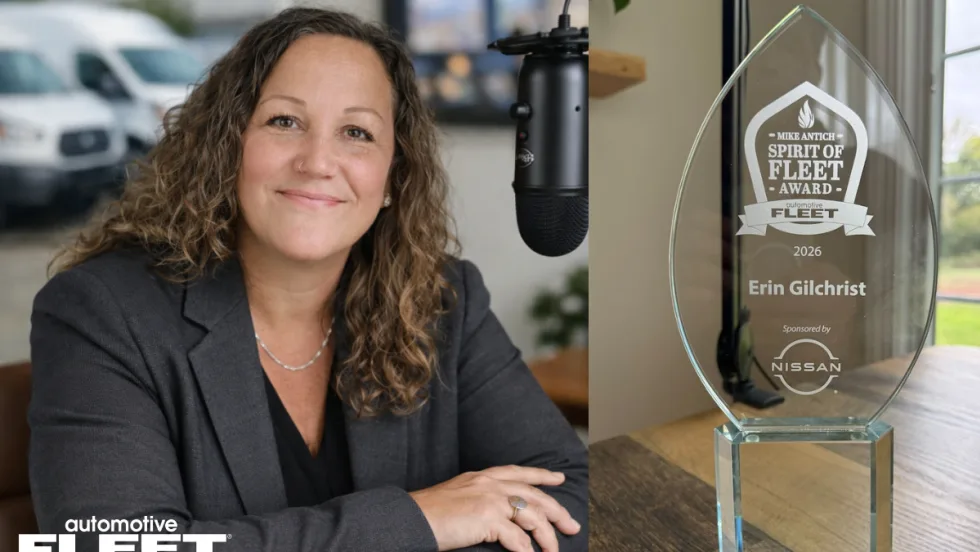
Erin Gilchrist Receives Mike Antich Spirit of Fleet Award
Last week at AFLA in Vegas, Erin Gilchrist received the inaugural, brand-new Spirit of Fleet Award.
Read More →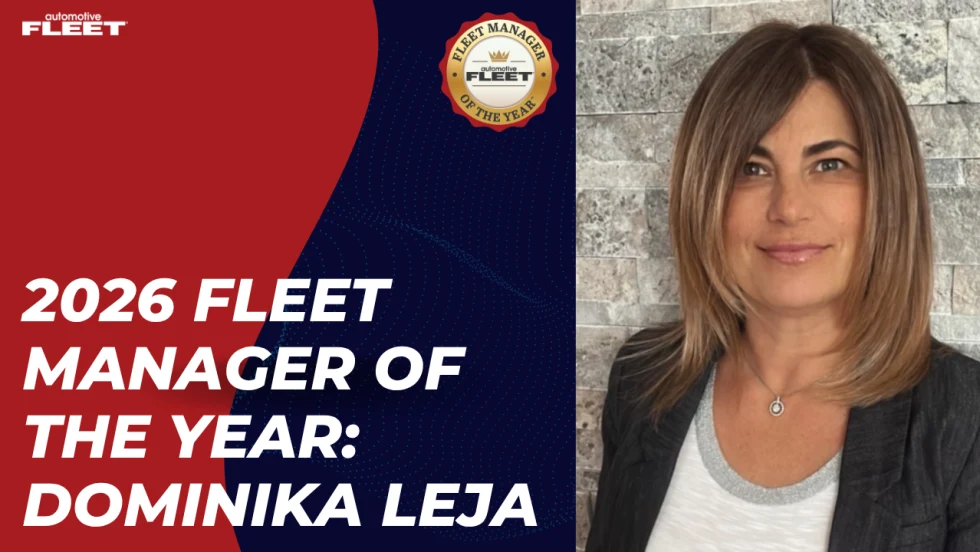
Dominika Leja Named the 2026 Fleet Manager of the Year
The AstraZeneca associate director of fleet was recognized for her leadership in fleet electrification, cost savings, and operational transformation.
Read More →
Jamie McKay Named the 2026 Fleet Visionary Award Winner
The Aptive Pest Control fleet manager was recognized for her approach to operations, data, lifecycle management, and driver needs.
Read More →
Fleet Forward Conference Introduces One-Day Passes for 2026
New one-day registration gives fleet professionals the flexibility to attend Tuesday, Wednesday, or Thursday, with passes available for $199 through Sept. 18.
Read More →
Vibe Coding: When Fleet Managers Become Software Builders
Five fleet professionals — none with programming skills — discuss how they’re using AI to build fleet solutions in-house and in a fraction of the time.
Read More →
Fleet Forward Conference Tackles Fleet Industry’s Growing Leadership Gap
This session will examine succession planning, knowledge transfer, and the skills the next generation of fleet leaders will need as veteran professionals leave the industry.
Read More →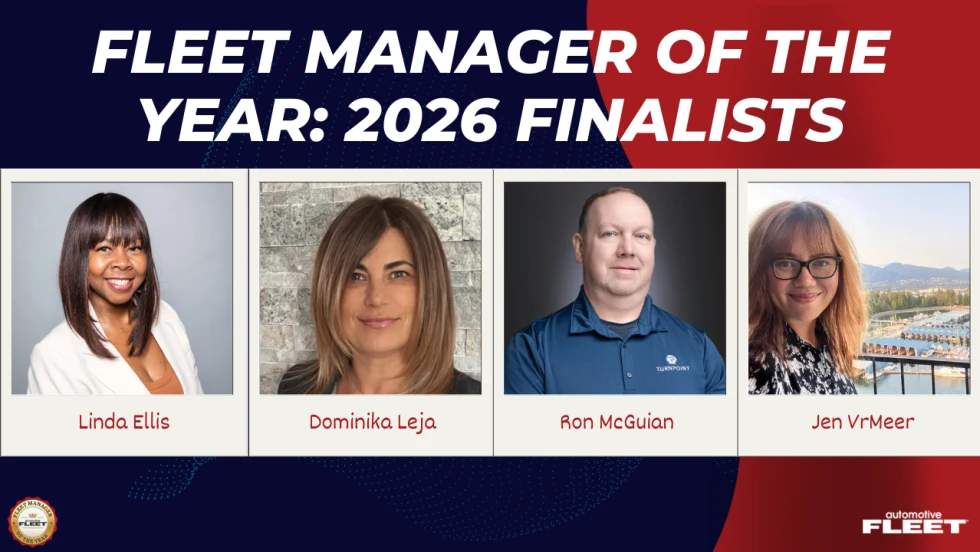
2026 Fleet Manager of the Year Finalists Announced
Who are the 2026 Fleet Manager of the Year finalists?
Read More →
John Rossant to Deliver Opening Keynote at 2026 Fleet Forward Conference
The CoMotion founder will draw on developments across Europe, China, the Middle East, and other international markets to identify trends that could influence how U.S. fleets plan for the coming decade.
Read More →
How to Build Custom Fleet Tools With AI and Vibe Coding [Webinar]
A new Automotive Fleet webinar explores how fleet managers are using AI and vibe coding to automate routine work and create simple operational tools without traditional programming skills.
Read More →