




Are We Losing Control Over Fleet Management?
Ask yourself, how much control do you really have over the following market conditions?


Ask yourself, how much control do you really have over the following market conditions?
Deteriorating resale values for fleet vehicles.
Skyrocketing fule prices (that just as rapidly decrease in price.) The answer,unfortunately, is that our control is limited. The best we can do is mitigate the impact of the adverse market conditions. Although restrained by lower interest rates and acquisition costs, vehicle lifecycle costs threaten to increase since depreciation represents approximately 65 percent of fixed fleet costs and fuel represents about 60 percent of operating costs. As the below chart illustrates, we need to readjust our lifecycle forecasting models to incorporate real-world resale values. Compounding this, there continues to be extreme pressure placed upon fleet managers by senior management to control (read, lower) fleet costs. Fleet managers are increasingly being asked to measure, report, and justify their fleet costs. Even when budgets are fine-tuned, the wild swings in fuel prices can make it difficult to not only stay within a current budget,but also to project future budgets. Some fleets are reorganizing due to budget constraints, which includes outsourcing more processes and updating policies to incorporate new cost controls.
Responsibilities Are Becoming Too Diverse
The challenge for today's fleet managers is to continue to find ways to add value to their company and the bottom line. Fleet managers are being asked to come up with ways to save money without negatively impacting company drivers. What makes this difficult nowadays is that fleet managers are handling a greater degree of responsibilities than in the past. The day of the fleet manager only handling fleet is becoming more of a rarity. Fleet managers who are excelling at their corporations have taken on diverse management responsibilities, but the downside is that the total amount of time they can devote to fleet has been reduced. Fleet managers say that there are not enough hours in the day to keep track of everything in our industry as was done before. Also, with the massive amounts of front-end incentives that automakers are offering to retail customers, fleet managers find themselves distracted by consuming precious time monitoring their own competitive assistance or rifle-shot incentives to ensure their programs remain competitive. In some cases, time constraints have caused a fleet manager's daily activity to de-evolve into "crisis management." One example is the daily administrative challenges of enforcing compliance to corporate fleet policies among drivers. Even today, the challenge for some is developing effective communication with their drivers. It may be surprising that in this day and age not all drivers have access to e-mail, even at some of the nation's largest corporations. On the opposite extreme are 'e-savvy' drivers who only want information provided electronically or on an Intranet Web site and do not want information in a paper format. However, these same drivers often don't bother to red the e-mails sent by the fleet department, which fleet managers find frustrating and an ongoing challenge.Hitting a Moving Target
The unpredictability ofthe fluctuating market conditions facing today's fleet managers was well summarized in an e-mail sent to me by Jim Anselmi, director of fleet operations and travel for Lorillard Tobacco in Greensboro, NC. Here's what Jim wrote when I asked him about the market forces he foresaw influencing the commercial fleet market in the near future. "We experience fuel prices rising, and then falling. Interest rates hit an all-time low, but they will eventually go up. But when? Vehicle manufacturers' incentives get better and better, but for how long? Residuals are down, no, maybe they're up; no, they're down. We're directed to reduce expenses. Then, we're told by management to do it again and again, while at the same time to do more with less and less until we just don't do it anymore! It's like trying to hit a moving target. It is exciting, so hang on. We haven't reached 'redline' yet," wrote Anselmi. Let me know what you think. mike.antich@bobit.com
More Operations
What Fleet Managers Really Want From Vendors
From customer service frustrations and technology breakdowns to RFQs, change management, and the growing impact of turnover across the industry, this conversation pulls back the curtain on the real operational challenges fleet managers are navigating every day.
Read More →
Fleet Safety Masterclass: Industry Leaders on Storytelling, Strategy & Innovation
In this special masterclass episode, industry leaders break down what it really takes to build safer fleets in today’s increasingly distracted and data-driven world.
Read More →
Integrating Legacy Fleet Systems and Historical Data
In this episode, we bring together fleet and technology leaders to unpack the realities of data integration, system migrations, and the evolving role of AI in fleet management.
Read More →


From Resistance to Results: Change Management Strategies for Fleets
From new technologies and safety programs to evolving regulations, fleets are under constant pressure to adapt. But as Dr. Betz explains, success isn’t about the system you implement—it’s about whether your people actually use it.
Read More →
Where We're Headed: A Practical Look at AI in Fleet
Discover how AI is actually being deployed in fleets, not just marketed, including practical use cases and emerging risks.
Read More →
How Coca-Cola United Protects Its Fleet from Growing Legal Risk
Growing legal exposure can put fleets at risk. Here's one company's approach.
Read More →
Fleet Managers Think They Understand Their Costs. The Data Says Otherwise.
Most fleet managers say they have a strong handle on their costs, but new research from Bobit Business Media tells a different story. A 2026 survey of 190 fleet professionals reveals a widespread "confidence gap" where fragmented systems, disconnected data, and delayed reporting are leaving major blind spots hidden beneath the surface. Find out what the data actually shows.
Read More →
Cameras, Safety and Insurance: From Reactive Claims to Real-Time Prevention (Part 2 of 2)
Part Two: Commercial auto remains one of the most challenging and costly lines of coverage for fleet operators and insurers alike. Continue learning more about how to effectively address these issues from Onur Aksan, Enterprise Business Development Executive, Geotab
Read More →
New Trucks, AI & Summer Downtime | AF News Recap
From new truck updates to AI-powered driver coaching and summer maintenance tips, this week's fleet headlines are all about keeping things moving.
Read More →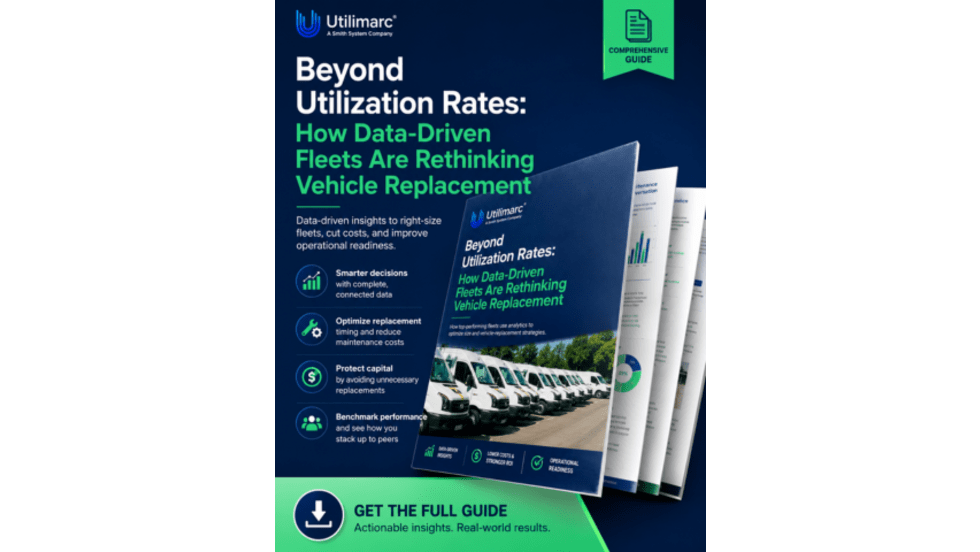
Beyond Utilization Rates: Smarter Fleet Replacement Decisions
Vehicle replacement decisions affect every aspect of fleet performance, from operating costs to asset availability. This guide explores how fleet leaders use integrated data, benchmarking, and lifecycle analytics to determine the right fleet size and optimize replacement timing with greater confidence.
Read More →