




Alternative-Fuel Tax Credits for Fleets
Many eligible fleets may be leaving money on the table by not filing for alternative-fuel tax credits. The filing process isn’t as tricky as it may appear to be.
The Internal Revenue Service (IRS) might not be the first agency that springs to mind when seeking funding for alternative-fuel vehicles, but, in reality, the IRS has several programs aimed to directly benefit users of alternative fuels and alternative-fuel vehicles.
In addition to the $7,500 IRS tax credit available for the purchase of certain plug-in electric vehicle as covered in the September/October 2012 issue of Green Fleet magazine, there is also a 50-cents-per-gallon tax credit available for dispensing certain alternative fuels used to operate a motor vehicle.
In essence, this program funds back 50 cents for each gallon of a “qualified alternative fuel” dispensed. This easy-to-apply-for tax credit is available to fleets that qualify even if they are exempt from income taxes with only a minimum expenditure of time and effort. Most fleets will be able to gather the required records and complete the required paperwork in less than one hour.
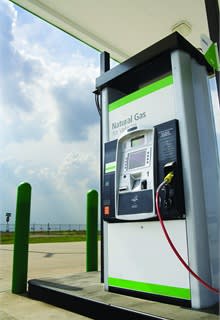
. The operative word here is “dispensing,” as the fleet claiming the tax credit must be what the IRS refers to as an “Alternative Fueler.”
What Alternative Fuels are Eligible?
The American Taxpayer Relief Act of 2012 extended the 50-cents-per-gallon federal alternative motor fuel tax credit through Dec. 31, 2013, and also made it retroactive for all of 2012. Qualifying fuels under this program include compressed natural gas (CNG), based on 121 cubic feet; liquefied natural gas (LNG); liquefied petroleum gas (LPG), aka propane autogas; P-Series fuel; liquid fuel derived from coal through the Fischer-Tropsch process; and compressed or liquefied gas derived from biomass.
While this federal program has been around since 2005, many eligible fleets may not be aware of its existence and could be missing out on an opportunity to bring external revenue into their operation.
Who Qualifies?
Fleets dispensing CNG, LNG, LPG/propane autogas, and the less common alternative fuels previously noted are all eligible for this tax credit. The operative word here is “dispensing,” as the fleet claiming the tax credit must be what the IRS refers to as an “Alternative Fueler.”
Simply purchasing or using one of the alternative fuels listed is not sufficient to qualify for the tax credit. For a fleet to be eligible to claim the credit it must be liable for reporting and paying the federal excise tax on the sale or use of the alternative fuel. Tax-exempt fleets (such as state and local governments) that dispense one of the listed alternative fuels from an onsite fueling station for use in multiple vehicles qualify for the incentive.
In addition to alternative fuel dispensed directly into vehicles from fueling facilities, propane autogas in replaceable canisters used to power equipment such as forklifts and airport tugs is also eligible for the tax credit.
In a 1965 ruling, the IRS determined that delivery of fuel in general-purpose, portable containers to an end user does not constitute “delivery into the fuel supply tank of a motor vehicle.”
Therefore, operators of equipment powered by propane autogas supplied in canisters are also eligible to receive the tax credit.
[PAGEBREAK]
Registering as an Alternative-Fueler
If a fleet has onsite fueling facilities dispensing any of the fuels listed, it should be eligible to receive 50-cents-per-gallon simply by maintaining some basic records, completing the required paperwork and submitting it to the IRS.
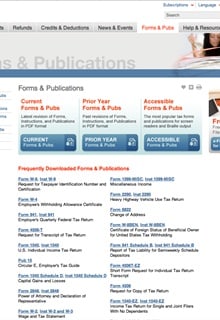
However, before any of that takes place a required first step is becoming registered as an “Alternative Fueler” with the IRS. Registering as an alternative fueler is as simple as completing and submitting an IRS Form 637, entitled “Application for Registration for Certain Excise Tax Activities.”
(Visit www.irs.gov/pub/irs-pdf/f637.pdf to view Form 637 with instructions.)
Applying to become registered as an alternative fueler on the Form 637 is self-explanatory and fairly straightforward, but having agency’s Employer Identification Number (EIN) handy before starting will help expedite completing the form. Also note that, for the purposes of claiming the tax credit for the fuels listed above, most fleets will enter “AL” in the “Activity Letter” column in Part II of the Form 637.
A simple one sentence description of the use in motor vehicles and type of fuel are all that is needed in the “Activity Description” of Part II.
After completing and submitting the Form 637, it will be necessary to wait until a confirmation letter of alternative fueler registration from the IRS is received. This confirmation letter will include the alternative fueler identification number assigned to the agency. This number is required before a request for the tax credit may be submitted, so it is a good strategy to request the alternative fueler ID long before the intention to file.
Claiming the Tax Credit
After the Alternative Fueler Identification number has been received from the from the IRS:
The tax credit may be claimed by submitting an IRS Form 8849, “Claim for Refund of Excise Taxes.” (Visit www.irs.gov/pub/irs-pdf/f8849.pdf to view Form 8849, with instructions.)
Complete and submit Schedule 3, “Certain Fuel Mixtures and the Alternative Fuel Credit.” (Visit www.irs.gov/pub/irs-access/f8849s3_accessible.pdf to view Schedule 3, with instructions.)
It will again be necessary to provide the EIN on the Form 8849 and enter the company’s alternative fueler identification number on the Schedule 3.
Although this might sound complicated, these are actually some of the simplest IRS forms to complete.
After the IRS receives the application, it will process the claim and mail the refund to the applicant. The process may take several months, and it is not unusual to experience a delay, depending upon the time of year the paperwork is submitted. Not surprisingly, the IRS is quite busy around the April tax deadline, so it is a good idea to submit the application shortly after the company’s fiscal or calendar year ends. It is also a good idea to submit the application via a traceable shipment such as USPS Priority Mail, FedEx, or UPS.
What About the Previous Year?
Most tax returns/credits must be filed within a set period time after the reporting period ends. However, fleets that were eligible and submitted tax returns, but did not file for a tax credit for previous years may still have an opportunity to claim the credit/refund. While IRS Notice 2013-26 indicated a filing deadline of July 1, 2013, for 2012 calendar-year alternative-fuel tax credits, the same notice provides for filing amended claims for a period of up to three years from the date of a previously filed return. Fleets may be allowed to file and claim these tax credits via an amended return. In this case it certainly seems to be worth the effort to prepare and submit claims for previous eligible years if fleet meets the criteria.
Editor’s note: This article is intended for informational purposes only. Before filling out or filing any forms, a fleet manager should check with his or her company’s legal counsel or other appropriate parties.
About the Author
Richard Battersby is the director, fleet services, at the University of California, Davis. He also the coordinator for the East Bay Clean Cities and a member of the Clean Cities Hall of Fame. He can be reached at rebattersby@ucdavis.edu.
More Green Fleet

Merchants Fleet Reports 290M EV Miles as Fleets Navigate Changing Electrification Market
From millions in operating savings to hundreds of millions of EV miles, Merchants Fleet’s latest report reveals what’s working and what’s changing in fleet electrification.
Read More →
The EV Breakdown Nobody's Talking About: Why Most Electric Vehicle Roadside Calls Aren't Mechanical Failures
Here's why EV breakdowns are widely misunderstood.
Read More →
ChargePoint Now Available in Energy Pass
ChargePoint and additional planned charging network integrations were added to GM's Energy Pass.
Read More →

First Look: Slate Auto's Electric Fleet Pickup
Could an affordable, modular EV pickup make electrification more practical for fleets?
Read More →
Slate Debuts Colorful, Unique EV Models
A recent media and client event, studded with electric vehicles dressed up on platforms, planted a new position for the manufacturer in the wider EV market. Fleets will find cost-saving advantages.
Read More →
Slate Electric SUV, Pickup Switchable Model Aims For Light-Duty Fleets
Everything about this EV is counterintuitive and understated, making it stand out from the crowd.
Read More →
Inspiration Mobility Acquires Key Electrada Assets
Inspiration Mobility Group has acquired select assets of Electrada, adding the fleet electrification provider's team, technology, and charging infrastructure development capabilities to its energy management business.
Read More →
Turning Connected Vehicle Data Into Decisions That Matter
Fleet leaders have more data than ever, but turning that data into clear, actionable decisions remains a challenge. This white paper shows how leading organizations are using connected vehicle data to improve safety, reduce costs, and optimize fleet performance. Learn how to turn insight into action across your fleet.
Read More →
Are You Tracking Your Fleet's True Total Cost of Ownership?
Bobit Business Media surveyed 190 fleet professionals and found that while most fleets are tracking costs, fragmented systems and data gaps are keeping true TCO visibility out of reach. With rising pressure to control spend in an increasingly volatile environment, the gap between what fleets think they know and what the data actually shows is wider than you might expect. See how your peers are managing costs today and where the industry still has room to improve.
Read More →