




Altering Upfit Specs to Reduce Fuel Costs
From utilizing alternative fuels to decreasing vehicle weight to increasing vehicle aerodynamics, there are several options for fleet managers looking to reduce fuel costs through chassis and upfit specs.

Planning and executing a fleet sustainability initiative can be daunting for even the most seasoned fleet manager. There is so much uncertainty involved with new technologies and an incredibly wide range of options to consider that could increase risk.
But, keep in mind you don’t always have to go big when going green. Even slight adjustments to chassis and upfit specifications, when combined, can make a huge impact on slashing fuel costs and a fleet’s carbon footprint.
So, whether you’re looking to go “all-in” or want to take a more incremental approach to tweak specs here and there, these four strategies can help generate ideas for achieving a greener fleet without sacrificing the bottom line:
Work to Displace Petroleum
While alternative fuels aren’t for every fleet, they’re at least worth looking into. Every gallon of gasoline or diesel that’s displaced with a cleaner-burning alternative will substantially reduce carbon emissions. And, in certain applications, the conversion to alt fuels can make good financial sense.
The four primary types of alt fuels available for truck and van fleets today include:
Natural gas: Although it’s still considered a fossil fuel, natural gas burns significantly cleaner than gasoline and diesel. Another plus for this domestically produced alt fuel is attractive pricing due to abundant supply. According to Natural Gas Vehicles for America (NGVAmerica), vehicles powered by compressed natural gas (CNG) or liquefied natural gas (LNG) reduce carbon monoxide emissions by 70-90 percent, nitrogen oxides (NOx) by 50-75 percent, and carbon dioxide (CO2) emissions by 20-30 percent.
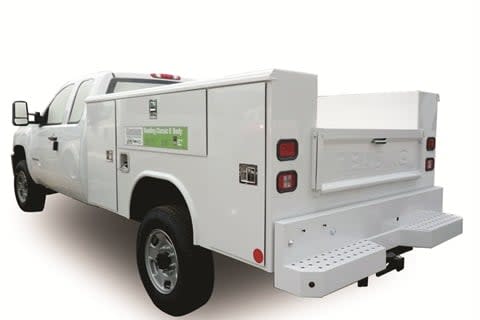
Reading Truck Body’s aluminum service body (when designed with an aluminum understructure) achieves about a 50-percent weight savings over a comparable steel body.
Of the natural gas options, CNG is far more prevalent in light-duty and medium-duty work trucks, whereas LNG is currently used in less than 5 percent of NGVs. Nearly all LNG utilized by fleets is used by heavy-duty trucking and some transit bus operations, because its density allows for a smaller fuel system footprint.
Propane autogas: Also known as liquefied petroleum gas (LPG), propane autogas is produced from both natural gas processing and crude oil refining and used as an alternative fuel in internal combustion engines in light- and medium-duty vehicles. According to the Propane Education & Research Council (PERC), tests conducted by the U.S. Environmental Protection Agency (EPA) show that propane-autogas-fueled vehicles produce 30- to 90-percent less carbon monoxide and about 50-percent fewer toxins and other smog-producing emissions than gasoline engines.
Electrification: Battery-electric vehicles (BEVs) achieve zero vehicle emissions and eliminate the need for petroleum fuels, but come with a steep price tag, especially in the commercial truck and van segment. Hybrid-electric vehicles (HEVs) and plug-in hybrid electric vehicles (PHEV) offer more flexibility in terms of range, because they incorporate both battery power and an internal combustion engine, but must be used in appropriate applications to achieve reasonable payback time frame.
Biodiesel: Want to go green with near zero up-front investment? That’s the potential of biodiesel, an alternative renewable fuel produced in the U.S. from plant oils (such as soybeans), animal fats, algae, and used cooking oil. Many diesel engine OEMs have certified their engines for use with biodiesel blends up to B-20 (a mixture of 20-percent biodiesel, 80-percent petroleum diesel). For the latest listing of OEM statements on approved biodiesel use, visit www.biodiesel.org/using-biodiesel/oem-information.)
According to the EPA, biodiesel (in its pure B-100 form) reduces greenhouse gas emissions by at least 57 percent, or up to 86 percent when compared to petroleum diesel.
Who typically performs alt-fuel conversions? Some OEMs offer factory options for propane autogas, natural gas, and hybrids. In other cases, the vehicle is shipped to a body and equipment upfitter who is certified by the alt-fuel system manufacturer to manage the conversion process.
Optimize Powertrains
Alt-fuel technology is not the only option to go green. Consider the impact a smaller engine can make on fuel consumption and carbon emissions.
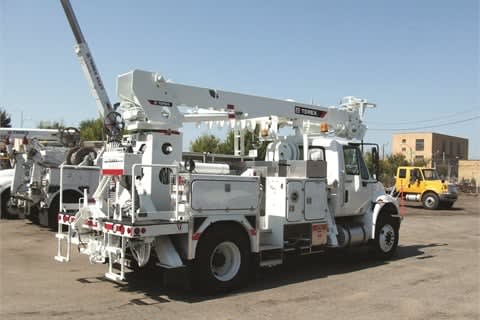
The 11-foot fiberglass composite service body by BrandFX is about 50-percent (or 1,000-pounds) lighter than a similar steel upfit.
Using the website www.fueleconomy.gov, compare the fuel economy of a 2014 Ford F-150 two-wheel-drive pickup powered by a 6.2L eight-cylinder engine and the same truck equipped with a 3.5L six-cylinder EcoBoost engine. The combined city and highway fuel economy rating for the eight-cylinder is 15 mpg, while the six-cylinder offers a 20-percent improvement at 18 mpg.
What difference can a 3 mpg improvement make on the environment?
If the vehicle is driven 25,000 annual miles, that’s a difference of almost 278 fewer gallons of gasoline burned per year:
1,667 gallons x 15 mpg - 1,389 gallons at 18 mpg = 278 gallons.
And, that savings spread over a five-year lifecycle is 1,390 gallons — just for one truck. Imagine how many gallons of fuel could be saved when reducing engine size — when appropriate to the application — across multiple vehicles throughout a fleet.
A similar principle can be applied to medium-duty engine selection when there are several diesel engine displacement and horsepower ratings to choose from. Does the truck’s job description really require the highest horsepower and torque? A smaller engine just might do the job.
However, be careful. Sacrificing performance to downsize an engine can be counter productive, said Mike Stark, senior technical sales manager for Freightliner Custom Chassis Corp. “Fleet managers also need to factor in performance requirements in which the trucks will operate, taking into issues such as startability and gradeability needs, especially relative to the conditions these trucks will drive in: Will it be primarily highway driving? Will it be lots of stop-and-go? Will it be mostly uphill/downhill driving or mostly flat driving? It’s important to achieve a balance between fuel economy and power to do the job,” Stark said.
Stark also recommended modifying specs that could be causing a drag on the engine, which can waste fuel.
“A lesser-known but still important consideration pertains to [engine] fan clutches,” Stark explained. “A viscous fan clutch runs constantly, which consumes horsepower and reduces fuel economy. Spec’ing electronic fan clutches instead can reduce horsepower demand and, as a result, potentially improve fuel economy for a fleet.”
Reduce Vehicle Weight
The principle behind reducing vehicle weight is that the lighter the vehicle, the less energy (or fuel) it takes to move it. According to the U.S. Department of Energy, every 100 pounds of weight reduction translates into a 1 to 2-percent fuel economy improvement.
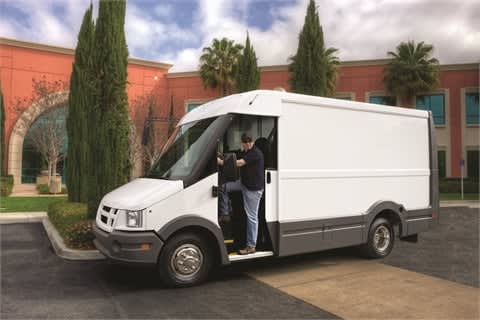
The Isuzu Reach, developed with Utilimaster, achieved a 13.1-pecent improvement in aerodynamics (over a comparable walk-in van design), which has yielded a 6-percent increase in fuel economy due to the reduction in drag coefficient.
But, what opportunities exist for cutting weight out of a vehicle? From a chassis perspective, one option is spec’ing a smaller engine. For example, the Isuzu four-cylinder 3.0L diesel engine Reach walk-in delivery van (built by Utilimaster) is 400-pounds lighter than a six-cylinder 6.7L diesel engine, according to John Marshall, senior vice president of sales, marketing & customer support for Utilimaster — a division of Spartan Motors.
With pickup trucks, reducing weight could be as simple as spec’ing two-wheel instead of four-wheel drive, if the application does not require significant off-road use. According to www.fueleconomy.gov, selecting two-wheel drive can make a difference of 1 to 2 mpg better fuel economy for a 2014 Ford F-150, depending on engine selection.
Another option, particularly with a medium-duty chassis, is replacing steel wheels with aluminum. According to the EPA, each aluminum wheel reduces weight by about 40 pounds. Spread that over six wheels for a Class 5 truck, and that’s a 240-pound savings.
Aluminum can also be incorporated in upfit designs as a lighter-weight alternative to steel. According to Craig Bonham, vice president of sales for Reading Truck Body, the company’s aluminum service body (when designed with an aluminum understructure) achieves about a 50-percent weight savings over a comparable steel body.
Similar weight savings can be achieved with fiberglass composites. Carla Anglin, vice president of sales and marketing for BrandFX Body company, said that the company’s 11-foot fiberglass composite service body is about 50-percent (or 1,000-pounds) lighter than a similar steel upfit.
There are also plastic composites. Marshall with Utilimaster said the company’s Reach delivery van body, built primarily out of plastic composite panels, is approximately 600-pounds lighter than the conventional aluminum body walk-in van.
Fleets can also cut weight with van interiors using lightweight materials. Jenn Voelker, marketing manager for Masterack, said that the company’s plastic composite SmartSpace van cargo management system achieves weight savings by as much as 30 to 35 percent over a traditional steel system.
In some cases, reducing weight in the upfit can allow for a fleet to downsize the chassis (and engine) without sacrificing legal payload, creating additional reductions in fuel consumption and emissions.
While lightweight materials offer great potential for fuel savings and carbon emissions reductions, they aren’t appropriate for every application and come with trade-offs, such as incremental cost and strength relative to steel. Consult with the fleet’s upfitter, fleet management company, and other fleet advisors to determine the best mix of materials to fit the job — and the fleet’s sustainability goals.
Improve Vehicle Aerodynamics
This method is particularly useful for trucks and vans intended to operate at highway speeds, where there’s stronger wind resistance that could diminish fuel efficiency. Cutting drag by 20 percent could boost fuel economy up to 15 percent at highway speeds, according to the EPA.
What are some options to enhance aerodynamics?
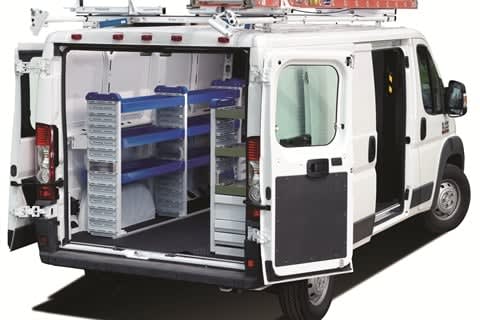
Masterack’s plastic composite SmartSpace van cargo management system achieves weight savings by as much as 30 to 35 percent over a traditional steel system.
One is through body design. For example, according to Marshall with Utilimaster, the Reach design team developed the Reach van to achieve a 13.1-percent improvement in aerodynamics (over comparable walk-in van designs), which has yielded a 6-percent increase in fuel economy due to the reduction in drag coefficient.
The EPA also offered these recommendations that would apply to medium-duty trucks:
Roof fairings (an integrated air deflector mounted on the top of the cab).
Side extender fairings (to reduce the gap between the tractor and the trailer).
Side tank fairings.
Aerodynamic front bumper (to reduce air flow beneath the truck).
Aerodynamic mirrors.
Work with the fleet’s upfitter for design and specification ideas, particular to the application, to enhance aerodynamics and fuel efficiency.
The Bottom Line
Examine vehicle specifications in light of each of these four strategies. Does it make financial (and practical) sense to displace petroleum by converting to an alternative-fuel system? Could the engine be downsized without sacrificing the truck’s job requirements? Are there opportunities to take weight out of the chassis and the body to reduce fuel consumption and harmful emissions? How important is improving vehicle aerodynamics based on the truck’s application? Sometimes, it’s the sum of little things that can make a big difference for the environment.
More Green Fleet
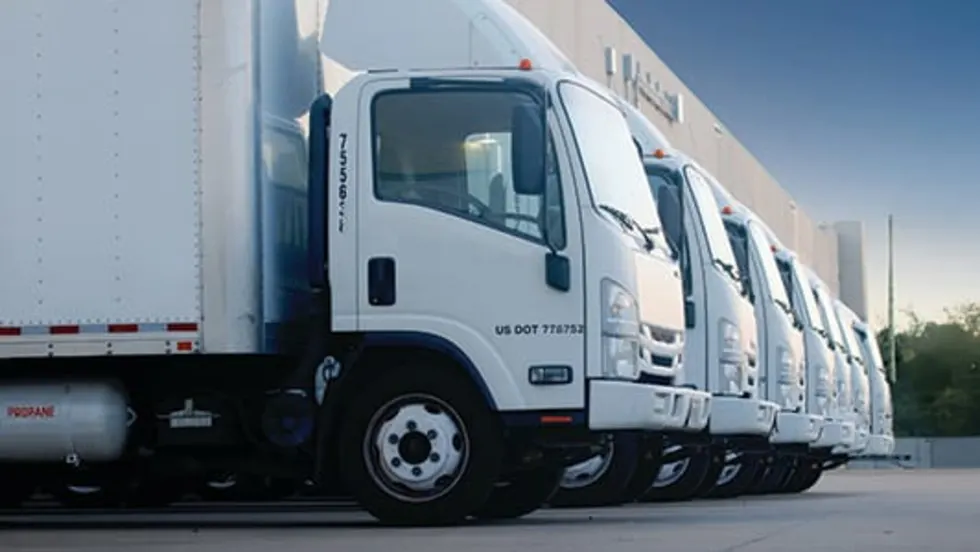
New Propane Autogas Program Offers Fleet Compensation
Qualified commercial fleets can receive $7,500 per eligible propane autogas vehicle and up to $10,000 for new refueling site prep. Learn how the program works and see whether your fleet qualifies.
Read More →
EV Charging Use Is Outpacing Infrastructure Growth
ChargePoint’s 2026 Charging Forward Report points to rising charger use, higher-powered charging, commercial vehicle electrification, and energy-management technology. Here’s what fleets should know.
Read More →
Merchants Fleet Reports 290M EV Miles as Fleets Navigate Changing Electrification Market
From millions in operating savings to hundreds of millions of EV miles, Merchants Fleet’s latest report reveals what’s working and what’s changing in fleet electrification.
Read More →

The EV Breakdown Nobody's Talking About: Why Most Electric Vehicle Roadside Calls Aren't Mechanical Failures
Here's why EV breakdowns are widely misunderstood.
Read More →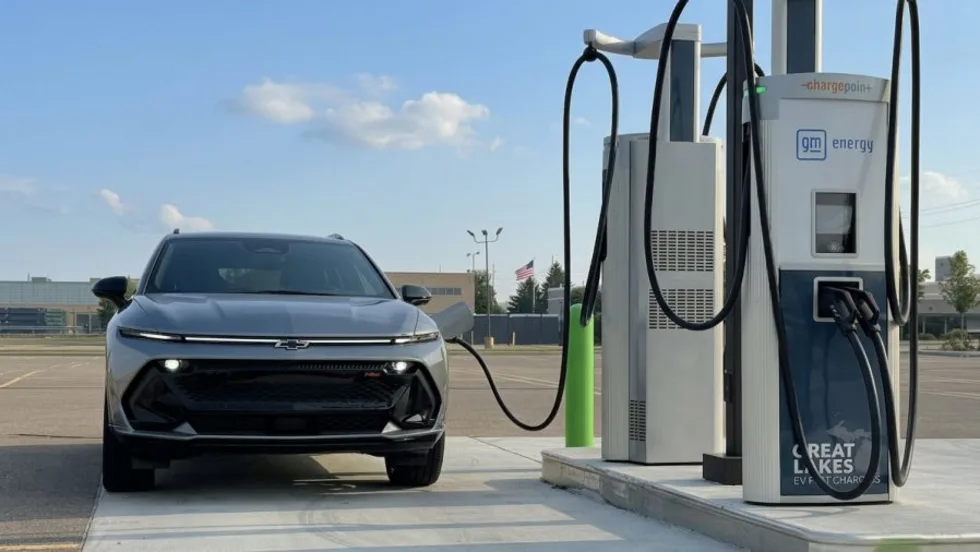
ChargePoint Now Available in Energy Pass
ChargePoint and additional planned charging network integrations were added to GM's Energy Pass.
Read More →

First Look: Slate Auto's Electric Fleet Pickup
Could an affordable, modular EV pickup make electrification more practical for fleets?
Read More →
Slate Debuts Colorful, Unique EV Models
A recent media and client event, studded with electric vehicles dressed up on platforms, planted a new position for the manufacturer in the wider EV market. Fleets will find cost-saving advantages.
Read More →
Slate Electric SUV, Pickup Switchable Model Aims For Light-Duty Fleets
Everything about this EV is counterintuitive and understated, making it stand out from the crowd.
Read More →
Inspiration Mobility Acquires Key Electrada Assets
Inspiration Mobility Group has acquired select assets of Electrada, adding the fleet electrification provider's team, technology, and charging infrastructure development capabilities to its energy management business.
Read More →