




AFLA Looks Ahead: 2nd annual meeting held
2nd annual meeting of young association hailed success. . . plans made for future activities and programs
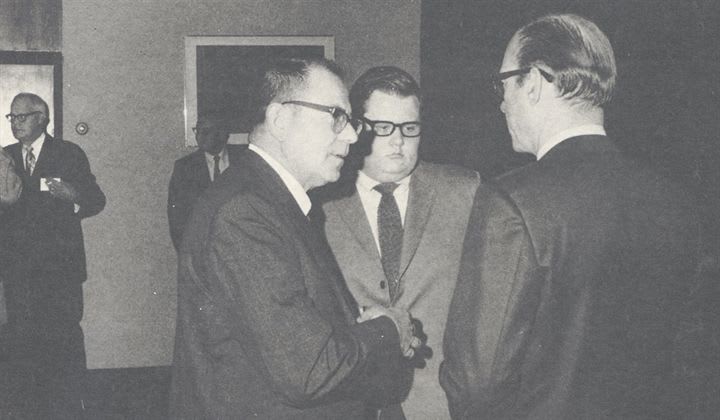
Two business-packed days of meetings and seminars in early April proved to both members and observes from related industries that the young Automotive Fleet and Leasing Association had finally arrived and is satisfying a long-felt need in the fleet and leasing field. On hand to swell the attendance in beautiful Atlanta, Georgia to new records were representatives from auto manufacturers, related associations, the auto-aftermarket, and auto auctions.
BOARD MEETING
Prior to the official opening of the meeting the board of directors met to discuss the future of the organization, plans for the forthcoming year, a membership drive, and the election of officers. Particular stress was placed on the need for the inclusion of fleet-minded dealers in the membership rolls. Also examined was the possibility of holding annual rather than semi-annual meetings in the future. The report of the executive secretary, Edward J. Bobit, was given and showed an increase of 30% in members since the last meeting.
LECTURES & SEMINARS
Leading off the two days of lectures and seminars was Jack Oliver of Beaudry Ford. The Atlanta fleetman welcomed and discussed his concepts of soliciting and servicing national fleet accounts. Among the essentials he listed for a fleet-minded dealer were adequate facilities, separate offices for fleet and market, and retail sales, adequate fleet personal. With respect to solicitation of new business, Oliver listed advertising, direct mail to fleet administrators, and personal calls both locally and regionally. Also discussed by him were servicing facilities of the fleet dealer.
Continuing on the same subject was Henry Leiphart of Decatur Chevrolet. Leiphart further stressed the need for facilities, capital, and qualified personnel. Outlining his personal practices in these areas, he advised that his dealership now delivers cars free of charge within a 50 mile radius of Atlanta and will deliver for a slight charge up to 500 miles from its home base. In the question and answer period that followed, Leiphart further revealed that his dealership delivered 3,300 fleet cars last year, as opposed to 5,500 retail sales in the same period.
Speaking on "What puts a Dealer on Our Approved List," Thomas Wille of Scot Lad Foods asked the audience how he could stretch the word "service" into a half-hour talk. Stressing that the fleet administrator is not always looking for the best short-term or one-shot "deal," he advised that service both before and after a transaction is made is the most important factor in an administrator's dealer selection. Also important, according to Wille, was the practice of periodic call-backs by the dealer - whether or not any trouble had developed.
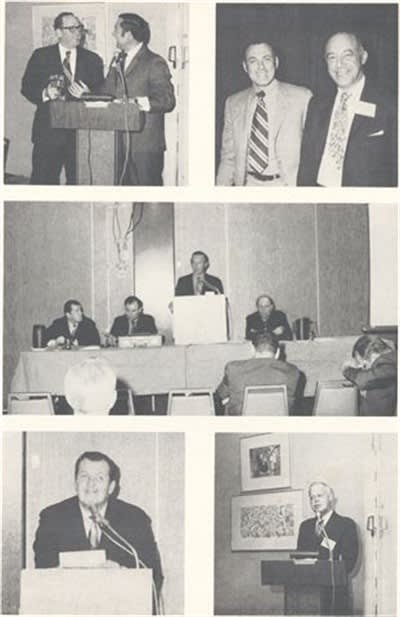
Discussion of "Invoicing, Receivables, and Condition Reports" was presented by Jerry McCarthy of Loop Chrysler/Plymouth and Jack Lamb of Humble Leasing. McCarthy examined the needs for an accurate condition report and a standardized invoicing system. Lamb advised that his company had dealt with over 700 dealers last year and was constantly looking for ways to reduce that number. Listed among the chief of his company's complaints against dealers were delays in ordering, delivery, licensing, and billing. As a solution is delays in billing, he advised that Humble has devised its invoice. Further he stated that a phone call to clarify an invoice discrepancy is often well worth the money.
The last topic of the first day's session, "Fleet Selling on the Coast," was handled by "Woody" Woodard of Hayward Motors and Bob McGarvey of Beach City Chevrolet. Both advised that the personal touch and service were the important factors, regardless of the location of the fleet safe. Woodard further discussed the peculiar high-mileage condition of most California fleet cars in conjunction with the new stringent odometer laws of that state and made a plea for an advertising campaign designed to prove that high-mileage fleet cars are not necessarily a bad buy as a used car. In support of his condition that high-mileage cars in his state are now experiencing a poor market, he related that at the present time almost 60% of such cars are now shipped out-of-state for sale in other areas.
After a continental breakfast sponsored by Chrysler Corp., the second day of meetings was begun by Jim Lambert of Avis and Jim Harder of National, Examining the subject "How We Double Cycle in Atlanta," both men explored the reasons for and troubles inherent in the double-cycle approach to daily rental fleet supply, Among the reasons for the procedure, Harder listed minimization of down-time, control of fleet size during peak and slack periods, and the providing of customers with the latest in equipment. Both men also discussed such problems as licensing, break-in of new cars, and need for minor repairs which arise out of the double-cycle procedure.
Also heard during the morning session was Bud Richardson of Commercial Credit Industrial Corporation. In outlining his company's procedure in selecting fleet-minded dealers, mentioned a file of recognized fleet dealers, recommendations of CCIC field reps, and the help of manufacturers. Mandatory for any dealer who anticipates doing business with CCIC, according to Richardson, are such prerequisites as sound financial condition, separate fleet department, a competitive mark- up, adequate facilities, good management, a large inventory, and night service facilities.
FEATURED SPEAKER
Following a lunch sponsored by General Motors, Dewitt Chapple of Gelco-IVM leasing, presented the features talk of the two-day meeting. Again the members and guests were advised of the importance of service and the personal touch in fleet sales. Chapple further stated that he felt it was of the utmost importance that a fleet driver be sent to the delivering dealer when picking up his car so that a firm foundation for a future good relationship can be established from the beginning. Among other topics touched on during his talk were the advisability of a dealer having a rental "loaner" available for service customers to minimize down-time.
BOBIT AWARD
Also presented during the luncheon was the Annual Bobit Award for service in the fleet field. This Year's winner was Tom Wille of Scot Lad Foods. In outlining Wille's contribution to the industry above and beyond the call of duty Ed Bobit advised that all present owed Wille a debt of gratitude and respect for his outstanding service.
Buick Presentation
During the last afternoon session, Bruce McArthur and Ray Gepp of the Buick Fleet department offered a slide-film presentation on the advantages of fleet, leasing and daily rental market sales. The presentation developed by Robert R. Englehard, Inc., will be offered to Buick dealers in the near future.
Also representing the Buick point if view was Warren Ottinger of Warren Buick who spoke on "The Cost Of Doing Business With A Fleet Administrator." Ottinger advised that his cost on an average fleet sale was as follows: $25 for prep; $19 for financing. $24 for administrative and clerical; $13 for advertising, phone and miscellaneous; and $20 for association membership dues. Total gross profit was shown as $178. Thus Ottinger stated his dealership is realizing a net profit of $74 per car on an average fleet sale. A lively question on advertising costs, drop-shipments invoicing and the extent of his involvement in the fleet market.
Drop Shipments
One of the most discussed and controversial subjects of the day was covered by Ron Trappani of Lease plan international and pierce walsh of warren brick. Though both agreed in principle on the advantages of drop-shipping, Walsh pointed out that the procedure can present problems for the delivering dealer in the areas of used-car disposal and registration Trappani stressed the efficiency that the system offered thought he admitted that problems are encountered when small dealers in rural areas are used as the delivering dealer. He also high lighted the problems encountered by a large leasing company when standardization is not employed or followed by a dealer by pointing out "In sending in the papers on an individual transaction it doesn't make any difference if the papers are stapled or paper-clipped-but look what happens when the leasing company must remove thousands of staples every day!
USED CAR DISPOSAL
The subject of used car disposal was covered by Dick Raustan of Lease Plan International, Ed Cieslak of Hertz and R.A Waldrop of Dixie Auto auction. Raustan and Cieslak pointed out the importance of properly filled-out condition reports and examined the problems of leasing companies when presented with incomplete or carelessly prepared reports. Waldrop discussed the used car market advising that he saw a slight rise in the market coming in the near future. Specifically he advised the fleet administrators and dealers to urge drivers and customers to obtain hardtop models rather than sedans due of the popularity of hardtop models in the current market.
NEW OFFICERS
Following the discussion and seminars a regular business meeting was held by the members for the election of a new slate of officers. As a result of this Don Fenton of Tom Edwards Chevrolet was unanimously elected the association's new president. Other officers on last years Board of Directors were moved to higher positions on the Board. Added to the Board was Tom Wille.
In accepting the office, Fenton stated, "we've come a way in just one year. But we still have a long way to go. I urge each of you to attempt to recruit one new member in the next year. For it is only by getting more responsible men in our industry involved in AFLA that we can succeed in our objectives and move ahead."
More Operations

How Fleets Can Recruit and Train Veterans for Technician Roles
Here's how the technician shortage has affected uptime for fleets, and what to do about it.
Read More →
Avis Budget Group Deploys Neology Toll Management Technology Across Major Brands
Neology’s neoFleet platform will manage toll transactions and toll-authority operations for vehicles across Avis, Budget, Payless, Budget Truck and Zipcar.
Read More →
Fleet Personal-Use Charges Edge Higher in 2026
Nearly eight in 10 surveyed fleets allow personal use of company vehicles, while just over half of respondents report charging employees for the privilege.
Read More →
The Future of Fleet + What’s Changing Right Now | AF News Recap
Could developments overseas offer a preview of what’s coming for U.S. fleets? This week, we’re looking at the future of AI, autonomy, and electrification, plus Ford Pro’s new certified pre-owned program, smarter vehicle offboarding, and a new way for fleets to manage toll expenses.
Read More →
How to Handle Vehicle Offboarding
What do fleet managers need to do when a driver leaves?
Read More →
Fleet Manager’s Ultimate Playbook: Navigating the New Standard in OEM Connectivity
Rising operating costs, driver safety concerns, and unplanned downtime are putting unprecedented pressure on modern fleets. Discover how fleet managers use embedded OEM connectivity and real-time vehicle data to cut TCO, prevent downtime, and protect drivers without aftermarket telematics hardware.
Read More →
U.S. Bank Adds Verra Mobility Toll Management to Voyager Fleet Platform
The integration allows U.S. Bank Voyager fleet customers to manage toll payments and violations alongside fuel, EV charging and maintenance expenses.
Read More →
ADAS Prevents Crashes. But Repairs Cost More | AF News Recap
ADAS-equipped vehicles may crash less often, but they can cost more when they do. This week, we’re breaking down what that tradeoff means for fleets, plus Subaru’s first Forester Wilderness Hybrid, Nissan’s new e-POWER Rogue, and why Calstart has become Catalyst Mobility.
Read More →
Moventum Fleet Management Names Mark Iorillo Head of Sales
Iorillo brings nearly 20 years of fleet management and sales experience to the role, including previous positions at Element Fleet Management, CEI, Donlen and Ryder.
Read More →
Fleet Has a Talent Pipeline Problem. What Comes Next? | AF News Recap
Where will fleet’s next generation of leaders come from? This week, we’re looking at the industry’s talent pipeline, what certification can add to a fleet career, how to build an award-worthy track record, and the return of Automotive Fleet’s Personal Use Survey.
Read More →