




Advanced Clean Fleets Rule — Private Fleets Prepare for Compliance
The regulation applies to fleets that run at least one Class 2b or larger vehicle in California. Compliance starts Jan. 1, 2025.

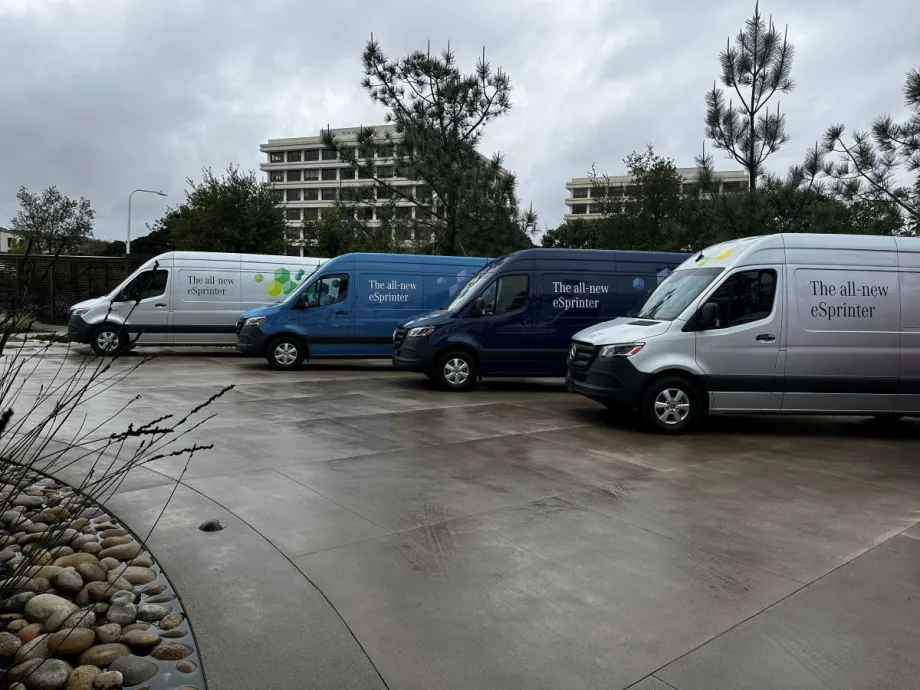
Electric cargo vans such as the Mercedes-Benz eSprinter are an ACF compliance option. By Jan. 1, 2025, 10% of cargo van fleets in California must be zero emissions.
Photo: Chris Brown
The Advanced Clean Fleets (ACF) rule, finalized by the California Air Resources Board (CARB) in April 2023, aims to mitigate emissions from the transportation sector in California through the adoption of zero-emission vehicles (ZEVs).
ACF applies to many types of fleets, including drayage and those owned by state, local, and federal government agencies, with vehicles that have a gross vehicle weight rating greater than 8,500 lbs.
The more urgent, and thus more publicized part of the rule mandates that 50% of the acquisitions of state and local government fleets must be ZEVs starting in 2024.
But another mandate is coming due soon for what CARB calls “high priority” fleets. High-priority fleets are entities that own, operate, or direct at least one vehicle in California, and that have either $50 million or more in gross annual revenues, or that own, operate, or have common ownership or control of a total of 50 or more vehicles.
“What's important for private fleets to understand is that if you're doing business in California — meaning you have a single applicable vehicle on the road in California — even if you’re based in another part of the country, then ACF applies to you,” said Lisa Drake, Assistant Director for Fleet Electrification at Merchants Fleet.
The vehicles don’t have to be registered in California, and they don’t need to operate solely in California.
How Do Private Fleets Comply?
For high-priority private fleets, there are two ways to comply: through the Model Year Schedule or the ZEV Milestones Option.
Under the Model Year Schedule, new vehicles over 8,500 lbs. GVWR acquired after January 2024 must be ZEVs. Following this path, fleets can still keep their internal combustion engine (ICE) vehicles, but they must be retired when they have been in use for 13 years, have traveled more than 800,000 miles, or are more than 18 years old.
Under the ZEV Milestones Option, fleet composition must meet increasing percentage targets based on the type of vehicle. The Milestones option is more flexible, yet more complex. Fleets can still buy ICE vehicles but must balance their overall fleet percentages with ZEVs based on vehicle type. (See Milestone chart.)
Following the ZEV Milestones option, if you’re running 100 cargo vans in California,10 of those vans must be electric starting Jan. 1, 2025 — whether the 10 ICE vans they’d replace are ready to retire or not.
It’s important to reinforce that the milestones take effect on Jan. 1, so the new vehicles in the affected groups need to be in fleets by that date, not at some point during the calendar year. With delays in vehicle deliveries, permitting, utility upgrades, installing charging equipment, and more, fleets need to get started now, Drake said.
There are ways to get started with charging to get initially compliant — including mobile solutions and charging-as-a-service plans — and from there, fleets can plan for longer-term upgrades. On the vehicle side, Merchants Fleet also offers clients a lease option that helps fleets get into EVs right away and out of them after 12 months if necessary.
ACF Compliance & Enforcement
Fleet operators must annually submit a compliance report for their California fleet. Under the original rulemaking, high-priority fleets had a requirement to submit an initial compliance report by Feb. 1, 2024.
However, on Dec. 28, CARB announced that it would temporarily withhold enforcement of the drayage and high-priority fleet provisions of ACF reporting requirements until the U.S. Environmental Protection Agency grants a preemption waiver from the federal Clean Air Act, or determines a waiver is not necessary.
The delay comes after the California Trucking Association’s lawsuit against CARB requesting the prevention of enforcement of ACF for drayage and high-priority fleets.
Nonetheless, fleets not in compliance with ACF may face large fines and could lose their ability to operate in California. CARB is encouraging fleets to begin reporting voluntarily.
Regarding compliance, “Showing authentic, good faith efforts can only be to your advantage,” Drake said.
“But it’s more important to begin your process to comply because as you're doing that, you're also building your understanding of what it’s going to take to get to zero-emission transportation into your organization.”
Another reason, Drake said, is to access funding such as California's Hybrid and Zero-Emission Truck and Bus Voucher Incentive Project (HVIP). That money is designed to incentivize organizations to acquire ZEVs voluntarily before the compliance milestones — after which the money might no longer be there.
Accessing HVIP incentives comes with urgency —for fleets with over 50 vehicles, the grant money sunsets on Dec. 31, 2024. The grants are expected to continue for fleets under 50 vehicles.
Extensions & Exemptions
The ACF rule exists, of course, in the real world of vehicle delivery delays and disruptions in the buildout of charging infrastructure.
Fleets can apply for an extension to delay ZEV adoption based on four categories: infrastructure construction delays, utility electrical upgrade delays; vehicle delivery delays; and daily usage exemptions (if available vehicles do not meet duty-cycle requirements). However, many of these exemptions must be applied for a year in advance of your compliance date.
Working closely with CARB on your particular situation and showing authentic, good-faith efforts to comply will be in any fleet’s best interest.
ZEV Fleet Milestones by Milestone Group and Year
Group | Vehicle Types | 10% | 25% | 50% | 75% | 100% |
|---|---|---|---|---|---|---|
Milestone Group 1 | light-duty package delivery vehicles, box trucks, vans, two-axle buses, yard tractors | 2025 | 2028 | 2031 | 2033 | 2035+ |
Milestone Group 2 | work trucks, day cab tractors, three-axle buses | 2027 | 2030 | 2033 | 2036 | 2039+ |
Milestone Group 3 | sleeper cabs, specialty vehicles | 2030 | 2033 | 2036 | 2039 | 2042+ |
More Green Fleet
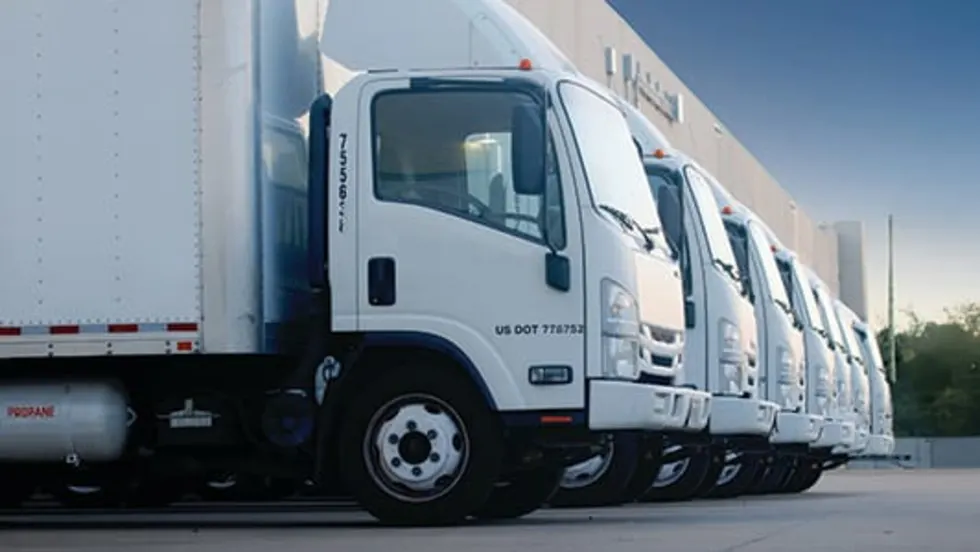
New Propane Autogas Program Offers Fleet Compensation
Qualified commercial fleets can receive $7,500 per eligible propane autogas vehicle and up to $10,000 for new refueling site prep. Learn how the program works and see whether your fleet qualifies.
Read More →
EV Charging Use Is Outpacing Infrastructure Growth
ChargePoint’s 2026 Charging Forward Report points to rising charger use, higher-powered charging, commercial vehicle electrification, and energy-management technology. Here’s what fleets should know.
Read More →
Merchants Fleet Reports 290M EV Miles as Fleets Navigate Changing Electrification Market
From millions in operating savings to hundreds of millions of EV miles, Merchants Fleet’s latest report reveals what’s working and what’s changing in fleet electrification.
Read More →
The EV Breakdown Nobody's Talking About: Why Most Electric Vehicle Roadside Calls Aren't Mechanical Failures
Here's why EV breakdowns are widely misunderstood.
Read More →
ChargePoint Now Available in Energy Pass
ChargePoint and additional planned charging network integrations were added to GM's Energy Pass.
Read More →

First Look: Slate Auto's Electric Fleet Pickup
Could an affordable, modular EV pickup make electrification more practical for fleets?
Read More →
Slate Debuts Colorful, Unique EV Models
A recent media and client event, studded with electric vehicles dressed up on platforms, planted a new position for the manufacturer in the wider EV market. Fleets will find cost-saving advantages.
Read More →
Slate Electric SUV, Pickup Switchable Model Aims For Light-Duty Fleets
Everything about this EV is counterintuitive and understated, making it stand out from the crowd.
Read More →
Inspiration Mobility Acquires Key Electrada Assets
Inspiration Mobility Group has acquired select assets of Electrada, adding the fleet electrification provider's team, technology, and charging infrastructure development capabilities to its energy management business.
Read More →