




Related: The Overlooked Fleet & Automotive Impacts of the Big Beautiful Bill
Adapting Fleet TCO Strategies to Rising Acquisition and Insurance Costs
New data-driven platforms that incorporate real-world performance and OEM-agnostic insights are helping fleets avoid cost overruns and make more informed procurement and insurance decisions.
by Ian Gardner
July 17, 2025
Managing fleet costs in 2025 is driven by AI-powered, OEM-agnostic TCO platforms to stay ahead of rising vehicle, insurance, and maintenance expenses.
Image: Automotive Fleet
6 min to read
The landscape for vehicle fleet companies in 2025 is marked by a maelstrom of escalating costs, forcing fleet managers to confront unprecedented challenges in maintaining profitability and operational efficiency. Acquisition and leasing costs are projected to soar by 10-15%, mirroring a similar jump of 12-15% in insurance premiums. The price of spare parts is experiencing multiple hikes, with an average increase of 8%, and the complexities of international trade, particularly with China, are further inflating expenses due to volatile exchange rates and tariffs.
This perfect storm of rising expenditures underscores an undeniable truth: accurate and real-world-informed Total Cost of Ownership (TCO) calculation is no longer merely a best practice but a critical imperative for survival and strategic growth. In this volatile environment, the conventional approaches to TCO are proving woefully inadequate, leaving many fleets vulnerable to significant financial pitfalls. The future, and indeed the present, demands a true shift toward advanced AI-powered TCO technology platforms that rely on field-operational data rather than sticker-price or theoretical projections especially those possessing the crucial capability of being OEM data agnostic and incorporating cost and performance data of ancillary on-vehicle systems like refrigeration, pony motors and other aftermarket technologies that have their own TCO, use, maintenance and repair profiles.
The Frustrations of Traditional TCO: A Recipe for Costly Inaccuracies
Traditional small fleet TCO methods, reliant on spreadsheets and manual calculations, are inefficient and riddled with costly inaccuracies. Without advanced AI and predictive modeling, fleet managers remain reactive, making decisions on historical data that can't keep pace with dynamic market changes. This leads to underestimated expenses, budget overruns, suboptimal vehicle choices, and missed savings.
The sheer volume of vehicle data becomes a burden, causing data stagnation and blind spots. This problem is particularly acute for Electric Vehicles (EVs). Traditional TCO models, designed for ICE vehicles, fail to accurately factor in EV-specific costs like charging infrastructure, accurate usage-based battery degradation, and evolving maintenance. Additionally, EV fleets face unique challenges such as the impact of fluctuating energy prices, the need for specialized technician training, and the unpredictability of battery life cycles—all
of which can dramatically affect long-term costs if not properly modeled. Fleets adopting EVs without AI-driven TCO risk miscalculating true costs and undermining sustainability goals, as legacy systems can't handle the real-time forecasting needed for dynamic energy pricing and battery tech.
Consider two fleets evaluating mid-sized electric delivery vans from different OEMs. On paper, both options appear similar—identical battery capacity, comparable range, and similar list price. Yet Fleet A, using real-world TCO modeling, discovers that one option underperforms in cold-weather regions due to battery degradation not captured in OEM specs. Factoring in elevation, cargo weight, and actual charging downtime, their model reveals a 14% higher operational cost than projected. Fleet B, using theoretical models, selects the same vehicle unaware of these issues—leading to surprise budget overruns and maintenance frustrations.
The Peril of OEM-Specific Data: Impact on Acquisition and Insurance
The lack of OEM data agnosticism in many existing TCO platforms presents an even more nuanced and often overlooked problem, particularly concerning vehicle acquisition and insurance costs. When a TCO platform is tied to specific OEM data, fleet managers are presented with a limited and potentially biased view of vehicle performance and cost-effectiveness, which can be slanted to provide a particular point of view.
OEMs, naturally, have a vested interest in promoting their own products, and their provided data, while valuable, may not always offer the complete, unbiased picture required for truly objective decision-making.
This can lead to a reliance on information that, while technically accurate, might omit crucial comparative data points from other manufacturers, hindering a fleet's ability to truly optimize its procurement strategies across brands and platforms. Without the ability to ingest and analyze data from all vehicle manufacturers – a capability inherent in OEM-agnostic platforms – fleet managers cannot conduct truly apples-to-apples
comparisons across diverse vehicle types and brands.
This limitation means they might inadvertently acquire vehicles that, while seemingly cost-effective upfront, prove more expensive over their lifecycle due to higher maintenance needs, lower fuel efficiency, or poorer resale value compared to alternative OEM offerings that were not properly evaluated.
This challenge is similar to how consumers often experience a disconnect between EPA fuel economy estimates and real-world mileage. Theoretically optimized data rarely accounts for operational specifics—such as hilly terrain, frequent stops, or auxiliary power drain—that can significantly skew performance and cost. The ramifications extend directly to insurance premiums. Insurance providers rely heavily on comprehensive, accurate data to assess risk and determine coverage costs.
When a fleet's TCO calculations are opaque or incomplete due to a lack of OEM agnostic data, it becomes challenging to present a compelling, data-backed case for favorable insurance rates.
Insurers may perceive higher risk if they cannot fully understand the granular details of vehicle performance, such as uptime patterns, recurring mechanical issues, or environmental usage context, that influence claims.
A system that can seamlessly integrate data from various OEMs provides a holistic view of the fleet's health and operational patterns, enabling fleet managers to demonstrate a proactive, data-driven approach to risk management.
This transparency, facilitated by OEM-agnostic AI, can be a powerful lever in negotiating lower premiums and securing more tailored insurance policies, directly impacting the bottom line. Conversely, a fragmented data landscape, often a byproduct of non-agnostic platforms, can lead to higher insurance costs as providers err on the side of caution when faced with incomplete information.
The Power of AI-Powered, OEM-Agnostic TCO Platforms
Advanced AI-powered TCO tech platforms are a game-changer for fleet management. Leveraging machine learning, they process vast data—telematics, maintenance, fuel, driver behavior, external markets—for unprecedented predictive accuracy. Imagine AI forecasting component failures, enabling proactive repairs and drastically reducing downtime and costs.
These platforms also optimize routes in real-time, cutting fuel consumption significantly, while continuously learning from field data to fine-tune TCO estimates based on actual operating conditions. Crucially, their OEM data agnostic nature means they analyze data from any vehicle manufacturer. This neutrality is vital for diverse fleets, allowing objective comparisons of lifecycle costs across ICE and EV models. Such unbiased insights empower strategic procurement, ensuring optimal vehicle choices for acquisition, efficiency, and resale, ultimately securing better insurance rates and optimizing your fleet's financial health.
Early adopters of these platforms have reported significant reductions in both maintenance and insurance costs. One regional parcel fleet, for instance, reported a 12% drop in annual insurance premiums after demonstrating a 30% reduction in mechanical failures using predictive diagnostics from an AI-driven platform. Another logistics operator avoided a costly vehicle refresh by identifying and addressing systemic load-related failures in specific vehicle models—insights only available through real-world data modeling.
The transition to a data-driven, predictive, and OEM-agnostic approach – grounded in real-world field operations rather than speculative modeling- represents a fundamental shift that empowers fleet managers to navigate the complexities of the modern automotive landscape, optimize every facet of their operations, and secure a competitive edge in an increasingly challenging economic environment. The future of fleet profitability hinges on embracing the transformative power of AI to unlock true Total Cost of Ownership intelligence.
Subscribe to Our Newsletter
More Vehicle Research
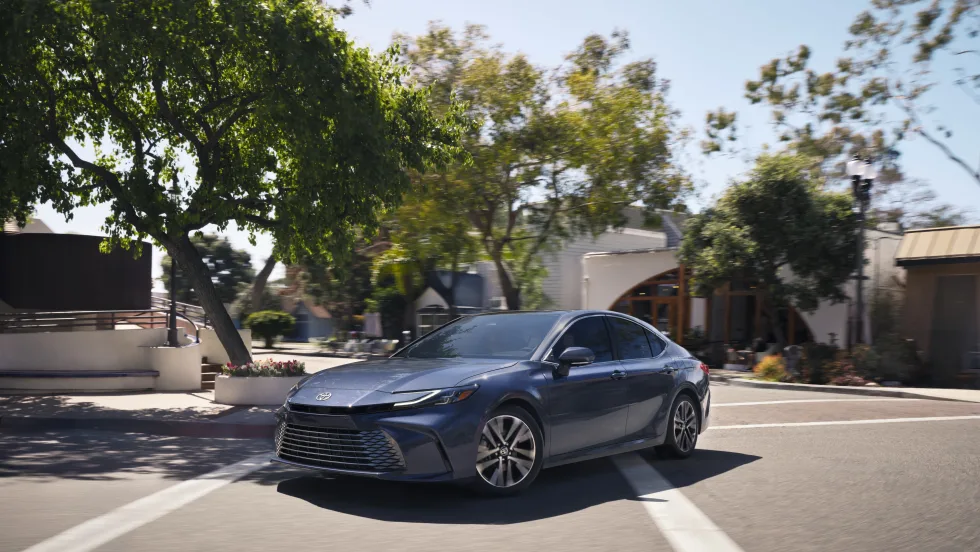
2027 Toyota Camry Offers Hybrid Powertrain Across Five Grades
The 2027 Toyota Camry is a carryover with new pricing.
Read More →
Chevrolet Updates 2027 Trax and Trailblazer with More Standard Safety Features
Chevrolet is updating two of its smallest SUVs with added driver-assistance technology, redesigned interiors, and revised trim options. The changes could add more safety equipment as standard for commercial fleets, while a new Trailblazer configuration adds another all-wheel-drive option.
Read More →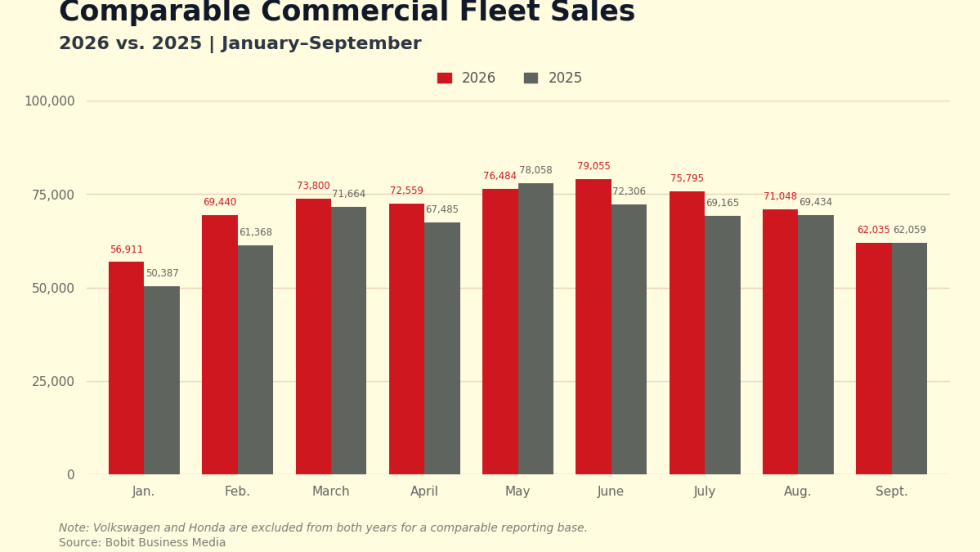
Commercial Fleet Sales Rise 5.8% Through September 2026
September commercial fleet sales were essentially unchanged from a year earlier, slowing year-to-date growth while keeping volume ahead of 2025.
Read More →
Hall of Fame Inductee: John Dmochowsky
The longtime Mondelēz International fleet executive joins the Automotive Fleet Hall of Fame.
Read More →
Hall of Fame Inductee: Lee Miller
After more than four decades at Boehringer Ingelheim, Lee Miller leaves a legacy built on fleet expertise.
Read More →
Hall of Fame Inductee: Mark F. Petersen
From managing fleets of thousands of vehicles to advancing safety and mentoring fellow professionals, Mark F. Petersen made his mark across both the corporate and supplier sides of fleet.
Read More →
When Charger Downtime Becomes a Fleet Availability Problem
As EV deployments move beyond pilot programs, charger reliability can directly affect vehicle readiness, driver productivity and route scheduling.
Read More →
2027 Nissan Rogue Hybrid Adds e-POWER, Standard AWD
The new Rogue Hybrid uses Nissan’s e-POWER system with dual electric motors, offers an estimated 40 mpg and starts at $35,490.
Read More →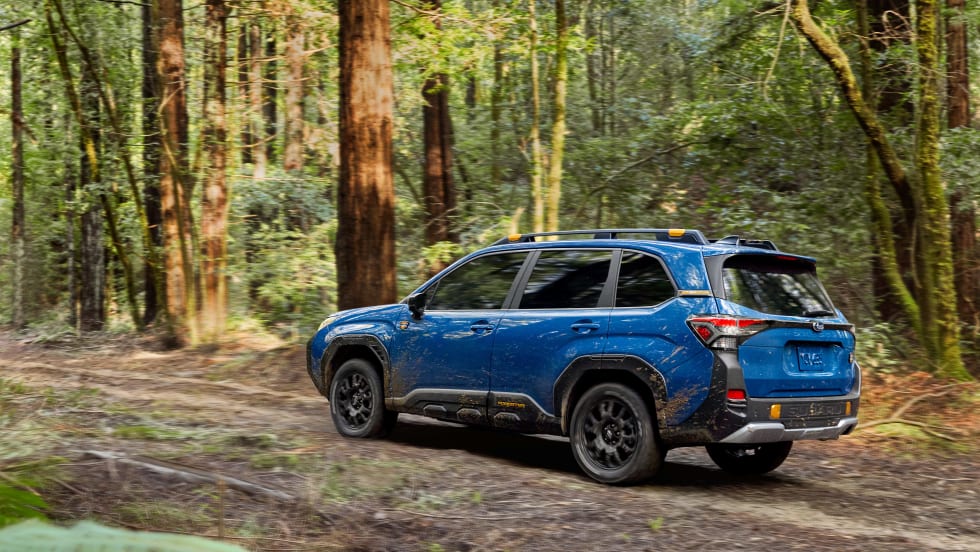
2027 Subaru Forester Adds First Wilderness Hybrid
The 2027 Forester lineup starts at $29,995 and adds a Wilderness Hybrid with 194 combined horsepower and 9.3 inches of ground clearance.
Read More →
EV Realty Names Henrik Holland President as Charging Platform Expands
The former Prologis Mobility and Shell executive will help expand EV Realty’s truck charging business and move its power-first infrastructure model into autonomous vehicle depots and other fleet sectors.
Read More →