




A Fresh Standard for Asset Valuation
As ISO 55000 becomes more widely acknowledged and accepted, its likely to become the prism through which asset-heavy organizations are viewed and a benchmark by which such organizations are judged.
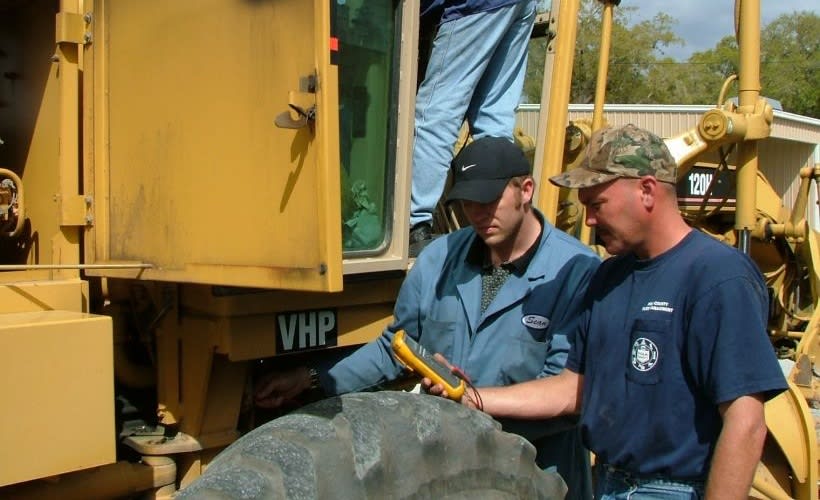
Fleet professionals are often held accountable for a lack of asset management efficiency when no standards exist for measurement.
Photo courtesy of Bob Stanton.
The acceptance of and familiarization with ISO, and the standards it represents for fleet operations, was largely unrecognized outside of the manufacturing sectors prior to 2001.
Over the past 15 years, service sector businesses including fleets began recognizing and embracing ISO standards as strategic imperatives to improve quality, efficiency, service delivery, cost control, and safety. In particular, the tenets of ISO 9001 have become admired, emulated and adopted by some fleets and for others, a highly sought-after accreditation having value across entire supply chains.

Bob Stanton, Stanton Consulting
The benefits of Lean processes leading to the improvements that satisfy the quality management system called ISO 9001 in a fleet environment cannot be debated. For instance, any shop or garage facility employing 5S diligently would never want to return to the its former state.
In 2014, another ISO standard series was released which is, at least among fleet professionals, largely unknown and yet is more closely aligned to the goals and responsibilities of fleet management than ISO 9001.
After years of development, in 2014 and following guidelines previously established by the British Standards Institute called PAS55, the ISO 55000 series for asset management was published. Unlike ISO 9001 which was originally geared toward the manufacturing sectors, the tenets of ISO 55000 closely parallel many of the responsibilities common to fleet managers.
As ISO 55000 becomes more widely acknowledged and accepted, its likely to become the prism through which asset-heavy organizations are viewed and a benchmark by which such organizations are judged and evaluated. Organizations will likely adopt this standard as a policy imperative. Further, ISO 55000 could become the standard by which asset responsible employee performance is judged and a key strategic and certification credential requirement for the engagement of consulting services in the fleet management space.
As with any ISO standard such as 9001 or 55001 accreditation, an organization must be certified by a Conformity Assessment Body. Information on this process is widely available.
This article broadly explains the various asset management processes outlined in the standard to illustrate its alignment with common fleet responsibilities. Fleet managers are routinely expected to interpret various and disjointed asset management objectives that are often presumed but not codified.
Worse, fleet professionals are often held accountable for a lack of asset management efficiency when no standards exist for measurement. Worse yet and most commonly, fleet managers, due to the absence of written asset management policies, “make it up as they go” because they, in many cases, are the only ones in the organization who recognize the need for asset accountability.
How Tenets of ISO 55000 Align with Fleet Management Responsibilities
Here are typical responsibilities often seen in the position descriptions for fleet managers today:
Calculate and strive to minimize asset total cost of ownership without compromising safety or service delivery.
Develop and implement an asset replacement strategy that maximizes investment return.
Establish and maintain cost efficient life cycles over a wide range of assets while assuring that organization objectives and senior management buy-in are achieved.
Implement daily and long-term strategies to protect asset safety, reduce risk, and assure employees have the necessary tools that reinforce the safety culture of the organization.
Direct activities that comply with environmental objectives and social responsibilities.
Develop and implement an asset utilization strategy that achieves and assures maximum asset value while guarding against asset under-utilization.
Maximize asset readiness for the benefit of reliable service delivery to customers or citizens utilizing high quality maintenance processes and follow-through.
Administer to assure full knowledge and compliance with all current and future statutory regulations that apply.
Assure department execution is directed toward achieving the mission and objectives of the organization.
The tenets of ISO 55000 and the strategic approaches to ISO 55001 are as follows. As you read them, you will see clearly how each aligns with your asset management responsibility and how, if indeed your organization lacks a strategy such as this, adopting this standard may have benefits.
The strategic approach to ISO 55001 follows the same structure for management system standards seen in ISO 9001.
The Standard includes KPI’s and an emphasis on interdepartmental coordination which many organizations lack. ISO 55000 encompasses the following aspects which align closely with the fleet manager’s responsibilities outlined previously:
Ensuring asset management objectives are consistent and aligned to organizational objectives.
That stakeholders are identified and satisfied, and the scope/boundaries of the asset management system are clearly defined.
That asset management leadership is clearly defined, policies are clearly stated, and that leadership has the authority, responsibility and resources to succeed within those policies.
That risks and opportunities are defined, and strategies exist to achieve a balance of risk, cost, and performance
Organizational support exists (e.g. information systems) that is documented, controlled, communicated and auditable.
Insourced and outsourced activities are reviewed regularly, controlled throughout, fully documented and justified.
Asset performance at all levels is measured, documented, analyzed, and evaluated for effectiveness and efficiency and that senior management is fully engaged and accountability driven.
That the asset management system is constantly under review and identified improvements are readily documented and implemented to underscore rejection of the status quo in favor of system improvement.
Fleet managers, in most public and in many private sector organizations where vehicles are not their core business, often do not have a “seat at the table” when major initiatives are considered. They are however, equally held accountable when rolling stock asset anomalies occur.
The standard outlined by ISO 55000 coupled with the specific approaches outlined in its companion ISO 55001 represents a pathway to achieving high asset values by employing a strategy that can be defined as being the “right thing to do” while featuring a fully documented process that is available for scrutiny and accountable to all stakeholders.
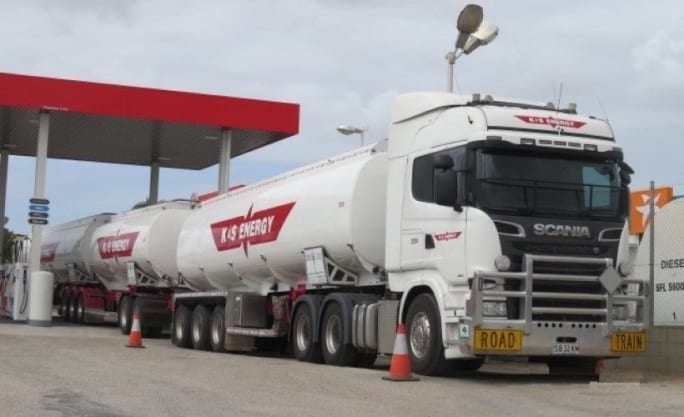
Over the past 15 years, service sector businesses including fleets began recognizing and embracing ISO standards as strategic imperatives to improve quality, efficiency, service delivery, cost control, and safety.
Photo courtesy of Bob Stanton.
Included in the standard is a strategic recipe for success outlined in a Simplified Asset Management Plan (SAMP). It documents how organizational objectives are to be converted into asset management objectives; the approach for developing an Asset Management Plan and how the plan and the organization will collaborate to support both achievement of the asset management objectives and those of the organization.
Most organizations lack the specifics outlined above and the results typically reflect departments working at cross purposes with one another by default, not by design.
Because fleet management or the fleet function “touches” so many of an organization’s outflow of service, the buy-in of all fleet stakeholders is required for success. Consequently, any asset management plan must have the support and leadership of senior management, a key tenet of this standard.
From a fleet manager’s perspective, the value of ISO 55000, just as the value of ISO 9000, cannot be debated. This approach to asset management, when and if it becomes truly an industry standard, will be a welcome benchmark for both public and private sector fleets. Its universal nature can assure continuity in asset management across the industry spectrum, maximize true asset value in utilization, operations and disposal, and by design, hold the entire organization, including fleet, accountable for successful execution that will stand the tests of due diligence, adequate justification, and return on investment.
Perhaps, in the recognition of ISO 55000, the emergence of a new industry best practice will evolve that offers a high standard of excellence worthy of consideration.
About the Author: Bob Stanton is the founder and president of Stanton Consultants. He is widely recognized as a subject-matter expert in fleet operations and is a three-time recipient of the Larry Goill Award for Fleet Innovation presented by NAFA Fleet Management Association and a Charter Member of the Public Fleet Hall of Fame.
More Operations

Avis Budget Group Deploys Neology Toll Management Technology Across Major Brands
Neology’s neoFleet platform will manage toll transactions and toll-authority operations for vehicles across Avis, Budget, Payless, Budget Truck and Zipcar.
Read More →
Fleet Personal-Use Charges Edge Higher in 2026
Nearly eight in 10 surveyed fleets allow personal use of company vehicles, while just over half of respondents report charging employees for the privilege.
Read More →
The Future of Fleet + What’s Changing Right Now | AF News Recap
Could developments overseas offer a preview of what’s coming for U.S. fleets? This week, we’re looking at the future of AI, autonomy, and electrification, plus Ford Pro’s new certified pre-owned program, smarter vehicle offboarding, and a new way for fleets to manage toll expenses.
Read More →
How to Handle Vehicle Offboarding
What do fleet managers need to do when a driver leaves?
Read More →
Fleet Manager’s Ultimate Playbook: Navigating the New Standard in OEM Connectivity
Rising operating costs, driver safety concerns, and unplanned downtime are putting unprecedented pressure on modern fleets. Discover how fleet managers use embedded OEM connectivity and real-time vehicle data to cut TCO, prevent downtime, and protect drivers without aftermarket telematics hardware.
Read More →
U.S. Bank Adds Verra Mobility Toll Management to Voyager Fleet Platform
The integration allows U.S. Bank Voyager fleet customers to manage toll payments and violations alongside fuel, EV charging and maintenance expenses.
Read More →
ADAS Prevents Crashes. But Repairs Cost More | AF News Recap
ADAS-equipped vehicles may crash less often, but they can cost more when they do. This week, we’re breaking down what that tradeoff means for fleets, plus Subaru’s first Forester Wilderness Hybrid, Nissan’s new e-POWER Rogue, and why Calstart has become Catalyst Mobility.
Read More →
Moventum Fleet Management Names Mark Iorillo Head of Sales
Iorillo brings nearly 20 years of fleet management and sales experience to the role, including previous positions at Element Fleet Management, CEI, Donlen and Ryder.
Read More →
Fleet Has a Talent Pipeline Problem. What Comes Next? | AF News Recap
Where will fleet’s next generation of leaders come from? This week, we’re looking at the industry’s talent pipeline, what certification can add to a fleet career, how to build an award-worthy track record, and the return of Automotive Fleet’s Personal Use Survey.
Read More →
Smith System Launches Driver Risk Management Program
Fleets have more driver data than ever, but identifying risky behavior doesn't necessarily correct it. Smith System's new Driver Risk Management program combines monitoring, training, and follow-up coaching to help fleets connect risk signals with driver intervention.
Read More →