




8 Insider Lease Tips
Do you know how to get relief from that mileage penalty, or how to get a bin package for next to nothing? We asked leasing companies and leasing-related service companies to give us some tips and strategies on how small fleets can save money and time when leasing their fleets.

By seeking flexible terms, businesses can ensure their leasing arrangements align with their financial strategies and operational needs.
Photo: Work Truck
When navigating the complex world of vehicle leasing it's crucial to ask for flexible terms to meet your unique business needs.
According to Dale Davis, president of Republic Fleet Services, while captive leases offer attractive residual values, independent leasing companies can provide more adaptable options. For instance, businesses in a tax bind may benefit from accelerated payments, while new or expanding businesses might prefer a step lease to conserve capital during initial lean months.
Timing also plays a pivotal role in structuring leases. Standard leases from manufacturers' finance programs and banks are typically rigid, but smart lessors can tailor lease durations to market conditions, avoiding pitfalls like new model changes or unfavorable resale conditions. By seeking flexible terms, businesses can ensure their leasing arrangements align with their financial strategies and operational needs.
1. Ask for Flexible Terms
Do you want to lease a Mercedes or BMW? A typical consumer lease through a captive is often the best way to go, says Dale Davis, president of Republic Fleet Services in Costa Mesa, Calif. High-line manufacturers will subsidize the lease with a residual that’s well above market value. However, independent leasing companies can often structure more flexible lease terms. If the customer is in a tax bind and needs to spend an extra $100,000 in the last two months of the year, see if the leasing company can accelerate payments.
Conversely, if you’re a new or expanding business with a fleet that won’t be generating income for a while, ask for a step lease. This allows the client to conserve capital by making minimal payments in the early lean months. The other key is timing. The manufacturers’ captive finance programs and banks offer flat two- to five-year leases at standard monthly intervals.
“If you asked for 46 months, they wouldn’t give it to you,” says Davis. Smart lessors will move the client out of a lease when market conditions are advantageous. They can write the lease for a certain number of months to avoid conflicts with a new model change or to make to make sure a convertible isn’t coming off lease and on the market in Omaha in February, for example.
2. Keep Bank Lines Free
Financing fleet vehicles through a bank can needlessly tie up a company’s line of credit, says Davis. Using off-balance sheet financing is a smarter way to finance fleet vehicles.
“Why use your bank lines for something that is worth less tomorrow?” says Davis.
Instead, finance fixed, long-term debt with a lease through an independent leasing company, Davis recommends. This leaves bank lines free for inventory, hiring, payroll and other day-to-day activities.
“A company with a two-million dollar net worth and a million dollars outstanding at their bank on vehicles is likely going to have a difficult time getting a half-million dollar operating line,” says Davis. “The average bank is not going to be too comfortable in lending any entity more than 50 percent of its net worth.”
3. Relieving the Excess Mileage Bind
A leasing company may be able to act as your advocate in a sticky off-lease situation with another lender or captive finance company.
“We’ll take the advocate position for you with the lender and come to them with reality,” says Davis.
A common problem is the vehicle coming off a closed-end lease with an excess mileage bill that would cover Harvard tuition for a year. Davis recalls a lessee that came to him with a three-year-old Cadillac with 180,000 miles on a closed-end lease.
"The only thing that made sense was the clothes rack hanging across the back seat,” says Davis. “It fit in perfectly.”
GMAC wanted $24,000 in excess mileage charges for a car with a residual value of $23,000. Republic stepped in and bought the car for residual then wholesaled it for $10,000, and billed the customer the $13,000 difference. The customer saved more than $10,000 over having to pay the excess mileage charge. Occasionally, leasing companies will bend their own excess mileage rules. Davis once wrote a lease with a 90,000-mile cap that was returned with 140,000 miles. The excess mileage bill came to $9,000.
“We were fully within our rights to bill them for the extra 50,000 miles,” says Davis.
Instead, Davis treated it like an open-end lease. He asked the client to pay the difference between the residual and actual wholesale value—$4,000—instead of the $9,000 in excess mileage. Leasing companies are not in the habit of relaxing these rules, so don’t think you can get out of trouble like this more than once. However, the incentive to the leasing company is to help out a loyal customer, or even better, gain some new business.
4. Ask About Web-Based Tools
The small-fleet lessee depends on a much more personal relationship with the leasing company than larger fleets do. That traditionally meant picking up the phone for answers instead of going online. However, smaller leasing companies are now developing robust Web-based applications that had been the domain of the big guys (GE Capital, Donlen, LeasePlan, etc.) and big fleets.
Motorlease, a leasing company that caters to small and mid-sized fleets, is launching the third generation of its Web site soon, says Jack Leary, president. The new Web tool will empower the small fleet operator and drivers. The program sends e-mail notifications when cars are due for replacement or registration renewal.
Drivers will be able to order cars, track personal use, process accident reports and receive preventive maintenance alerts. Though the personal touch won’t go away, “We’re making the Web-based management reporting the big companies have had for years available to small fleets,” says Leary. ULTEA, another small- to medium-sized fleet lessor, has a similar online program in place.
In addition to online ordering and status reports, the company has added driver logs in the last 18 months, says Keith Kreps, president. ULTEA also implemented employee sales over the Internet. The client’s intranet has a link to the ULTEA server, which lists vehicles for sale to company mployees.
5. Ask for Cap Money
Many leasing companies get CAP (competitive assistance program) money from the manufacturer, an added incentive to steer customers to a specific make or model. The leasing company can then pass the CAP money along to the client that has a fleet account number but doesn’t have the same buying power.
It could be an extra $2,000 off the lease, says Jim Rose, Jr., president of Leasing Services Inc. of Shelby, N.C. General Motors has been aggressive with CAP money recently, says Rose.
6. Get a Bin Package for Cheap
Manufacturers have small business programs (GM’s Business Central, Dodge’s BusinessLink and Ford Preferred) that offer cash incentives or money towards an upfit package. A good leasing company can find a solution to take the cash and get an upfit package for cheap, says Rose. Some customers don’t want a bin package that came with a new van. Rose removes them and stores them.
When a customer wants a bin package but doesn’t qualify for it, he can pull one out of his inventory and only charge the client for labor. “We know how to cut corners if that’s a serious issue,” says Rose.
7. Big Fleet Management for Small Fleets
Traditionally, fleet leasing and management companies have concentrated on servicing larger fleets in the pursuit of economies of scale. This has left small fleet operators out in the cold when it comes to obtaining the same kind of fleet management services the big guys get. A company called Network now offers these programs to small fleets through independent leasing companies. Network, a division of LeasePlan, has programs to handle maintenance and repair management, license and title management, fuel management, accident management and even MVR checks.
“If you can get it from LeasePlan for a 100-car fleet, you can get it through Network for a five-car fleet,” says Network vice president Dave Chimenti. The Network program is unique in that the leasing company is trained to sell and service Network’s management programs, and remains the client’s point of contact. The leasing company handles day-to-day issues with the fleet administrator and driver, and billing is through the leasing company.
The idea is to give the small fleet “national coverage with a local presence,” says Chimenti.
The leasing company collects vehicle and driver data and enters it into the Network system. The leasing company then has access to Network’s Web tools to run fuel exception reports, handle accident claims electronically and analyze depreciation, maintenance and repair. With these metrics the leasing company can help the client better manage the fleet.
8. Upstream Remarketing Flows Down to Small Fleets
Fleets can realize better returns on off-lease vehicles through employee sales. But without the economies of scale, small fleets have lagged behind their large fleet brothers in implementing programs to facilitate “upstream remarketing.”
Driveitaway Inc., one of the pioneers in upstream remarketing programs, has partnered with Wilmar Inc., an independent leasing company based in Charlotte, N.C. Driveitaway now offers its reDrive remarketing platform to Wilmar’s client base of small fleets through LeasePlan’s Network division. The reDrive program allows Wilmar’s clients to offer their end-of-lease cars, vans and trucks for sale to their drivers and employees before they come off-lease.
With reDrive, prospective buyers can view information about each vehicle online, including a third party inspection report with multiple pictures and a full maintenance history.
Originally posted on Work Truck Online
More Vehicle Research
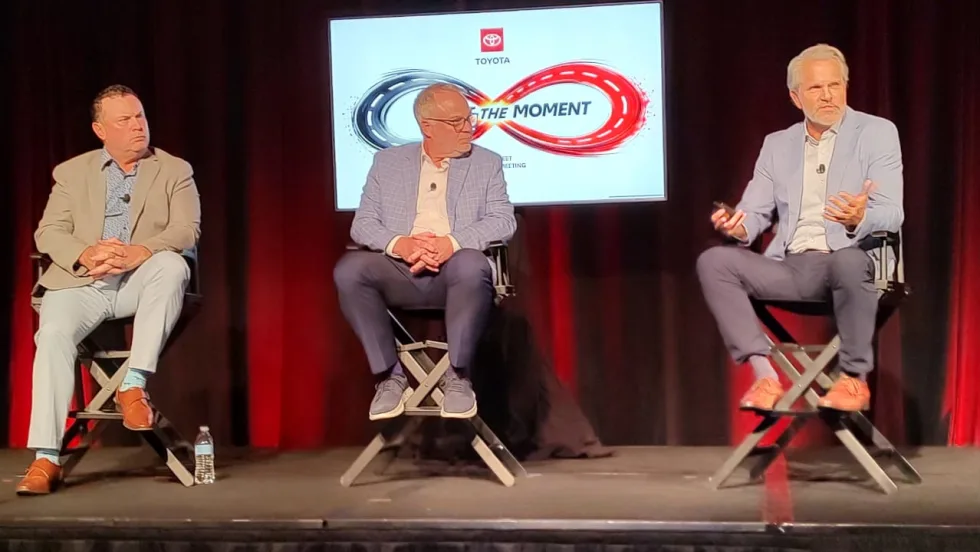
Toyota Fleet Briefs Fleet Leaders on Rapidly Growing Fleet Service Program, Successes of Hybrids, and Supply
During the annual Toyota Fleet Executive Meeting, fleet leaders learned about Toyota’s legacy of driving fuel efficiency with hybrids, its investments in U.S. production, the early success of Toyota Fleet Service Advantage, and much more.
Read More →
NAFA Launches CAFM Scholarship Program for Fleet Professionals
The new program will award up to four scholarships annually to help eligible fleet professionals cover the cost of Certified Automotive Fleet Manager certification.
Read More →
Your Fleet Experience Deserves a Vote in the 2027 Fleet Awards
Cars, trucks, vans, SUVs, and upfits. Help choose the 2027 fleet award winners and unlock early-access resources for voters. Ballots close December 31.
Read More →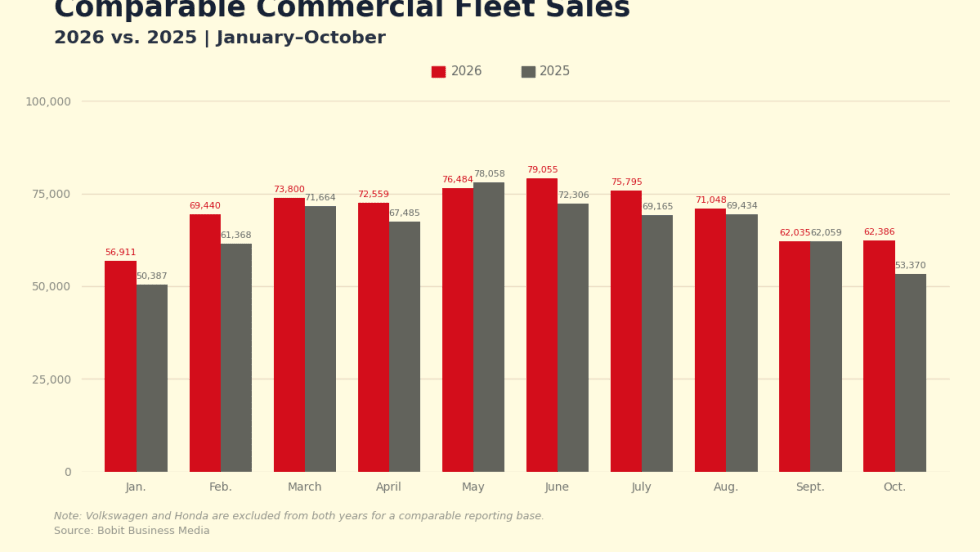
Commercial Fleet Sales Rebound 16.9% Through October
October's stronger results lifted commercial fleet sales growth to 6.7% through the first 10 months of 2026.
Read More →
Which Vehicles Earn Your Fleet’s Vote? Voting Opens for 2027 Fleet Vehicle of the Year
Which vehicles earn your fleet’s vote? Cast your ballot to unlock early access to our analysis of ownership costs across 55 vehicle nameplates.
Read More →
Crash Tests, Catalytic Converter Theft & Fleet Safety | AF News Recap
A stolen catalytic converter can cost a fleet far more than the replacement part. This week, we're exploring how to reduce theft-related risk, what fleet managers learned from live IIHS crash testing, the 2027 Jeep Compass's new safety features, and why supporting original industry reporting matters.
Read More →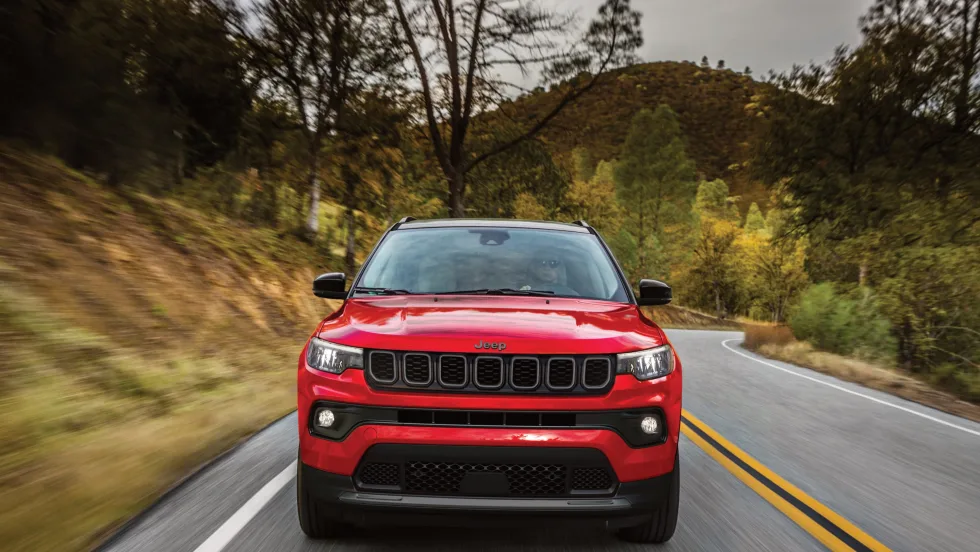
2027 Jeep Compass Adds Standard Driver-Assistance Features, Starts at $31,985
The 2027 Jeep Compass adds standard adaptive cruise control across the lineup, along with additional technology and equipment options on select trims.
Read More →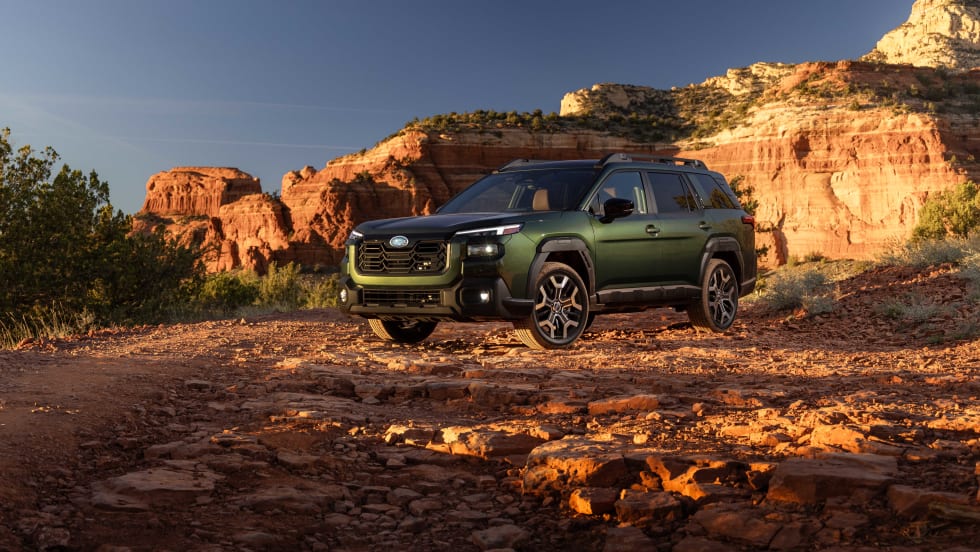
2027 Subaru Outback Adds Base Trim, Lowers Pricing Across Lineup
The 2027 Outback starts at $32,995, with price reductions on several trims and expanded availability of hands-free driver-assistance technology.
Read More →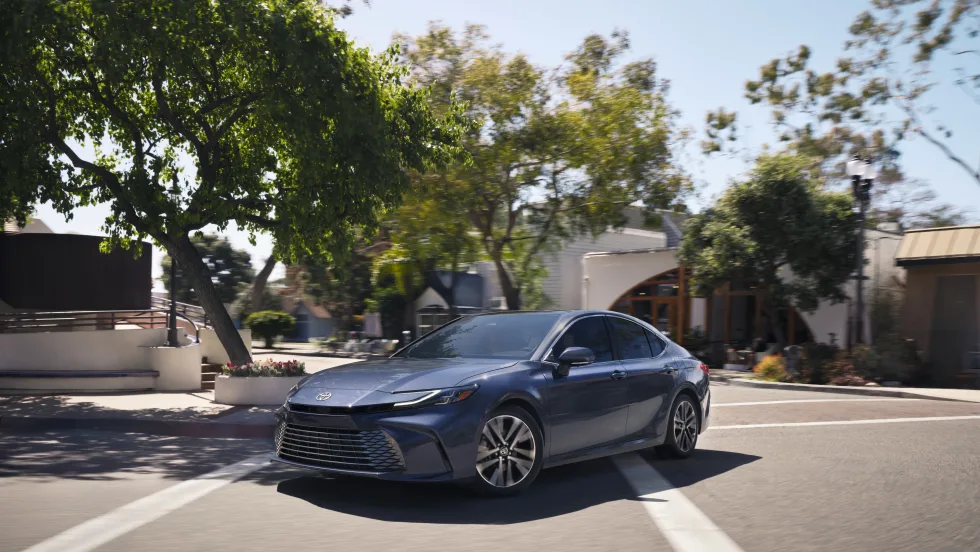
2027 Toyota Camry Offers Hybrid Powertrain Across Five Grades
The 2027 Toyota Camry is a carryover with new pricing.
Read More →
Chevrolet Updates 2027 Trax and Trailblazer with More Standard Safety Features
Chevrolet is updating two of its smallest SUVs with added driver-assistance technology, redesigned interiors, and revised trim options. The changes could add more safety equipment as standard for commercial fleets, while a new Trailblazer configuration adds another all-wheel-drive option.
Read More →