




8 Catalysts to Connected Vehicle Data for Fleets
The data is there, but harnessing it isn’t so simple. These market trends are jumpstarting fleets’ ability to turn connected vehicle data into actionable insights.


Industry-wide standardization of data will stimulate the switch, but the wholesale changeover to embedded modems isn’t imminent.
Photo: Getty Images
How will fleets reap the benefits of connectivity?
The “connected car” started as a vague promise, but its benefits are finally being realized in many areas of fleet: improved safety and efficiency, regulatory compliance, vehicle access and sharing, determining fleet suitability for EVs, better tools for preventive and now predictive maintenance, assimilating video telematics, creating algorithms to lower fleets’ total costs of ownership, and more.
We are only beginning to scratch the surface. Yet harnessing the data across multiple manufacturers and models — and then making sense of it all — isn’t so simple. The following eight market trends are jumpstarting fleets’ ability to turn connected car data into actionable insights.
Remember, these aren’t the end benefits of connected vehicles, but the catalysts to get there.
Catalyst 1: Embedded modems
About 85% of new vehicles come with OEM-embedded modems straight from the factory, and the first operational benefit is clear — to avoid the installation and uninstallation of aftermarket devices. This direct connection also allows for more flexibility and pinpointed services, such as “waking up” the vehicle to identify location in the order-to-delivery process and remotely verify a car’s mileage or engine health. With embedded modems, those services could be offered without a full-scale telematics subscription.
However, no two embedded modems are alike, and the data they transmit can be vastly different from manufacturer to manufacturer and even model to model. For this reason, the vast majority of data for fleets is still pulled from aftermarket modems.
Catalyst 2: Automotive Data Service Providers
This diversity of data sources has led to the rise of automotive data service providers such as Motorq, Wejo, Otonomo, and Smartcar. These startups are the connective tissue between vehicles and the consumers, dealers, fleets, and the automakers themselves that need the data.
While their business models differ, in general their cloud-based platforms aggregate and standardize data across multiple OEMs. They then offer a streamlined pipeline of normalized data to third-party developers, TSPs, fleet management companies, and the OEMs themselves, which then use the data for numerous applications.
Telematics service providers (TSPs) are also partnering with OEMs for direct access to their modems. Industry-wide standardization of data will stimulate the switch, but the wholesale changeover to embedded modems isn’t imminent.
Catalyst 3: App Marketplaces
Larger TSPs such as Geotab, Samsara, Verizon Connect, and most recently GPS Trackit are growing marketplaces of third-party applications that address diverse areas of fleet such as DOT compliance, fuel management, video telematics, route planning, driver training, maintenance, and more.
For fleets, the benefit to these marketplaces is access to solutions through a pre-integrated dashboard (think iPhone apps) on their existing telematics systems. This foregoes the need for expensive enterprise solutions with separate connections for each.
Catalyst 4: OEM Fleet Telematics
Automakers are also entering the market as service providers to leverage data from their vehicles. While much of the focus here is on consumer-facing infotainment apps, Ford and General Motors offer their own versions of fleet telematics systems.
Automakers understand their fleet buyers have vehicles from multiple brands, many of which are already connected through robust aftermarket telematics systems. These OEMs therefore aren’t necessarily trying to compete with the established TSPs. However, as automakers are sitting on rich data to push directly through their embedded modems, they’re offering their own applications that address specific fleet needs such fuel levels, tire pressure monitoring, and diagnostic trouble codes (DTCs).
This direct connection will become more prominent with greater EV penetration, allowing fleets to monitor battery state of charge, manage charging, and analyze overall performance. (Regarding multi-branded fleets, GM’s OnStar Vehicle Insights can now be used with most non-GM vehicles via a plug-in OBD-II adapter.)
Catalyst 5: Penetration of 5G
Fleets’ bandwidth needs are growing. A fleet device on a 2G network might have required one megabyte a month; that quickly grew to 10 MB a month. Vehicles today can generate as much as 25 GB of data per hour. While existing 3G and 4G networks are handling the requirements of connected car services today, the data pipeline must increase to accommodate ever-increasing data needs.
With 5G, which is essentially 100 times faster than 4G with one-hundredth the latency, fleets will be able to simultaneously connect more devices and sensors to gain much greater real-time visibility of fleet activity. This lightning-fast data transfer turns decision-making from reactive to predictive and facilitates new trends such as video telematics and predictive maintenance.
Down the road, increasing levels of autonomy make 5G essential.
Catalyst 6: Smart Components and Devices
A new and growing factor in maintenance is smart components, in which IoT sensors are available on parts such as tires, brakes, batteries, and transmissions that can transmit the health of those parts. The trend extends to smart devices found on everything from trash dumpsters and farm equipment to traffic signals and vocational tools.
The data from these edge computers increases the flow of information into the fleet operation exponentially. The task for fleet managers is to funnel all these separate signals into a single dashboard for better decision-making.
Catalyst 7: Over-the-Air Updates
For vehicles, over-the-air (OTA) updates alleviate downtime by making changes to vehicles’ electronic control units without the owner having to go to a dealer or service center. OTA updates started as ways to refresh infotainment features such as maps and in-vehicle apps and are expanding into engine and drive controls, particularly for electric vehicles.
More types of OTA updates are permeating, yet the industry is proceeding with caution — particularly when updating componentry on any moving vehicle.
Catalyst 8: Opt-Ins for Big Data
Fleet data had traditionally been siloed. In the pre-telematics era, the data was sitting in ledgers and then hard drives to be analyzed by the owners of that data to make better decisions. Fleet management companies then gathered metrics from fleet customers to make broad comparisons.
With the growth of telematics, fleet operators could collect larger data sets and parse them: First by region, driver, fuel type, mileage, and vehicle class, and then by engine characteristics, upfit type, topography, weather, traffic density, revenue-per-stop, and more. These data sets could then be analyzed in multiple permutations.
But to generate insights that can influence vehicle design, change how fleets buy, spec, and maintain vehicles, and bring about core operational transformations, the data needs to get even bigger. This means drawing data from hundreds of thousands of vehicles across hundreds of fleets, user types, and regions.
For this to be possible, fleets and their drivers need to opt in to allow their data to be aggregated and analyzed. This is happening — some TSPs, fleet management information systems providers, and other third parties are offering fleets the choice to opt in to release their data to the provider. The benefit to fleets, of course, is that allowing their data to be benchmarked against similar use cases will yield a wealth of intelligence.
Data privacy is still paramount, so the data must be managed with extreme caution and stripped of personally identifiable information (PII). With seemingly ever-increasing data breaches, the task of securing the data is not to be taken lightly.
Going further to analyze this data against non-vehicle data — such as data from IoT sensors in multiple device types across whole cities — broadens the value exponentially. When the data gets this big, the insights become truly transformative.
More Fleet Forward
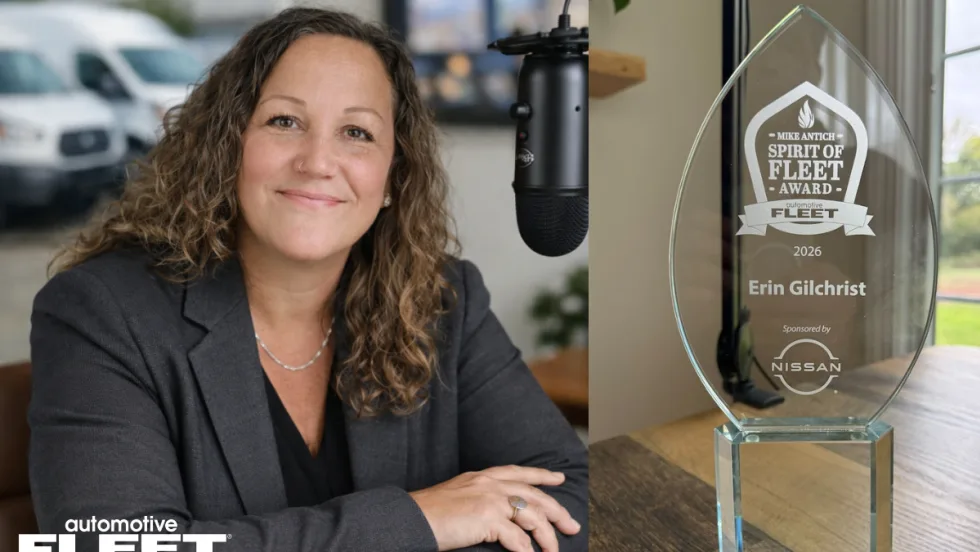
Erin Gilchrist Receives Mike Antich Spirit of Fleet Award
Last week at AFLA in Vegas, Erin Gilchrist received the inaugural, brand-new Spirit of Fleet Award.
Read More →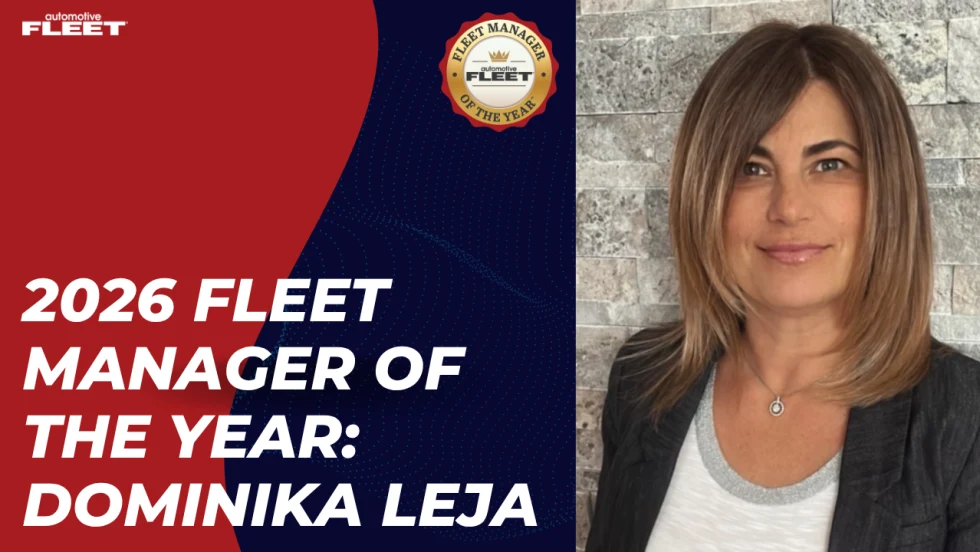
Dominika Leja Named the 2026 Fleet Manager of the Year
The AstraZeneca associate director of fleet was recognized for her leadership in fleet electrification, cost savings, and operational transformation.
Read More →
Jamie McKay Named the 2026 Fleet Visionary Award Winner
The Aptive Pest Control fleet manager was recognized for her approach to operations, data, lifecycle management, and driver needs.
Read More →
Fleet Forward Conference Introduces One-Day Passes for 2026
New one-day registration gives fleet professionals the flexibility to attend Tuesday, Wednesday, or Thursday, with passes available for $199 through Sept. 18.
Read More →
Vibe Coding: When Fleet Managers Become Software Builders
Five fleet professionals — none with programming skills — discuss how they’re using AI to build fleet solutions in-house and in a fraction of the time.
Read More →
Fleet Forward Conference Tackles Fleet Industry’s Growing Leadership Gap
This session will examine succession planning, knowledge transfer, and the skills the next generation of fleet leaders will need as veteran professionals leave the industry.
Read More →
2026 Fleet Manager of the Year Finalists Announced
Who are the 2026 Fleet Manager of the Year finalists?
Read More →
John Rossant to Deliver Opening Keynote at 2026 Fleet Forward Conference
The CoMotion founder will draw on developments across Europe, China, the Middle East, and other international markets to identify trends that could influence how U.S. fleets plan for the coming decade.
Read More →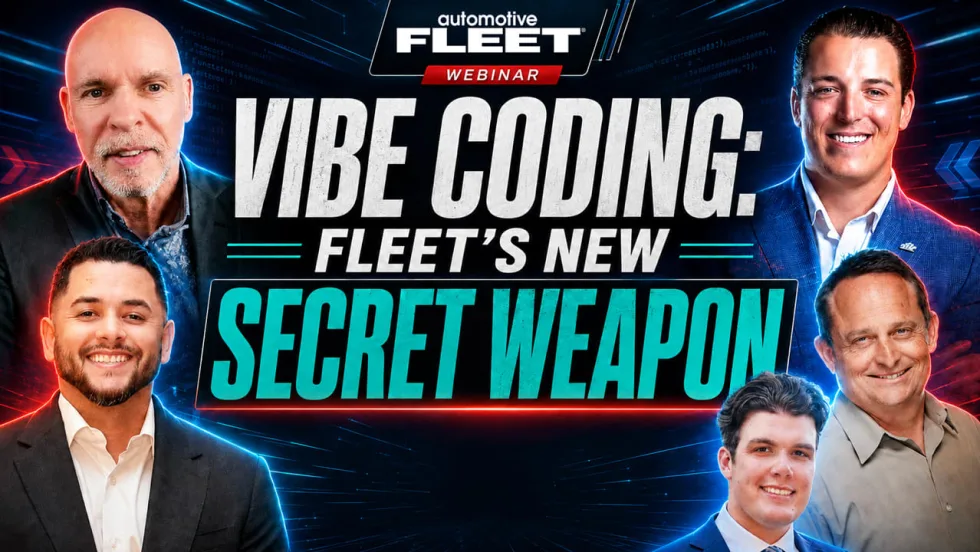
How to Build Custom Fleet Tools With AI and Vibe Coding [Webinar]
A new Automotive Fleet webinar explores how fleet managers are using AI and vibe coding to automate routine work and create simple operational tools without traditional programming skills.
Read More →