




5 Global Trends for Shared Mobility in 2021
Invers identifies subscription services, e-bike and moped sharing, corporate carsharing, and greater penetration of digital services as trends for the shared mobility market this year.


The need for flexible individual mobility is growing, especially due to the pandemic.
Photo via Depositphotos.
For the shared mobility industry, as for many others, 2020 was primarily defined by the pandemic. However, Invers, a global provider of automated vehicle sharing, believes 2021 will be different.
Invers has identified five trends that will have a decisive impact on the shared mobility market this year:
1. Subscription Services
The need for flexible individual mobility is growing, especially due to the pandemic. Customers want to own their own vehicle but prefer not to tie themselves down; they want to rent for short periods with transparent prices and low fixed costs. Car subscriptions close this gap between rental or leasing vehicles and owning a car. There is a lot of momentum in the market: providers such as Cluno and Vive la Car have been around for some time.
VW carsharing service WeShare has recently responded: as of recently, customers can purchase monthly cancellable subscriptions and benefit from cheaper rates. Finn.auto founder Max-Josel Meier has been offering a subscription model since last year and has just convinced investors to invest another 20 million euros. Chinese provider Geely has announced its European subscription offering Lynk for 2021.
2. Moped Sharing
Since 2012, mopeds have been a constant in the sharing market, so far still at an expandable level. Especially in urban areas, user numbers are currently on the rise. According to the latest moped sharing study, the number of shared mopeds worldwide has risen by 58% in the past year from 66,000 to 104,000 vehicles today, and the number of registered users has even increased from 5 million to 9 million, i.e. by 80%.
The vehicles are robust and durable, comfortable and make finding a parking space easy. In addition, providers have not yet tapped into many cities and regions: in the UK, France, Italy, and throughout Eastern Europe, there is still considerable untapped opportunities.
3. E-bikes
E-bikes are taking over the streets. Not just since the pandemic, but many cities like Paris and Cologne are converting car lanes into bike lanes. In the next step, they have now reached the shared mobility industry. For example, Lime and FreeNow added e-bike sharing to their program in Hamburg as early as September 2020.
In Berlin, Wheels built their own vehicle — a combination of e-scooter and e-bike. At the end of 2020, Dott announced that it will offer e-bike sharing to its customers in London and Paris from March 2021, in addition to its successful scooter sharing services. According to industry insiders, other competitors are already waiting in the wings.
4. Corporate Carsharing
Recently, the topic of corporate carsharing has been very quiet. This will change in the coming year. The concept will make a powerful comeback to replace traditional corporate leasing. Deutsche Telekom, for example, wants to make fewer individual company cars and more efficient, holistic mobility offerings that also support CO2 targets. Carsharing and shuttle services play a crucial role in this.
5. Digital Acceptance
Home office, distance learning, online shopping, digital delivery services, coronavirus app — the pandemic has significantly accelerated the acceptance of digital offerings. The shared mobility industry, whose business model is largely digital, is also benefiting from this.
This is especially true for customer relations, which take place almost exclusively via smartphone: search, book, unlock — all via app. Cancel, unsubscribe, rate — also via app. The more potential users become accustomed to digital offerings, the more willing they are to reach for their smartphone for mobility as well, in order to flexibly use their scooter, moped, bike, or car.
More Fleet Forward

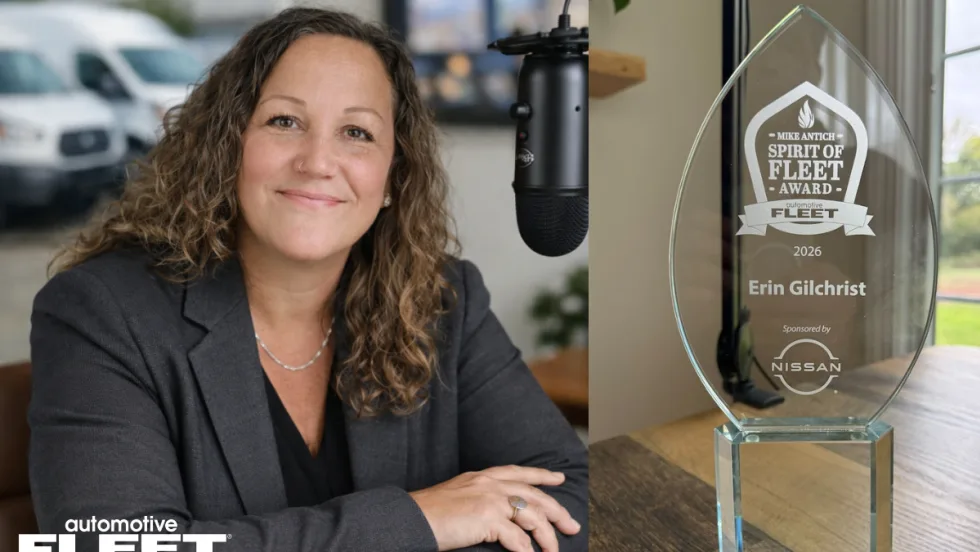
Erin Gilchrist Receives Mike Antich Spirit of Fleet Award
Last week at AFLA in Vegas, Erin Gilchrist received the inaugural, brand-new Spirit of Fleet Award.
Read More →
Dominika Leja Named the 2026 Fleet Manager of the Year
The AstraZeneca associate director of fleet was recognized for her leadership in fleet electrification, cost savings, and operational transformation.
Read More →
Jamie McKay Named the 2026 Fleet Visionary Award Winner
The Aptive Pest Control fleet manager was recognized for her approach to operations, data, lifecycle management, and driver needs.
Read More →
Fleet Forward Conference Introduces One-Day Passes for 2026
New one-day registration gives fleet professionals the flexibility to attend Tuesday, Wednesday, or Thursday, with passes available for $199 through Sept. 18.
Read More →
Vibe Coding: When Fleet Managers Become Software Builders
Five fleet professionals — none with programming skills — discuss how they’re using AI to build fleet solutions in-house and in a fraction of the time.
Read More →
Fleet Forward Conference Tackles Fleet Industry’s Growing Leadership Gap
This session will examine succession planning, knowledge transfer, and the skills the next generation of fleet leaders will need as veteran professionals leave the industry.
Read More →
2026 Fleet Manager of the Year Finalists Announced
Who are the 2026 Fleet Manager of the Year finalists?
Read More →
John Rossant to Deliver Opening Keynote at 2026 Fleet Forward Conference
The CoMotion founder will draw on developments across Europe, China, the Middle East, and other international markets to identify trends that could influence how U.S. fleets plan for the coming decade.
Read More →
How to Build Custom Fleet Tools With AI and Vibe Coding [Webinar]
A new Automotive Fleet webinar explores how fleet managers are using AI and vibe coding to automate routine work and create simple operational tools without traditional programming skills.
Read More →