




5 Fatal Career Mistakes Fleet Managers Make (and How to Avoid Them)
Even the best managers commit errors, and sometimes they’re big enough to stop a career cold. Here are five career mistakes fleet managers often make and steps they can take to avoid making them.
Let’s face it — fleet management is one of the most interesting and rewarding careers out there and an excellent stepping stone to greater responsibilities. The talents and experience needed to be a successful fleet manager are a rare combination of communication, technical knowledge, administrative ability, negotiation skills, and perseverance.
It is often said by experienced fleet managers that the industry “gets in your blood,” and it isn’t unusual for a fleet manager to move onto bigger and better things on some other “side of the desk” in the fleet industry.
However, as with any other career path, roadblocks, challenges, and decisions must be faced. If a fleet manager misses the target, the result can stop career progress in its tracks. Some career mistakes are more generic management errors, while others are specific to fleet. All, however, can — and must — be avoided.
Landing any new job can be a heady time — getting acclimated to a new opportunity and the desire to “clean up the town” looking for savings, correcting the mistakes made by a predecessor, or better still, building a fleet operation where there once was none.
At some point, though, the fleet manager is no longer “new” and now owns the operation. Savings become more difficult to find as the law of diminishing returns takes hold and most excess cost has been wrung out. At this point, with the fleet running relatively smoothly, policy and procedure in place, and vendors providing key services, it is very easy for the fleet manager to become complacent, to put it all on cruise control and relax. Definitely a bad move.
Becoming comfortable or “resting on one’s laurels,” can be disastrous. Too many changes occur too often in the fleet world to sit back and watch. Fuel prices spike, resale values tank, government regulations change, a key employee leaves. Unprepared, a fleet manager can be left scrambling to catch up, and solutions can take a long time to take hold as expense mounts. Managers begin to ask questions, demanding to know what action is being taken and when the situation will be brought under control. Comfort is replaced by anxiety, even panic, as the fleet manager looks for answers and wonders how things got so out of control.
Complacency is the enemy of excellence. Never assume the fleet is under control. Never believe all cost savings have been achieved. Keep on top of industry news, know what new models might be helpful, and don’t throw salesmen out the door. They may have a program or product you can use. Remember the early days, when it was easier to focus and the excitement of a new challenge was fresh. Treat each day as the first day on the job and never stop learning.
Fleet suppliers can provide a program, service, or product for nearly every situation or function found in fleet management. From leasing to maintenance to fuel, there’s a program for every need. Suppliers can provide expertise, systems, and staffing most fleet managers can only dream of. Indeed, in today’s “do more with less” environment, few fleets can be run without external suppliers.
That said, it is tempting to lean too heavily on suppliers or dole out too many tasks to outsourcing, just to keep the desk a bit clearer and to remove one’s “fingerprints” from key decisions.
Turning over the entire fleet to suppliers can be a fatal mistake. Not only does it open up the fleet manager to criticism when things go wrong (and the fleet manager is helpless to prevent it), but it also can make a senior manager wonder “what, exactly, does this manager do all day?” The lessor orders new vehicles, pays for them, delivers them, manages their maintenance and repair, fixes them when they crash, and sells them when they’re replaced.
Such questions can lead to serious concern that the company is paying for a manager who isn’t doing much management. And that concern can lead the company to do what seems eminently logical: if the fleet manager has ceded so much of his or her responsibilities to suppliers, the company may as well finish the job.
Remember the basics of outsourcing: clerical and administrative tasks can — and should (wherever possible) — be outsourced, but never management responsibilities. Management authority consists of those responsibilities that involve decisions on how and when to expend company resources: time, money, personnel, and assets.
Place firm limits on what a supplier can do and track performance every day. Use suppliers as tools. Build a successful fleet operation using those tools, but build it yourself.
Fleet managers, and they alone, should make all decisions on what vehicles to provide, when to replace them, whether to repair them (and if so, for how much and by whom), to whom they’re assigned, and how they’re sold when taken out of service. The list of fleet managers who have outsourced themselves out of a job is long and growing, and their companies aren’t better off for it. When all is said and done, suppliers’ first loyalty and concern is for themselves, their profitability, their headcount, and their success — not that of their customers. They simply cannot care for customers’ money with the same concern and focus as can a customer’s own employee.
Things change at a sometimes dizzying pace in the fleet industry, and it’s easy to be left behind. In the past, new model-year introductions were limited to the fall, today new models are launched throughout year. Fleet managers need to know what vehicles are available and whether they can be useful. In the public sector, government rules and regulations are a constant challenge, with “green” initiatives by fiat rather than choice. With new products, programs, techniques, and benchmarks constantly changing, staying informed is required to be a successful manager.
Here’s a frightening scenario: the senior vice president calls the fleet manager up to his office. Sitting with him is the sales executive for a major fleet lessor who has contacted the VP directly to make her pitch, replete with cost savings estimates and a carefully constructed plan of action.
“How do these numbers compare with our cost figures?” the VP asks. “Can they really save us this kind of money?”
Now the Catch-22: If the fleet manager says no, he or she had better be prepared with the company’s actual cost numbers, and they’d better be lower. If the fleet manager says yes, it immediately begs the question, “Well, what am I paying you for?”
Staying informed includes knowing your fleet cost figures, what suppliers are selling, and why you’re doing what you do now. Another nervous moment can arise when a fleet manager’s supervisor comes to him or her with a solution to a problem of which the fleet manager is unaware.
Fortunately, it is far easier to stay in the loop on industry news and trends today than 20 years ago. The Internet makes a world of information and opinion available to a fleet manager at the click of a mouse. Industry associations provide education and training, and facilitate networking with peers. No matter what problem, issue, or challenge a fleet manager may face, someone has already addressed it and is usually more than willing to share ideas. Avoid “not invented here” stubbornness; it is far better to learn and implement solutions from others than to wrestle with a problem alone. Most importantly, a fleet manager is committing career suicide if he or she allows a solution, a new industry idea, or a new product or service to be suggested by someone else.
There’s an old adage, that “character is doing what’s right when no one is looking.” There is much truth to that saying; however, building a career on it in a literal sense can propel that career into a brick wall. Yes, it’s important to do what is right, but if no one knows what you’ve done or how well you’ve done it, don’t expect a promotion.
Sometimes, a fleet manager simply assumes his or her efforts in controlling expense and keeping vehicles on the road are known by those whose opinion counts. But equally often, management does not know or the short summaries they ask for don’t do justice to the effort.
Thinking about a fleet manager’s basic function — providing safe, dependable transportation at the lowest cost possible — it is relatively simple to find salient information, presented in a simple, concise manner that presents a clear picture to senior management of current efforts being made and their success.
Cost reduction should be tracked as part of a regular communication with management, i.e., last year, vehicle variable expense was X cents per mile; this year, it is Y cents per mile; and this translates to Z dollar savings. Accident ratios, average repair costs, and depreciation rates are all excellent figures that allow a fleet manager to “strut their stuff” for management.
Don’t wait to be asked for information; offer it regularly. When success can be documented, make certain management knows about it. Allow for senior managers’ busy schedules. They don’t have the time to review voluminous reports, spreadsheets full of numbers, or lengthy written tracts. Use graphs and focus on trends. If a VP can see that over the past eight quarters vehicle expense is trending downward with a glance at a graph, it will tell far more than a five-page written report. Focus almost entirely on results, not process.
Simple, straightforward communication, which shows rather than tells, will not only keep management informed, but will let them know the fleet manager is “on the case” and the job is being done.
The quickest way to ensure a fleet manager remains a fleet manager and passed over for promotion or offered the opportunity to take on additional responsibilities is to convince management that he or she is the only one capable of the job. One sign of managerial incompetence is the fear of hiring top staff or mentoring a subordinate. Placing blame, keeping “fingerprints” off decisions that go bad, are hallmarks of a manager hitting a career dead-end.
A corollary to this tenet is the fleet manager who becomes agitated when anyone, either inside or outside the company, goes “up the chain of command” to discuss fleet matters. Managing in fear — fear that a staffer has designs on the job, fear that a supplier might go over the fleet manager’s head to discuss the fleet with a supervisor — can cause isolation and even stereotype the fleet manager as “the car guy.”
Don’t ever be hesitant to hire top talent. Keep staff informed. Crosstrain them. Make certain they know everything that’s going on in the department. Include them in meetings and discussions about new programs and ask for their input.
Aside from exhibiting the talent and background needed for greater responsibility, a key element in getting that promotion is to make certain the company knows someone is ready and able to take your place. If management asks you to join in a meeting, give staff a recap of what was discussed and outline the next steps.
Fleet management isn’t brain surgery, nor is it kindergarten. It requires a unique and eclectic set of skills — skills that can be applied to any number of other careers. However, fleet managers who ignore these five missteps can make certain that one of two things happen: they won’t keep their job very long or they’ll keep it far longer than they ever wanted.
More Operations
Managing Fleet Costs in an Era of Permanent Volatility
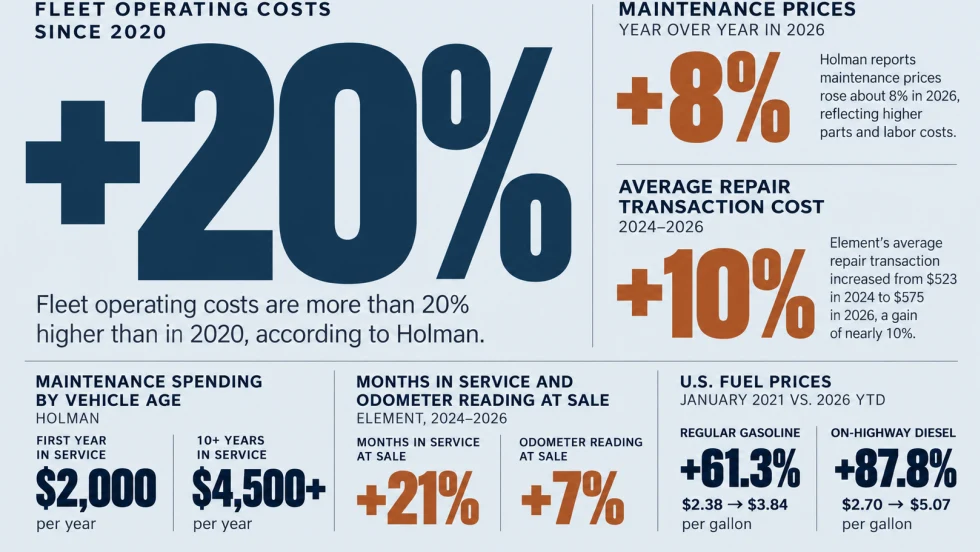
Fleet operating costs have risen more than 20% since 2020, raising a key question: When does extending a vehicle's service life stop making financial sense?
Read More →
The Next Evolution of Fleet Management: Autonomous Operations
This opening keynote session at the Fleet Forward Conference highlights the future of autonomous driving for fleets.
Read More →
How to Reduce the Total Cost of Risk From Catalytic Converter Theft
A stolen catalytic converter can cost fleets far more in downtime and lost productivity than in repairs. A total-cost-of-risk approach can help fleet managers quantify their exposure and prioritize theft prevention.
Read More →

Personal-Use Charges Rise as Vehicle Values Fall | AF News Recap
Personal-use charges are climbing, wholesale used-vehicle values are declining, and commercial fleet sales growth is slowing. This week, we're breaking down the latest fleet data, plus how Element Fleet Management is helping Waymo prepare for its first Canadian robotaxi market.
Read More →
Here's When You Should Make an Exception to Fleet Policy
Fleet policies are designed to create consistency, but not every driver or situation fits neatly within standard rules.
Read More →
AI-Native or AI-Acquired: What Should Fleet Managers Look for in an AI Platform?
Six questions can help fleet managers look beyond AI marketing claims to evaluate integration, data access, and real-world operational performance.
Read More →
A buyer's guide to fleet management software in 2027
Buying fleet management software in 2027 means looking beyond features and price. As fleet operations, technology and expectations evolve, this guide explores what today’s fleet professionals should consider when choosing a system that can deliver value now and adapt to what comes next.
Read More →
What Will Shape the Next Era of Fleet Management?
EVs, AI, and autonomous vehicles are reshaping fleet management. Discover what’s ahead—and how fleet leaders can prepare for the next era.
Read More →
How Fleets Can Recruit and Train Veterans for Technician Roles
Here's how the technician shortage has affected uptime for fleets, and what to do about it.
Read More →
Avis Budget Group Deploys Neology Toll Management Technology Across Major Brands
Neology’s neoFleet platform will manage toll transactions and toll-authority operations for vehicles across Avis, Budget, Payless, Budget Truck and Zipcar.
Read More →