





Dig Deeper: Advancements in Tire Design
4 Ways to Automate Tire Safety & Efficiency
New tire technologies are replacing manual processes with more efficient ways to capture tire tread depth, understand potential safety issues remotely, and keep accurate maintenance records.
December 12, 2022
Proper tire management is critical for fleets, dealers, and drivers alike to maintain safety on our roadways.
Photo: Canva
4 min to read
In 2020, defective tires caused 4,350 car crashes in Texas alone, including 85 fatal crashes and nearly 700 injury crashes. It’s clear that proper tire management is critical for fleets, dealers, and drivers alike to maintain safety on our roadways.
Tire Alerts in Real Time
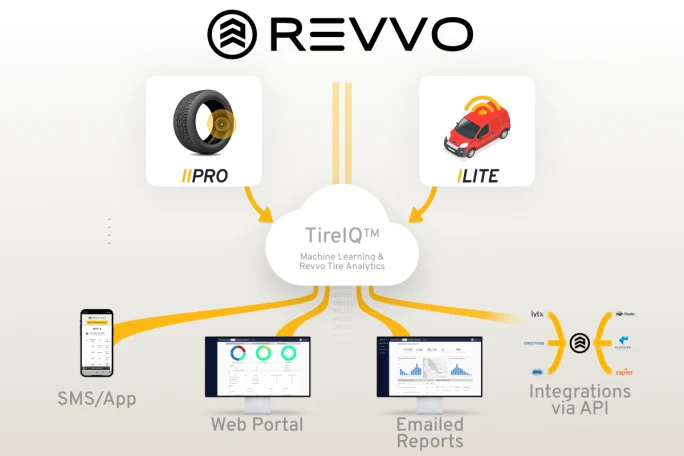
Revvo’s solution uses mounted sensors that transmit to an AI-enabled cloud to gather tire-related information from telematics and onboard vehicle systems, delivering insights fleets can act upon instantly.
Photo: Revvo
Revvo Technologies, which offers an AI-driven tire management solution, provides fleets data into tire tread, pressure, temperature, and critical issues remotely and in real-time by sending alerts and reports when inspections or actions on tires are required.
Revvo leverages an artificial intelligence engine called TireIQ to process, analyze, and deliver insights through its web dashboard, app, SMS, email, and API integrations with telematics and fleet software solutions like Geotab and Fleetio. Tire data is generated through Revvo’s offerings:
Revvo PRO, a patented sensor mounted in the tire, provides data from every revolution of a tire including tread (<1/32”), pressure, temperature, load, road surface, and alignment.
Revvo LITE, a telematics-only data solution developed for light-duty vehicle applications that use TireIQ’s machine learning models (developed over 50 million miles of tire revolutions).
To date, Revvo has seen a 90% reduction in tire-causing downtime, a 50% increase in operational efficiency, over 10% increase in tire life, and an 11% return on investment, according to Sunjay Dodani, CEO and co-founder. Revvo has measured this impact from tires used by autonomous vehicles, last-mile delivery vans, mid-mile trucks, Class 8 trucks and trailers, and specialty vehicles.
Record Tread Depth Instantaneously
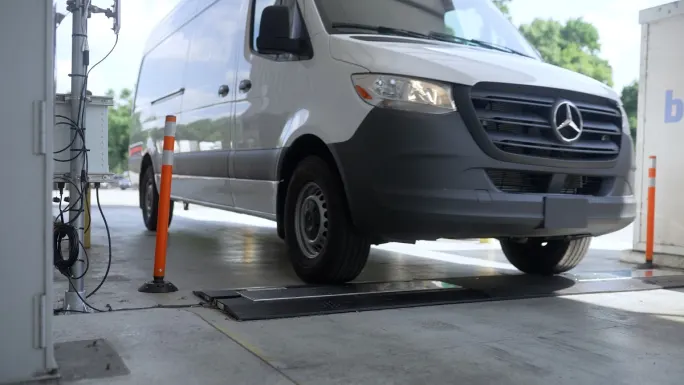
Bridgestone Americas’ Last Mile Tire System automates the process using a digital tread reader that measures tread depth on each tire when vehicles roll over it.
Photo: Bridgestone
Measuring tire tread depth is important for safety, but it’s been a manual undertaking. Bridgestone Americas’ Last Mile Tire System automates the process using a digital tread reader that measures tread depth on each tire when vehicles roll over it.
Digital tread readings provide data to optimize when the tire should be changed — staying within DOT depth regulations of 2/32nd of an inch yet conserving fleet budget if there is enough tread depth left on the tire. Analyzing tread data will also help fleets understand unusual wear patterns and act accordingly.
The Bridgestone system will dispatch service automatically when low tread depth is detected. Bridgestone offers the service overnight so fleet managers don’t have to take a vehicle off the road.
A pay-as-you-go model allows fleets to only pay for tire use, better aligning a delivery fleet’s expenses to revenue. The service is optimized for delivery fleets, though other fleet types can use the system, Bridgestone says.
Another tire tread detection solution is from Tyrata’s IntelliTread Drive-Over System and Tyrata.io platform. Its new feature creates digital tire profiles of every tire in the fleet and automatically alerts fleet managers when the wear is uneven or mismatched so tires can be rotated.
Tread Readings Go Mobile
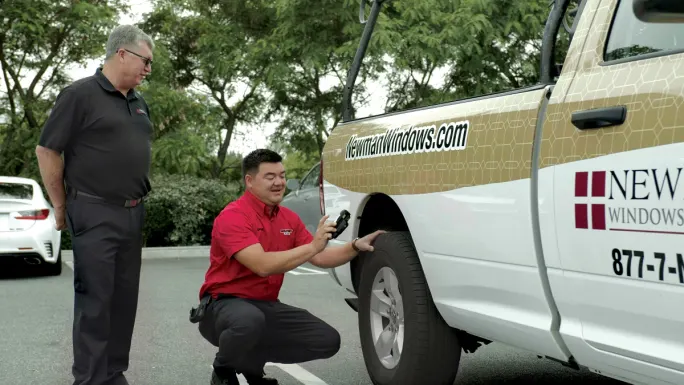
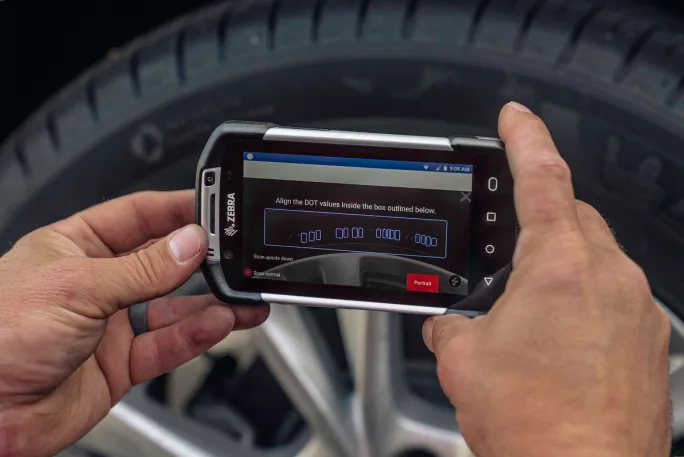
Last year, Discount Tire partnered with Zebra Technologies for a new mobile reader, now at over 1,000 stores.
Photo: Discount Tire
Leveraging new technology to keep drivers safe, Discount Tire introduced a mobile tire tread depth reader in 2021 with Zebra Technologies. It launched across 1,100 stores to help ensure customers receive accurate tire readings.
Mobile tire tread depth readers are one of many technological advancements from the tire retailer, which also includes Treadwell, an online tool to personalize tire-buying decisions. Discount Tire’s website and mobile app make it easy for customers to reduce in-store wait times by as much as 30% when they buy and book online.
Using Smartphones and OCR for Tire Health
Anyline’s OCR scanning device associates optical information from the tire with images documenting the health of the tire.
Photo: Anyline
Collecting tire data can be a tedious and potentially error-prone manual process, such as writing information down on paper or adding it to an Excel spreadsheet. Now, mobile data capture technology automates the process using optical character recognition (OCR) technology. OCR takes images of words, characters, or numbers — from a tire’s sidewall, for instance — and transfers them to machine-encoded text. Users just need a mobile phone to scan data in.
Anyline’s OCR scanning device associates optical information from the tire with images documenting the health of the tire. So, a technician could identify tread wear, tire cuts, and small cracks and decide what needs fixing now or record them for future attention. The digital record would more easily help the next technician that works on the vehicle to have that information at hand.
“Having all tire-related information, such as the age, tread depth, tire size, wear, and tire history in one digital spot allows drivers to access all necessary information at their fingertips,” Lukas Kinigadner, CEO and founder of Anyline, said. “By giving drivers the option of checking tires with their own mobile phones, drivers can know when their tires need to be replaced, scan tires to see if a tear existed previously or is new, and can compare tires instantly to online tire recall lists.”
Subscribe to Our Newsletter
More Operations

Company Vehicle or Reimbursement? How Fleets Are Rethinking Assignments
As fleet costs and insurance pressures rise, fleet managers are taking a closer look at which employees need company-provided vehicles and when a reimbursement program may make more sense.

Fleetio, ASE Launch Scholarship Program for Automotive Technicians
The second annual program will award 15 scholarships totaling $35,000 to support ASE certification, testing fees, and equipment costs.

Reading the Global Signals: What AI and the Energy Transition Mean for Fleets Now
In this opening keynote of the 2026 Fleet Forward Conference, John Rossant, founder of CoMotion, How can fleet managers navigate a never-ending, changing industry landscape?

90% Use Telematics. Are Fleets Getting Safer? | AF News Recap
This week, we're breaking down which industries have the highest rates, how Jamie McKay manages 2,400 vehicles, what's happening with the 2027 fleet awards, and why software-defined vehicles could introduce new costs.

What's Best Handled by an FMC, and What's Better Done Directly?
Fleet managers continue to rely on FMCs for essential services but are taking a closer look at where working directly with suppliers can improve efficiency and responsiveness.

Fleet Meets: Erin Gilchrist
Meet Erin Gilchrist, the inaugural Mike Antich Spirit of Fleet Award winner, as she shares insights on leadership, mentorship, the power of industry connections, and why people remain at the heart of fleet's future.

How 2026 Fleet Visionary Jamie McKay Manages 2,400 Vehicles Across 37 States
How do you keep 2,400 vehicles running across 37 states? Fleet Visionary Award winner Jamie McKay shares how collaboration, flexibility, and a few simple strategies help her tackle fleet management challenges at Aptive Pest Control.

Managing Fleet Costs in an Era of Permanent Volatility
Fleet operating costs have risen more than 20% since 2020, raising a key question: When does extending a vehicle's service life stop making financial sense?

The Next Evolution of Fleet Management: Autonomous Operations
This opening keynote session at the Fleet Forward Conference highlights the future of autonomous driving for fleets.

How to Reduce the Total Cost of Risk From Catalytic Converter Theft
A stolen catalytic converter can cost fleets far more in downtime and lost productivity than in repairs. A total-cost-of-risk approach can help fleet managers quantify their exposure and prioritize theft prevention.