




Truck Graphics: Kenworth T680 Features Special Design for Christmas Tree Tour
4 Graphics Tips for Working Trucks
For the trucks that travel through the mud, sleet, rain, or snow, there are fleet graphics designed to withstand those harsh conditions so your brand can still shine.

Hillary Weiss・Senior Editor
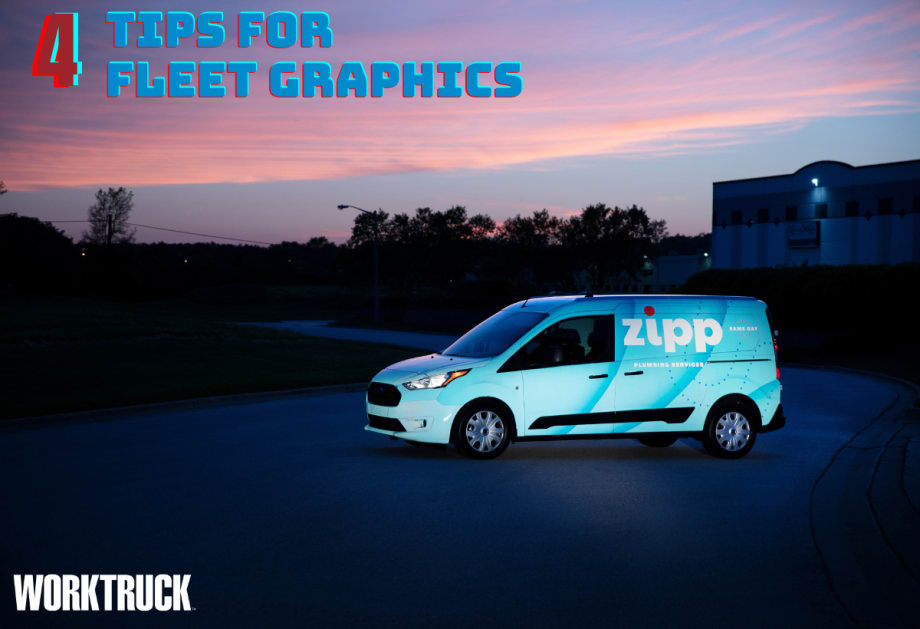
Reflective film increases a vehicle’s visibility and safety during the nighttime with retroreflective technology.
Photo: 3M/Work Truck
6 min to read
The world is turning digital. But one type of advertisement that remains constant is fleet graphics.
Advertising on vehicles is still an effective tool. According to 3M, out-of-home advertising generates four times more online activations per ad dollar than print, TV, and radio. Whether your fleet travels thousands of miles across the U.S. or only stays in one city, it’s a no-brainer to take advantage of vehicle graphics.
But what about work trucks that have dirty jobs? They aren’t driving on freshly plowed roads to an office job or parking in the protection of a parking garage. They’re plowing the snow and traveling through harsh environments such as mud, sleet, rain, and snow. Well, there are vehicle graphics for those trucks too.
Work Truck talked with 3M about the best types of graphics for work trucks getting down and dirty.
Top Tips for Choosing the Best Graphics for Your Fleet
Every business and fleet are different. Some businesses might not want to advertise on the road, others get most of their business from out-of-home advertisements. Here are four things to consider when deciding on graphics for the fleet.
Tip 1: Understand the Total Cost of Ownership
Marc Bagley, the sales trainer at 3M’s commercial solutions division, said his number one tip for fleets is to look at the total cost of ownership.
“It’s important to note installation time. How much money does your work truck generate for you in a given day. ‘Zero’ if it is sitting in a shop being worked on.” He said.
Getting trucks back on the road is imperative to your business. To combat this, 3M graphic solutions are tailored to the needs of the graphic installer allowing for faster and quicker installs getting your work truck back on the road sooner. For example, ceramic coating usually takes 24 to 48 hours to be applied and cured fully. 3M solutions for this are designed to be completed in half a day back on the road making you more money.
The longer trucks can be on the road, the more money you’re fleet can make. That means it’s also important to choose a product that lasts long and is durable. If the product isn’t suitable for the type of work truck, you’ll need to take it in to have the graphics fixed every few years.
Tip 2: Keep Safety Top of Mind
Bagley likes to ensure clients keep in mind the safety of the driver and those who would be around the vehicle.
He added, “We always encourage customers to look at a few different solutions. One of which is reflective film. The reason is that the reflective film is retroreflective, so the light will return directly to the light source it came from.”
So, any light, such as headlights, camera flash, or flashlight, will hit the graphic and bounce directly back to the light source. That helps not only the driver’s safety but also helps with brand awareness and ensuring the company's image is seen more clearly.

Depending on the film selection, fleet graphics allow your brand to stand out and get noticed.
Photo: 3M
Tip 3:Remember Resale Value
Using the wrong graphic product can result in damage when removed. Deidentification is incredibly important to consider to protect youe brand image at the end of the vehicles service life. 3M always recommends removable solutions whether the trucks are bought or leased.
But if you plan on reselling your vehicles in the future, you have to keep in mind the resell value. Bagley added “3M films have been tested to be removed quicker than competitors’ film. So when clients send their trucks to auction, they’ll also get a higher resale value.”
Tip 4: The Design Matters
3M solutions can be used to create full and partial wraps and spot graphics and decals.
Regarding designs for work trucks, Bagley said, “Every single edge on every individual letter is susceptible to dirt and debris and things that potentially permeate behind. If you’re considering whether to wrap a vehicle, I suggest, at a bare minimum, a partial wrap if it’s the bed of the truck or where there are no seams but a full wrap if you’re going for longevity.”
Graphics Built to Last No Matter the Environment
Does your fleet drive through dirt and brush or will get beat by the sun all day long? No matter the conditions your work trucks go through, there are graphics for every type of environment.
For fleets that tend to drive through mud, brush, road salts, or flooding, 3M has you covered.
3M has additional products to add over graphics to prevent dirt or mud from accumulating and covering the graphic.
Ceramic coating can be applied to the vehicle so dirt and debris don’t stick. It’s incredibly thin and almost unnoticeable. And because it's hydrophobic, every time it rains, the dust and debris will slide off your graphics, keeping vehicles looking cleaner with less effort.
Another product 3M offers is paint protection film — or self-healing film. It’s up to 8 millimeters thick and used to wrap parts of the vehicle that is subject to lots of scratching. This protects graphics from UV radiation, scratches, bug, stone chips, and road tar.
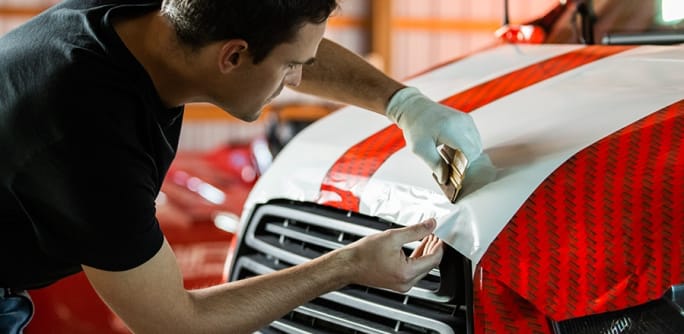
3M installers can safely and quickly install or remove films.
Photo: 3M
3M’s latest Scotchgard Paint Protection Film Pro Series 200 also has a built in hydrophobic coating almost as if it comes ceramic coated, so the hydrophobic water beading effect carries away surface dust and dirt.
Paint protection film’s self-healing properties work when the truck sits in the sun. The scratches will start to rapidly disappear and the film will re-gloss itself. 3M Scotchgard Pro Series Paint Protection Film also comes in gloss, luster, and matte.
When picking a finish, Bagley advised, “The longevity is the same, but the appearance is a little bit different. With matte and statin options, they attract or hold dirt a little bit more. Whereas gloss, because it's more slick things don't stick to it as well. Anybody with work trucks subjected to harsh environments, I recommend that they use a gloss laminate to help keep those trucks as clean as possible.”
If your fleet’s main goal is going green, 3M has a product that reduces the environmental footprint. Introduced in 2012, the 3M Envision wrap is made from non-PVC. It’s removable and even won the GreenGuard Gold certification.
Applying Science to Fleet Graphics
3M’s wraps are backed by comprehensive warranties. The reason the company can provide such inclusive warranties is that 3M uses accelerated weather science to test each product to determine how long it will last and what environment it will endure in.
Bagley added, “3M has 16 weathering facilities worldwide, from St. Paul, Minnesota; Phoenix; to Okinawa, Japan, 3M can measure how long their films will last in virtually any climate. Because 3M has the global capability with accelerated weathering, we're able to not only test in determining exactly how long the graphics will last, but we're also able to back those up with a non-prorated warranty. 3M is proud to have longer, non-prorated warranties than their competitors because we have the science to back it up.”
Bagley added with his final piece of advice for fleets, “Graphics themselves are important, it shows the branding of the company. It helps legitimize your business in the eyes of your customer. It also helps with vehicle drivers’ safety. But you look at products like paint protection film or ceramic coating, we tie all those together, and you get vehicle graphics that are built to last.”
Originally posted on Work Truck Online
Subscribe to Our Newsletter
More Operations

Fleet Has a Talent Pipeline Problem. What Comes Next? | AF News Recap
Where will fleet’s next generation of leaders come from? This week, we’re looking at the industry’s talent pipeline, what certification can add to a fleet career, how to build an award-worthy track record, and the return of Automotive Fleet’s Personal Use Survey.
Read More →
Smith System Launches Driver Risk Management Program
Fleets have more driver data than ever, but identifying risky behavior doesn't necessarily correct it. Smith System's new Driver Risk Management program combines monitoring, training, and follow-up coaching to help fleets connect risk signals with driver intervention.
Read More →
Automotive Fleet Opens 2026 Personal Use Survey for Commercial Fleet Managers
Less than two weeks left! Commercial and corporate fleet managers are invited to share how their organizations handle company vehicle personal-use policies, charges, and driver eligibility.
Read More →
From AI Prompts to AI-Generated Safety Songs | AF News Recap
Can better prompts make AI more useful for fleet managers? This week, we’re breaking down smarter fleet analysis, an AI-assisted experiment that turned safety training into music, and what happened to fuel prices in August.
Read More →
How to Write Better AI Prompts for Fleet Analysis
Include these six elements in your fleet prompts to generate more relevant analysis and accurate answers.
Read More →
Fleet Meets: Eric Kilgore
This edition of the Fleet Meets series features one of the industry's best leaders driving multi-market and national operations.
Read More →
Why Reactive Fleet Management Is Becoming Too Expensive to Sustain
Research highlights a growing need for proactive management strategies to address rising costs in fleet operations effectively.
Read More →
Sponsored•August 12, 2026
What Your Fleet KPIs Aren’t Telling You
Tracking fleet metrics is only useful when the data leads to better decisions. This guide helps fleet leaders assess cost, utilization, and downtime more accurately, identify performance gaps, and prioritize the actions that can improve operational results.
Read More →
Sponsored•August 7, 2026
Hidden in Plain Sight: Fleet Compliance Risks
Fleet compliance isn't just about having policies — it's about consistently enforcing them. This practical guide reveals six hidden compliance risks common in public sector and shared fleet operations and outlines proven strategies to improve visibility, accountability, and audit readiness
Read More →
Turning Fleet Payment Data into Executive Insights
Does data alone drive results in operations?
Read More →