




2015 Audi A3 Sedan Targets Sales Fleets
The A3 sedan will offer versatile powertrains, including a 1.8 TFSI, 2.0 TFSI, 2.0 TDI clean diesel, and a high-output 2.0 TFSI offered in the S3.

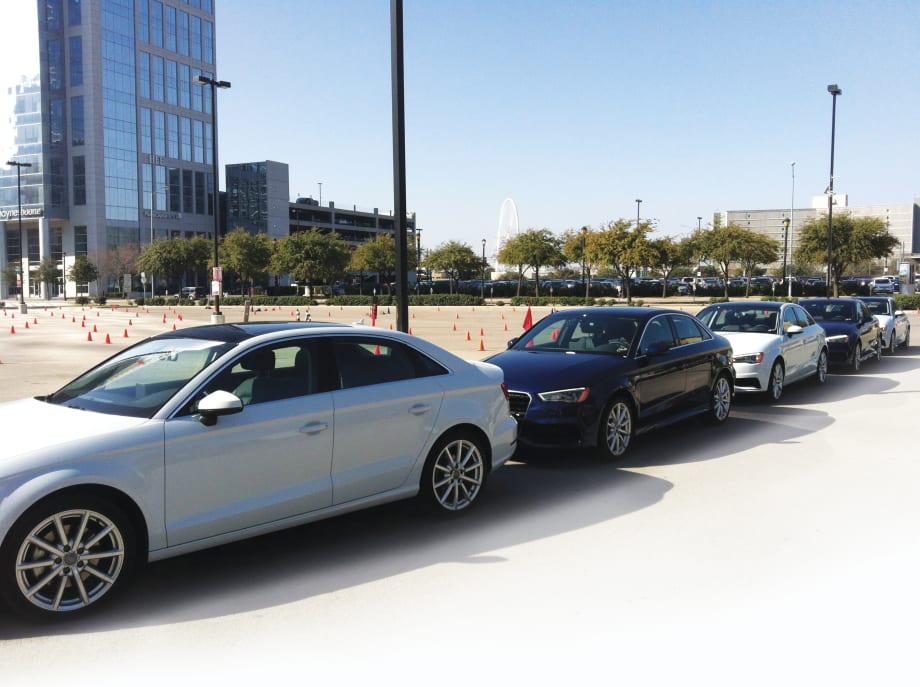
Photo courtesy of Audi.
Audi of America held the 2015 Audi A3 fleet preview in Dallas February 27-28, which featured a special briefing by Tony Trapalis, corporate sales manager, and a ride-and-drive event that included a slalom course to demonstrate the A3's maneuverability and safety features.
The all-new 2015 A3 sedan is a compact powerhouse that represents the entry level to the Audi brand of luxury vehicles. It offers a combination of standard features, including a panoramic glass sunroof, leather seating surfaces, and bi-xenon headlights, with a base MSRP starting at $29,900.
The A3 sedan plays a pivotal role in the soon-to-be expanding Audi A3 family. It will be joined later in 2014 by the Audi A3 Cabriolet, A3 TDI clean diesel, the high-performance S3 sedan, and, in early 2015, the A3 Sportback e-tron plug-in gasoline-electric hybrid vehicle (PHEV). Even the base model of the all-new premium Audi A3 comes equipped with standard features that include Audi signature LED daytime running lights and taillights, and Bluetooth technology.
The A3 also marks the first time a vehicle in this segment will offer MMI technology, Audi drive select, in-vehicle 4G LTE connection, with an ultra-thin retractable MMI screen. As configured, the A3 sedan is a Wi-Fi hotspot. Along with accessing e-mail, text messages, Facebook and Twitter, Picture Book navigation, flight information, fuel prices, parking information, and city events, MMI touch is integrated into a rotary pushbutton, enabling users to simply "write" their entry on a touchpad rather than selecting each letter as used in traditional systems.
Photo courtesy of Audi.
The A3 sedan will offer versatile powertrains, including a 1.8 TFSI, 2.0 TFSI, 2.0 TDI clean diesel, and a high-output 2.0 TFSI offered in the S3.
All engines are mated to the standard 6-speed S tronic dual-clutch transmission, which provides shifting flexibility with smooth, dynamic acceleration and virtually no interruption to the power flow, and increased fuel efficiency. Its rapid-fire shifting creates an uninterrupted power flow from the engine to the transmission, resulting in up to 10-percent better fuel efficiency compared to conventional 6-speed automatics.
For enhanced traction and handling, the A3 also offers the Audi quattro all-wheel drive, which distributes power to the wheels that need it the most.
Equipped with active lane assist, the A3 detects when the vehicle is leaving its lane without signaling, and, through gentle, corrective steering efforts, will assist the driver to remain in the lane. Additional steering wheel vibration also occurs, as well as "hands-off" steering wheel detection that disables the system completely.
Adaptive cruise control uses 27 networked control sensors around the A3 to detect vehicles in front. It then uses this information to maintain the required distance between vehicles. This is done almost constantly by the system automatically applying the brakes or accelerating.
More Operations

Avis Budget Group Deploys Neology Toll Management Technology Across Major Brands
Neology’s neoFleet platform will manage toll transactions and toll-authority operations for vehicles across Avis, Budget, Payless, Budget Truck and Zipcar.
Read More →
Fleet Personal-Use Charges Edge Higher in 2026
Nearly eight in 10 surveyed fleets allow personal use of company vehicles, while just over half of respondents report charging employees for the privilege.
Read More →
The Future of Fleet + What’s Changing Right Now | AF News Recap
Could developments overseas offer a preview of what’s coming for U.S. fleets? This week, we’re looking at the future of AI, autonomy, and electrification, plus Ford Pro’s new certified pre-owned program, smarter vehicle offboarding, and a new way for fleets to manage toll expenses.
Read More →
How to Handle Vehicle Offboarding
What do fleet managers need to do when a driver leaves?
Read More →
Fleet Manager’s Ultimate Playbook: Navigating the New Standard in OEM Connectivity
Rising operating costs, driver safety concerns, and unplanned downtime are putting unprecedented pressure on modern fleets. Discover how fleet managers use embedded OEM connectivity and real-time vehicle data to cut TCO, prevent downtime, and protect drivers without aftermarket telematics hardware.
Read More →
U.S. Bank Adds Verra Mobility Toll Management to Voyager Fleet Platform
The integration allows U.S. Bank Voyager fleet customers to manage toll payments and violations alongside fuel, EV charging and maintenance expenses.
Read More →
ADAS Prevents Crashes. But Repairs Cost More | AF News Recap
ADAS-equipped vehicles may crash less often, but they can cost more when they do. This week, we’re breaking down what that tradeoff means for fleets, plus Subaru’s first Forester Wilderness Hybrid, Nissan’s new e-POWER Rogue, and why Calstart has become Catalyst Mobility.
Read More →
Moventum Fleet Management Names Mark Iorillo Head of Sales
Iorillo brings nearly 20 years of fleet management and sales experience to the role, including previous positions at Element Fleet Management, CEI, Donlen and Ryder.
Read More →
Fleet Has a Talent Pipeline Problem. What Comes Next? | AF News Recap
Where will fleet’s next generation of leaders come from? This week, we’re looking at the industry’s talent pipeline, what certification can add to a fleet career, how to build an award-worthy track record, and the return of Automotive Fleet’s Personal Use Survey.
Read More →
Smith System Launches Driver Risk Management Program
Fleets have more driver data than ever, but identifying risky behavior doesn't necessarily correct it. Smith System's new Driver Risk Management program combines monitoring, training, and follow-up coaching to help fleets connect risk signals with driver intervention.
Read More →