




2012 Nissan NV Raises the Roof
Nissan’s first entry into the CV segment was designed to turn heads.

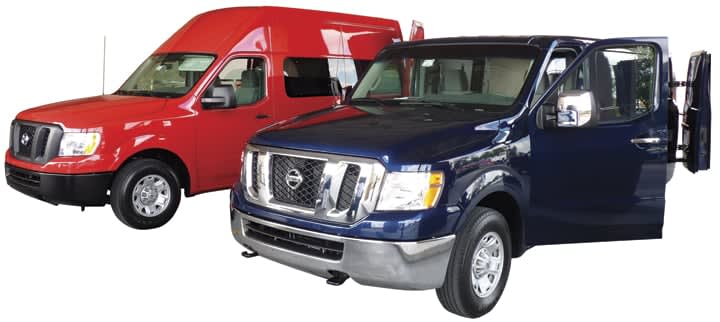
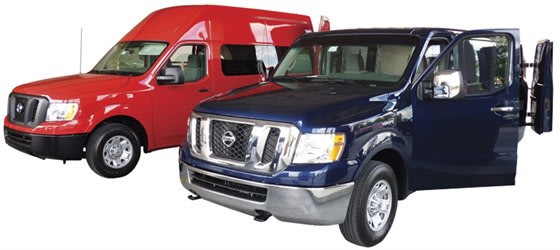
In January, Nissan started production on the 2012 Nissan NV commercial van. With its first entry into North America’s commercial vehicle (CV) market, Nissan is aiming to reinvigorate a segment known more for its “if it ain’t broke, don’t fix it” mentality than innovation.
“We’ve taken a fresh look at every aspect of the CV business — including styling, powertrain, interiors, cost of operation and ownership, dealership sales and service operations and, most importantly, real-world customer needs,” said Joe Castelli, vice president of Nissan North America Inc.’s commercial vehicle and fleet division.
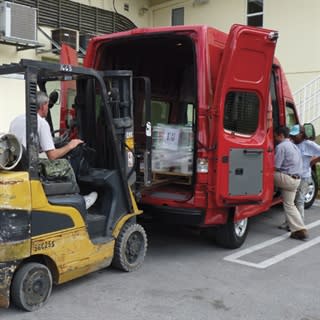
There’s enough room between the wheelhouses (70.2 in. max. width) for standard plywood or drywall sheets or pallets. Nearly vertical sidewalls maximize usable cargo space (234.1 cubic feet on the Standard Roof and 323.1 cubic feet on the High Roof).
The Nissan NV comes in half-, three-quarter and one-ton versions (NV1500, NV2500 HD, NV3500 HD) with a Standard Roof or High Roof (NV2500 HD, NV3500 HD). The standard gas engine is a 4.0L V-6 that produces 261 hp and 281 lb-ft torque. An optional 5.6L V-8 generates 317 hp and 385 lb-ft torque. No diesel engine is planned at this time.
Payloads range from 2,590 lbs. on the Standard Roof 1500 S (V-6) to 3,747 lbs. on the Standard Roof 3500 SV (V-8).
The 2012 NVs are available now through a network of 250 newly appointed Nissan Commercial Vehicle Dealers (www.nissancommercialvehicles.com). That number should grow to 300 by year’s end, according to Nissan.
Check out our video walk-around of the 2012 Nissan NV!
More Operations
A buyer's guide to fleet management software in 2027
Buying fleet management software in 2027 means looking beyond features and price. As fleet operations, technology and expectations evolve, this guide explores what today’s fleet professionals should consider when choosing a system that can deliver value now and adapt to what comes next.
Read More →
What Will Shape the Next Era of Fleet Management?
EVs, AI, and autonomous vehicles are reshaping fleet management. Discover what’s ahead—and how fleet leaders can prepare for the next era.
Read More →
How Fleets Can Recruit and Train Veterans for Technician Roles
Here's how the technician shortage has affected uptime for fleets, and what to do about it.
Read More →

Avis Budget Group Deploys Neology Toll Management Technology Across Major Brands
Neology’s neoFleet platform will manage toll transactions and toll-authority operations for vehicles across Avis, Budget, Payless, Budget Truck and Zipcar.
Read More →
Fleet Personal-Use Charges Edge Higher in 2026
Nearly eight in 10 surveyed fleets allow personal use of company vehicles, while just over half of respondents report charging employees for the privilege.
Read More →
The Future of Fleet + What’s Changing Right Now | AF News Recap
Could developments overseas offer a preview of what’s coming for U.S. fleets? This week, we’re looking at the future of AI, autonomy, and electrification, plus Ford Pro’s new certified pre-owned program, smarter vehicle offboarding, and a new way for fleets to manage toll expenses.
Read More →
How to Handle Vehicle Offboarding
What do fleet managers need to do when a driver leaves?
Read More →
Fleet Manager’s Ultimate Playbook: Navigating the New Standard in OEM Connectivity
Rising operating costs, driver safety concerns, and unplanned downtime are putting unprecedented pressure on modern fleets. Discover how fleet managers use embedded OEM connectivity and real-time vehicle data to cut TCO, prevent downtime, and protect drivers without aftermarket telematics hardware.
Read More →
U.S. Bank Adds Verra Mobility Toll Management to Voyager Fleet Platform
The integration allows U.S. Bank Voyager fleet customers to manage toll payments and violations alongside fuel, EV charging and maintenance expenses.
Read More →
ADAS Prevents Crashes. But Repairs Cost More | AF News Recap
ADAS-equipped vehicles may crash less often, but they can cost more when they do. This week, we’re breaking down what that tradeoff means for fleets, plus Subaru’s first Forester Wilderness Hybrid, Nissan’s new e-POWER Rogue, and why Calstart has become Catalyst Mobility.
Read More →