




10 Recommendations: What Drivers Should Do After a Fleet Accident
Drivers must collect as much information as possible when involved in an accident. Failure to do so can lengthen the accident management process and create unnecessary liability exposure. What information should be collected?

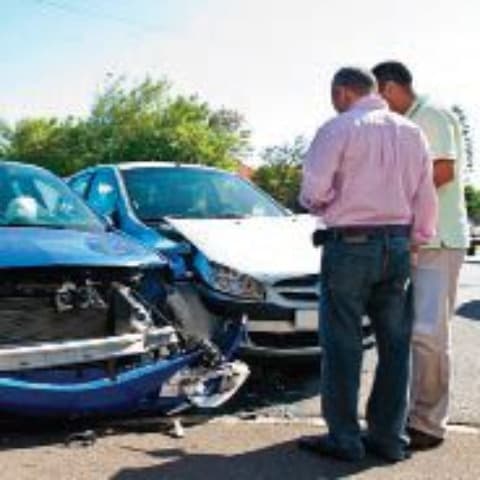
Drivers must collect as much information as possible when involved in an accident while driving a company-provided vehicle. Failure to do so can lengthen the accident management process and, in a worst case scenario, create unnecessary liability exposure for the company. In addition to exchanging insurance information, fleet managers should instruct company drivers to collect additional information, such as written notes of any injuries, description of vehicle damage, the time and location of the incident, weather conditions, and complete contact information of all third-party witnesses.
Similarly, drivers should be encouraged to draw an accurate diagram of the accident scene illustrating the street configuration, position of vehicles at the time of the accident, and witness locations. If provided by the company, instruct drivers to take photos of the accident scene with a disposable camera, if safe to do so.
"A picture is worth a thousand words, or in the case of an accident, thousands of dollars. You should have an accident reporting kit in the vehicle that includes a disposable camera, and make sure the kit is properly insulated to protect contents from heat damage. After an accident, used kits should be promptly replaced. This kind of advance planning can make a big difference to your accident costs," said Barbara Ward, director of driver risk & safety for PHH Arval.
If a disposable camera is not available, most cell phones include cameras. If safe to do so, instruct drivers to use their cell phones to take photos of the accident scene and the damaged vehicles. However, poor quality photos and inaccurate diagrams could prove to be counterproductive. "I love to see accident scene diagrams and photos, as long as the info is accurate and reliable. Poor photos are a waste of time and energy and cannot help define actual damages, actual event happenings, and actual facts. A rattled driver may not be able to take stable pictures," said David Vance, CSP, director of safety services for Fleet Response. "I would also be concerned as to the protection of personal photos taken by the participants of a crash relating to the potential legal issues that evolve. Lawyers usually get what they need."
However, the most important advice is for fleet managers to instruct company drivers beforehand what to do when an accident occurs. "If they don't, the accident management company cannot retrieve the factual evidence and information to render timely assistance," added Vance.
Beware of 'Wreck Chasers'
The old adage "the vehicle will never be right again" once it has been repaired is a myth if the shop performing the repairs is a qualified shop, according to Bob Martines, president and CEO of Corporate Claims Management.
"Quality shops usually have a significant financial investment in their shops to support their business. They go through serious ongoing training to stay abreast of design changes and how to repair the newer models. These qualified shops can and do fix vehicles at a high level of quality and integrity. Perhaps their final repair price may be higher in some instances; however, the work is done right the first time and is guaranteed," added Martines. "On the other side, there are too many unlicensed (unpoliced) shops that are 'wreck chasers,' towing vehicles from the scene of an accident, promising the driver his or her car will be taken care of. They bring the vehicles to shops that will pay them the highest fee for the job. The wreck chaser could care less about the shop or the quality of the job, just as long as they get their promised fee. No fleet manager or driver should ever succumb to the demands of a wreck chaser."
Martines also offers advice on when to total a vehicle.
"No vehicle should be fixed or totaled simply by the numbers unless, of course, there is an obvious total as a result of an accident. Too many fleet managers make decisions strictly by the numbers. A vehicle worth $12,000 with an estimate of $6,500 or $7,000 in most cases is totaled out. If you break down the actual repair, perhaps the numbers are not what they seem. In most cases, there may be a tow bill and perhaps a storage bill, as well as sales tax, which have no real value in an estimate. Once you calculate the non-labor/parts costs such as shop supplies and/or materials along with the other items mentioned, the price most likely changes dramatically, and the repair decision is an easier choice. A $6,500 repair adjusted for the non-essentials can easily be reduced to a very manageable $5,000 repair, which would be an acceptable repair if analyzed properly. While you are still facing the financial expense of $6,500, the extent of the damage is not as severe as initially viewed," said Martines.
Best Precaution: Plan in Advance
A good way for a fleet manager to try to ensure a driver collects the right information is to provide tools that the driver can keep in the vehicle (i.e. accident reporting kits, fleet guidelines, etc.) to use at the accident scene," said Vincent Brigidi, director of commercial operations for The CEI Group.
All accident management companies provide clients an accident kit. If you do not employ an accident management company, have a kit developed and place it in the glove compartment of a company vehicle prior to delivery to an employee driver.
VIEW NEXT PAGE FOR THE 10 RECOMMENDATIONS
[PAGEBREAK]
1. Immediately After the Accident.
"If it's a minor accident with no serious injuries, the driver should move the vehicle and occupants safely to the side of the road, out of the way of traffic," said Barbara Ward, director of driver risk & safety for PHH Arval. "If a vehicle can't be moved, but no one is injured, drivers and passengers should stay in the vehicle with seat belts fastened until help arrives. Also, turn on hazard lights and, if it's safe to do so, place cones, flares, or warning triangles."
Vincent Brigidi, director of commercial operations for The CEI Group, added that employee drivers should be instructed "not to drive their vehicles if they feel it's unsafe."
2. What to Do in Case of Injuries.
“Drivers should call for help for the injured. They should also get the names of any injured parties, the nature and extent of their injuries, and whether they were taken from the scene to a hospital. Also note whether the injured parties were occupants of vehicles or pedestrians,” said Brigidi.
3. Don’t Reveal You’re Driving a Company Vehicle.
“If at all possible, the company driver should not indicate to the other party he or she is driving a company vehicle. Some unscrupulous individuals think the accident is an opportunity to make money at the company’s expense. We see this happening more and more,” said Bob Martines, president and CEO of Corporate Claims Management (CCM).
4. Don’t Admit Fault.
“Don’t discuss specific details of the accident with anyone except the police. Be polite, but don’t admit fault to the other drivers or the police, even if you think your actions led to the crash. It’s important to engage the subrogation experts, who will complete a thorough review process to determine fault,” said Ward of PHH Arval.
“Drivers should never agree to ‘forget’ about the accident,” added Brigidi. “They should let their company know whether a police report was taken and, if so, provide the full officer and department information, including phone number.”
5. Don’t Apologize.
“It is necessary for fleet managers to tell their drivers not to offer any apologies. It is almost natural for kind-hearted individuals, even if that individual is not at fault, to offer some sort of remorse for the accident. If a third-party or witness hears the apology, it could be used against the company driver,” said Martines.
[PAGEBREAK]6. Promptly Report the Accident to Proper Authorities.
“When drivers are involved in an accident, they should be instructed to call their company fleet manager, accident management company representative, or, if appropriate, insurance company as soon as possible. If mandated by fleet policy, file a state vehicle accident report. A police report often helps insurance companies speed up the claims process,” said Ward. Also, drivers should tell their employers whether the accident occurred in the course of doing company business, said Brigidi. “Drivers should also notate the date and time the accident was reported to the company.”
7. Don’t Talk When Distraught.
“When there are any injuries (or worse), drivers become deeply disturbed. They must be cautious about what they ask and what they say. Law enforcement is well trained to control accident event conversations,” said David Vance, CSP, director of safety services for Fleet Response.
8. Follow Fleet Policy Guidelines.
“When a driver is under the emotional stress of being involved in a collision, it is important to provide, in advance, a checklist that drivers keep in the glove compartment. Otherwise, you’re leaving the recording of potentially critical information to chance,” said Brigidi of CEI.
9. Beware of Gypsy Tow Truck Operators.
“Drivers should be certain that the tow truck that comes to tow their vehicle has been sent by their company, insurer, or accident management provider. The downside to letting an unauthorized wrecker service take their vehicle is additional expense that could be sizable and delays in getting the vehicle repaired,” said Brigidi.
10. Establish an Accident Review Committee.
“All companies should implement a crash investigation process. An in-depth review of all crashes helps companies get to the true root cause of each crash, monitor trends, enforce accountability, and drive down the frequency and severity of collisions. It also helps drivers revisit their actions and choices pre-crash to ensure they are complying with company policies and procedures while demonstrating acceptable defensive driving best practices,” said Ward of PHH Arval.
More Safety

Fleet Manager’s Ultimate Playbook: Navigating the New Standard in OEM Connectivity
Rising operating costs, driver safety concerns, and unplanned downtime are putting unprecedented pressure on modern fleets. Discover how fleet managers use embedded OEM connectivity and real-time vehicle data to cut TCO, prevent downtime, and protect drivers without aftermarket telematics hardware.
Read More →
From Driver Well-Being to EV Charging | AF News Recap
Mental health belongs in the fleet safety conversation. This week, we’re looking at five ways fleets can support employee well-being before a crisis, plus Holman’s expansion in Mexico, new one-day Fleet Forward passes, and why EV charging demand is outpacing infrastructure growth.
Read More →
Nexar-Nauto Merger Aims to Give Fleets Better Safety Intelligence Through Larger Driving Dataset
Stefan Heck tells Automotive Fleet that combining more than 10 billion miles of driving history with Nexar's AI models will give fleets deeper insights into driver risk and roadway conditions than either company could provide independently.
Read More →
Don't Wait for a Crisis: 5 Ways to Build Mental Health Into Your Fleet Safety Program
For Suicide Prevention Month, fleet and safety leaders have an opportunity to put mental health where it belongs: at the center of workplace safety.
Read More →
How Camera Data Can Strengthen a Fleet’s Insurance Renewal
Insights from a commercial insurance carrier and a broker show how fleets can turn video telematic data, driver coaching, and improved claims results into a stronger case at insurance renewal.
Read More →
The Safest Fleets Aren’t the Ones with the Most Technology
You’ve made the telematics investment. Here’s how to capture the other half of its value and build the safest fleet on the road.
Read More →
Hidden in Plain Sight: Fleet Compliance Risks
Fleet compliance isn't just about having policies — it's about consistently enforcing them. This practical guide reveals six hidden compliance risks common in public sector and shared fleet operations and outlines proven strategies to improve visibility, accountability, and audit readiness
Read More →
NETS Sets 2026 Fleet Safety Benchmark Conference for Indianapolis
The Sept. 15–17 program will feature fleet benchmarking data, case studies, emerging technologies, and implementation strategies while running alongside the NSC Safety Congress & Expo.
Read More →
Off-the-Job Crashes Account for 43% of Employers’ $61.7 Billion Crash Burden
NETS quantifies costs dispersed across fleet, risk, HR, and other departments while providing new per-crash benchmarks for employers.
Read More →
Ram Recalls More Than 1.27 Million 1500 Pickups for Seat Belt Anchor Issue
The recall affects certain 2019-2026 Ram 1500 pickups that may have improperly attached second-row seat belt buckle anchors.
Read More →