10 Mistaken Assumptions Fleet Managers Make About Negligent Entrustment
Fleets can be sued for the actions of its employees. Remember these missteps to avoid legal headaches and a possible court dates.
by Richard Alaniz
November 22, 2011
7 min to read
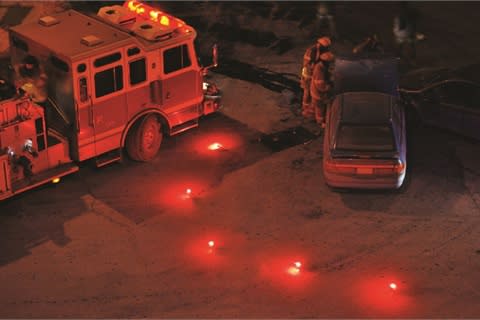
A review should be conducted after every traffic incident that involves a fleet driver, even if it's just a minor fender bender. Depending on the results, additional training or disciplinary action may be necessary.
At a Glance
A fleet can face a negligent entrustment lawsuit from the actions of ill-qualified or ill-trained drivers. Among the mistakes fleet managers can make that will lead to a costly lawsuit are:
Ad Loading...
Not knowing federal regulations.
Failing to conduct background checks on new drivers.
Inadequate record-keeping.
Only training new employees.
Lack of consistent policies.
Most fleet managers are familiar with the concept of "negligent entrustment," which allows for companies to be sued for accidents their drivers are involved in. However, negligent entrustment is a complicated area of the law, and a lack of understanding of its intricacies could leave a fleet vulnerable to a lawsuit.
In a negligent entrustment lawsuit, someone involved in an accident with a fleet driver claims the employee or contractor was sent out on a job without the proper regard for the driver's qualifications or ability to safely operate the vehicle. While the driver's own negligence will be the most important issue in court, the company's practices and policies could also come under fire. If a judge or jury decides the company failed to screen out unsafe or poorly trained drivers, the fleet could be on the hook.
Here are 10 common mistakes fleet managers make when it comes to negligent entrustment:
Mistake #1: Not Knowing Federal Regulations
Ad Loading...
It's not enough for truck drivers to have a valid commercial motor vehicle operator's license and be able to pass a road test. Under federal regulations, drivers must be more qualified than the bare minimum.
The Federal Motor Carrier Safety Administration (FMCSA), which is a division of the U.S. Department of Transportation (DOT), creates the commercial vehicle driver regulations.
As part of those qualifications, every driver must:
Be in good health and physically able to perform all driver duties.
Respond to official questions and be able to make legible entries on reports and records.
Fill out an employment application and have a valid medical certificate.
Speak and read English well enough to converse with the general public.
Understand highway traffic signs and signals.
Know how to safely load and properly block, brace, and secure cargo.
Be able to drive the vehicle safely.
Provide his or her employer with a list of all motor vehicle violations, or a signed statement that he or she has not been convicted of any motor vehicle violations during the past 12 months.
If a driver lacks any of these qualifications and they are never checked, this could be an open door to a negligent entrustment lawsuit.
Ad Loading...
Mistake #2: Doing the Bare Minimum
Don't settle for just dotting all the "i"s and crossing all the "t"s. Think of the FMCSA requirements as a starting point. Background checks and other research should be considered to be sure that someone with a poor driving record - who could be a liability - isn't hired.
Ensure applicants are specifically told what the hiring criteria are, and then put those requirements in writing. This will allow employees, and potential employees, to know what the hiring process is and the kind of scrutiny they will be under when they work for the company. This type of documentation can also help defend the company against possible lawsuits.
Mistake #3: Not Keeping Accurate Records
Not only does the FMCSA set minimum standards for driver qualifications, it also requires a fleet manager keep a file for every one of the company's regular drivers. That file must include the driver's application for employment, an inquiry to previous employers and state agencies, a certificate of motor traffic violations for at least the last 12 months, the driver's road test certificate, and the driver's medical exam certificate.
Ad Loading...
Fleet managers need to make sure all paperwork is on file and up to date. If a driver is involved in a lawsuit and the right documentation isn't available or the FMCSA comes looking for it and it can't be produced, the fleet could be vulnerable to legal or regulatory issues.
Mistake #4: Going with Just Your 'Gut' When Hiring
Under the Driver's Privacy Protection Act, states can't disclose individual records unless an employee provides signed consent. Be sure that this consent is secured, and don't take anyone's word about their own driving record. Specifically ask applicants to list every driving violation and accident for at least the last five years. Then, require each employee to sign a consent form that allows a search of their driving records. Make it a condition of employment, and never make any exceptions.
Mistake #5: No New-Hire Orientation Program
Many companies assume their drivers know what to do and what is expected of them when they are on the road. Do not make that kind of assumption. In a new-hire orientation, which should be attended by every new driver, spell out all of the company's expectations, along with the driver's legal requirements. This will help minimize liability in case of a lawsuit.
Ad Loading...
Mistake #6: Lending Out Keys to Company Vehicles
There should be a policy limiting the use of company vehicles to employees or contractors. Make it clear to employee drivers that family or friends are not allowed to have access to the company car or vehicle. If someone else has an accident while driving the company vehicle, you could find yourself liable in a lawsuit.
Mistake #7: Only Training New Employees
While it's critical to train new employees, training shouldn't stop after the first day or week. All drivers should have periodic training to make sure they understand company policies and procedures. Of course, you should also monitor employees to be sure they have taken care of their legally required medical and driving exams. Get copies of their records and keep those on file.
A review should be conducted after every traffic incident that involves a fleet driver, even if it's just a minor fender bender. Depending on the results of that review, the driver may need to undergo additional training. Disciplinary action may also be necessary.
Companies need to have a zero-tolerance approach to driver abuse of drugs, alcohol, and prescription medicine. Put this policy in writing and require drivers sign it. Those who violate the policy need to be disciplined appropriately and consistently. If it's legal in your state, consider random drug testing for fleet drivers. Also be sure to remind drivers that anyone found abusing illegal or prescription drugs or alcohol will be disciplined.
Mistake #9: Ignoring Psychological Testing
You don't necessarily need to make a habit out of giving psychological tests to all drivers; however, if it's apparent that some drivers seem to have issues with road rage, it may be wise to pinpoint these drivers and have them go through additional training about ways to manage their frustration while on the job.
Mistake #10: Not Rewarding Good Driving
Ad Loading...
Some car insurance companies make it a selling point to reward drivers for flawless driving records. You may want to consider doing the same for fleet drivers by providing some sort of bonus or reward system for those with perfect safety records. This will help show them that good performance is valued as muc
Accidents due to negligent entrustment can involve serious injuries (and even dealth) to both fleet personnel and other drivers or pedestrians. In addition, the consequences can be far reaching with a fleet liable for substantial damages. Negligent entrustment suits typically involve six- and seven-figure settlements.
h as poor driving is punished.
When it comes to negligent entrustment lawsuits, six- and seven-figure settlements are common. In one case in Delaware, an ambulance driver was involved in an accident that killed a motorcyclist. The family of the driver, who had a 3-year-old child and a pregnant wife, sued the ambulance company, claiming negligent entrustment along with negligent vehicle operation, training, and supervision. The ambulance company ended up settling for $5 million.
In another case in Missouri, a 17-year-old girl died and three others were injured when their car was struck head on by someone driving drunk while working. In the lawsuit that was later filed, the plaintiffs claimed the company was negligent because it knew its employees drove drunk yet failed to do anything about it. The lawsuit also claimed that the company never communicated its policies to the driver. The company ended up settling for $2 million.
You cannot guarantee that your drivers will never be in an accident. So the next best thing is to protect the company from lawsuits that could follow an incident with its drivers. The right training and screening procedures can help minimize the legal liability for negligent entrustment.
Ad Loading...
About the Author
Richard Alaniz is a partner at Alaniz and Schraeder, a national labor and emplo
yment firm based in Houston. He can be contacted at (281) 833-2200.
For fleet managers, fuel is one of the biggest line items in the budget — and it's one hybrids can shrink without changing how your people work. Download the eBook to see the numbers, understand the technology, and get a step-by-step guide to making the switch.
James Victory of NOV discusses how the company manages fleet safety, maintenance, and telematics across more than 150 locations supporting oilfield operations throughout the U.S.
Departmentally assigned vehicles often create hidden costs through underutilization, poor visibility, and increased administrative burden. This white paper explores how shared motor pool strategies help fleets reduce costs, improve accountability, and optimize vehicle utilization.
BBL Fleet expanded its footprint in the fleet management industry with the acquisition of Velcor Leasing Corporation of Madison through a stock purchase agreement finalized Feb. 27, 2026.
Fleet leaders are under pressure to reduce costs, adapt to economic uncertainty, and make smarter decisions. See how peers across North America are responding with real data, proven strategies, and forward-looking insights. Download the 2026 Market Pulse Report to benchmark your strategy and uncover where you can gain an edge.
AI is no longer a future concept for fleets—it’s already embedded in the tools, data, and decisions that operators rely on every day. In this episode of the Fleet Forward Podcast, recorded live at Fleet Forward, industry leaders take the conversation beyond hype to examine what responsible AI adoption really looks like in fleet operations.