




Foreign, Domestic Automakers Suspend Production at North American Factories
The shutdowns come to fight the spread of COVID-19/coronavirus after workers at multiple plants tested positive.

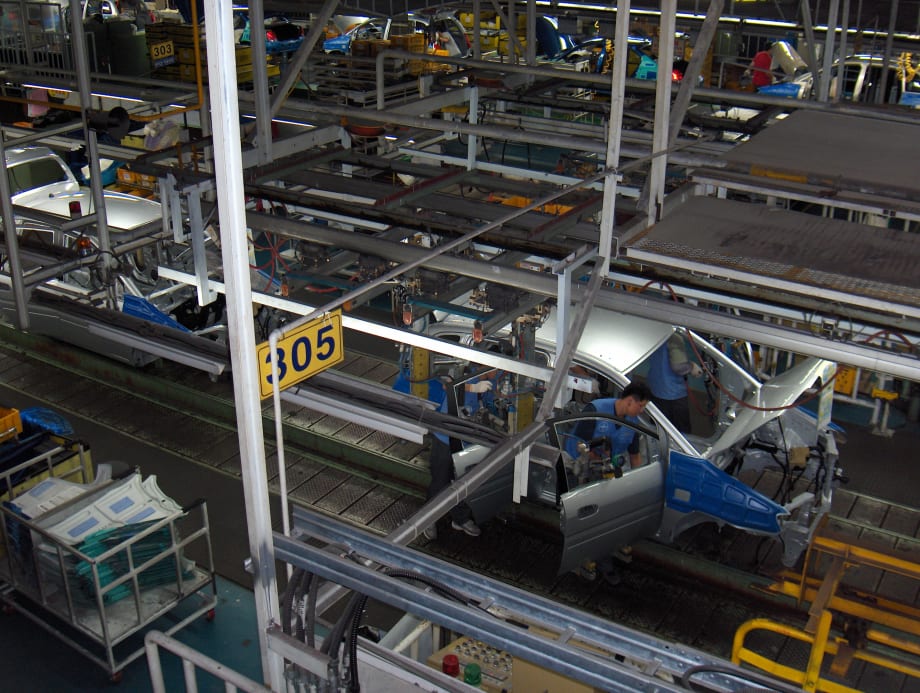
Photo via Anonyme/Wikimedia.
General Motors, Ford, and Fiat Chrysler will suspend production at North American manufacturing facilities to fight the spread of COVID-19/coronavirus, according to press statements and news reports.
Both GM and Ford stated their suspensions will last until at least March 30. GM stated its production status will be reevaluated week-to-week after that. Ford said its plants will shut down after Thursday evening shifts.
A factory worker at Ford’s assembly plant in Wayne, Mich. has tested positive for coronavirus/COVID-19.
Fiat Chrysler had closed its Sterling Heights Assembly Plant Tuesday night for deep cleaning, according to a statement sent to the Detroit Free Press. An employee had tested positive for COVID-19 at the facility, which makes the Ram 1500. An announcement regarding the plant’s reopening is pending.
The closures come after the United Auto Workers requested on Tuesday that the Big 3 automakers cease production for the next two weeks.
Hyundai confirmed a case of COVID-19 at its Alabama manufacturing plant and has suspended production at the plant starting today.
Tesla, however, will continue to keep its Fremont, Calif., plant open. TechCrunch reports that the EV automaker had conflicting guidance regarding a shelter-in place order in Alameda County.
Honda Motor Co. has temporarily closed its North American factories for one week starting on Wednesday.
Other foreign manufacturers, including Volkswagen, BMW, Nissan, Toyota, and Mercedes-Benz have not yet announced plant closures of their North American facilities.
Update 3/18: Fiat Chrysler said in a statement it will cease production at plants across North America starting today through the end of March. BMW reported it is closing its U.S. plants as well.
Update 3/19: Nissan announced that it will temporarily suspend production of its manufacturing facilities in the U.S. starting March 20 through April 6. Toyota is temporarily suspending production at all of its automobile and components plants in North America, including Canada, Mexico and the U.S., though its shutdown is short: Toyota reported its manufacturing facilities will be closed from March 23-24, resuming production on March 25, 2020. The service parts depots and vehicle logistics centers will continue to operate. Tesla will shut down its California and New York plans on March 23.
Originally posted on Work Truck Online
More Operations

Avis Budget Group Deploys Neology Toll Management Technology Across Major Brands
Neology’s neoFleet platform will manage toll transactions and toll-authority operations for vehicles across Avis, Budget, Payless, Budget Truck and Zipcar.
Read More →
Fleet Personal-Use Charges Edge Higher in 2026
Nearly eight in 10 surveyed fleets allow personal use of company vehicles, while just over half of respondents report charging employees for the privilege.
Read More →
The Future of Fleet + What’s Changing Right Now | AF News Recap
Could developments overseas offer a preview of what’s coming for U.S. fleets? This week, we’re looking at the future of AI, autonomy, and electrification, plus Ford Pro’s new certified pre-owned program, smarter vehicle offboarding, and a new way for fleets to manage toll expenses.
Read More →
How to Handle Vehicle Offboarding
What do fleet managers need to do when a driver leaves?
Read More →
Fleet Manager’s Ultimate Playbook: Navigating the New Standard in OEM Connectivity
Rising operating costs, driver safety concerns, and unplanned downtime are putting unprecedented pressure on modern fleets. Discover how fleet managers use embedded OEM connectivity and real-time vehicle data to cut TCO, prevent downtime, and protect drivers without aftermarket telematics hardware.
Read More →
U.S. Bank Adds Verra Mobility Toll Management to Voyager Fleet Platform
The integration allows U.S. Bank Voyager fleet customers to manage toll payments and violations alongside fuel, EV charging and maintenance expenses.
Read More →
ADAS Prevents Crashes. But Repairs Cost More | AF News Recap
ADAS-equipped vehicles may crash less often, but they can cost more when they do. This week, we’re breaking down what that tradeoff means for fleets, plus Subaru’s first Forester Wilderness Hybrid, Nissan’s new e-POWER Rogue, and why Calstart has become Catalyst Mobility.
Read More →
Moventum Fleet Management Names Mark Iorillo Head of Sales
Iorillo brings nearly 20 years of fleet management and sales experience to the role, including previous positions at Element Fleet Management, CEI, Donlen and Ryder.
Read More →
Fleet Has a Talent Pipeline Problem. What Comes Next? | AF News Recap
Where will fleet’s next generation of leaders come from? This week, we’re looking at the industry’s talent pipeline, what certification can add to a fleet career, how to build an award-worthy track record, and the return of Automotive Fleet’s Personal Use Survey.
Read More →
Smith System Launches Driver Risk Management Program
Fleets have more driver data than ever, but identifying risky behavior doesn't necessarily correct it. Smith System's new Driver Risk Management program combines monitoring, training, and follow-up coaching to help fleets connect risk signals with driver intervention.
Read More →