




Related: Fleet Safety Starts with Drivers
Vehicle Technology's Role in Risk Management
While drivers are the final stop in managing risk, evolving vehicle technology has played a big role in risk management as well.
by Bob Cavalli
March 11, 2020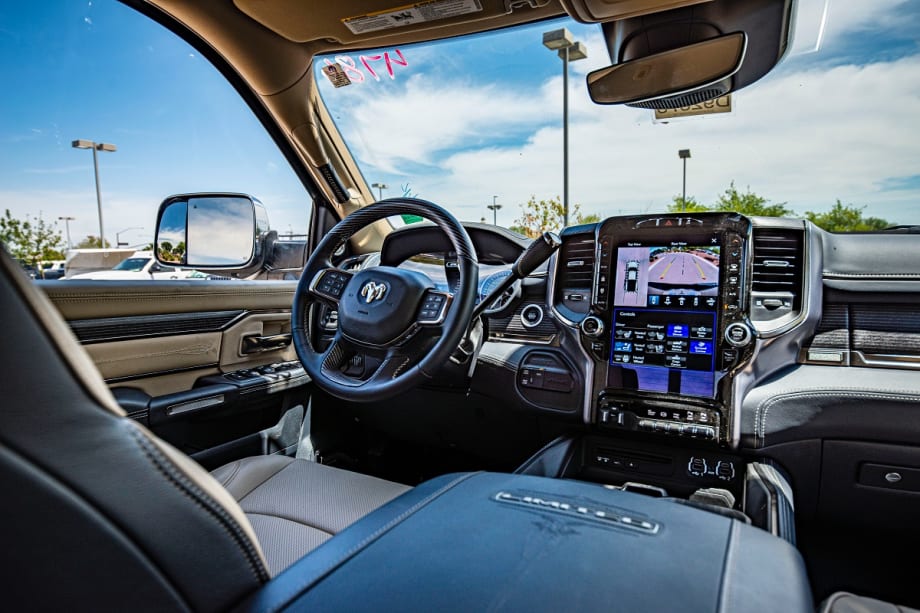
Vehicle technology has helped drivers avoid accidents, but there is also the possiblity that drivers become too reliant on certain technology.
Photo by Eddie Edwards from Pexels.
4 min to read
While drivers are the final stop in managing risk, evolving vehicle technology has played a big role in risk management as well.
The in-vehicle technology that we have now has come a long way, many vehicles now come with semi-autonomous functions as standard features, but it all began with seat belts.
Seat belts began as two-point lap belt systems, not unlike the belts you’ll see on your next airline flight.
The three-point system we know today was created by engineer Nils Bohlin, hired by Swedish automaker Volvo in 1958. Other OEMs followed suit into the early 1960’s, offering seat belts as optional equipment.
In 1966, all cars sold in the U.S. were required to be seat belt equipped, with mandatory seat belt usage (so called “click it or ticket” laws) following shortly thereafter.
Next came air bag technology, introduced by General Motors in 1973, again evolving from the original steering wheel air bag to what we see today, with side curtain and passenger airbags.
After it was discovered that the explosive deployment of air bags posed a hazard for small children, automakers began to allow owners to disengage passenger air bags.
Safety technology (excepting advancements in braking, i.e., disk brakes) had primarily been geared toward avoiding or minimizing injury to occupants in a collision. More preventive technology followed and continues to this day. In no particular order:
● Air Bags – Originally tested in government fleet cars in the early “70s, air bags” widespread commercial availability took off in the ‘80s, first as an option, then as standard equipment, evolving from the driver air bag (housed in the steering wheel) to side “curtain” air bags. They’re now a standard part of all cars and light trucks and have saved many lives over the decades of their use. Along with seat belts, air bags are a basic injury preventive addition to the search for safety.
● Backup cameras – Roughly a quarter of all accidents result from backing up; and injuries and deaths are dominated by small children. Backup cams are a strong preventive technology.
● Lane intrusion alarms – They take several forms, but tired and distracted drivers often drift out of the lane in which they’re traveling. Lane intrusion alarms are engineered so that drivers must take corrective action.
● Active braking systems – Also named “collision mitigation,” “accident avoidance,” and other monikers, these systems will brake when a vehicle crosses a “closeness” threshold with a vehicle or object in front of it. This occurs thousands of times each day, as drivers, distracted by cell phones or other phenomena, fail to manually brake a vehicle resulting in a front to rear collision. Active braking systems will break the vehicle, again, once on-board radar determines the vehicle gets too close to the vehicle, or object, in front of it. (OEMs have been rightfully careful in naming and describing such technology, due to potential liability if the system fails, or the vehicle is moving too fast to brake in time).
● “Intelligent” vehicles – This technology, which is relatively new, allows vehicles to communicate with each other, or with some fixed beacon on the road. Put very simply, imagine two vehicles, one traveling north and another traveling west, approaching an intersection. Both vehicles are sending out constant signals which, once the vehicles are within the range of these signals (say, 100 yards of each other), send notifications to the vehicle and drivers as they approach, and may activate other safety systems (the aforementioned active braking systems, for example), reducing dramatically the possibility of a collision. Even if only one of the vehicles in the example is so equipped, this technology can go a long way toward actual collision avoidance.
Safety technology is a wonderful thing. Helping drivers avoid accidents, preventing or mitigating injury when accidents occur, and helping fleet managers manage driver risk are all noble goals. But is there, or can there be, any downside to this technology?
The answer is a qualified yes. Put simply, a driver who knows his/her vehicle is fully equipped with safety technology may tend to be lax in their own driving behavior and depend upon such technology to keep them safe. All the technology in the world cannot be seen as a substitute for alert, defensive driving, and employees who are assigned company vehicles should be consistently trained to recognize their responsibility to drive safely, to drive as though there is no such technology ‘keeping them safe’.
Safety technology continues to advance at a dizzying pace which is helping to prevent injuries, prevent accidents, and manage risk, which are all responsibilities that are at the pinnacle of a fleet manager’s job.
Subscribe to Our Newsletter
More Safety
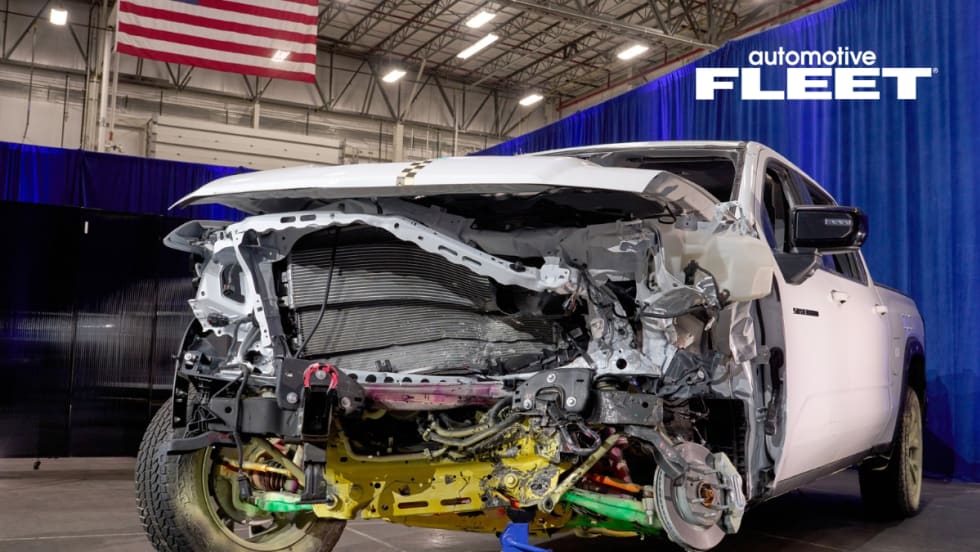
GM Conducts 92,000 Virtual Crash Tests for 2027 Chevrolet Silverado 1500
General Motors used computer simulations to evaluate crash scenarios, occupant protection and vehicle design variations before conducting physical crash tests.
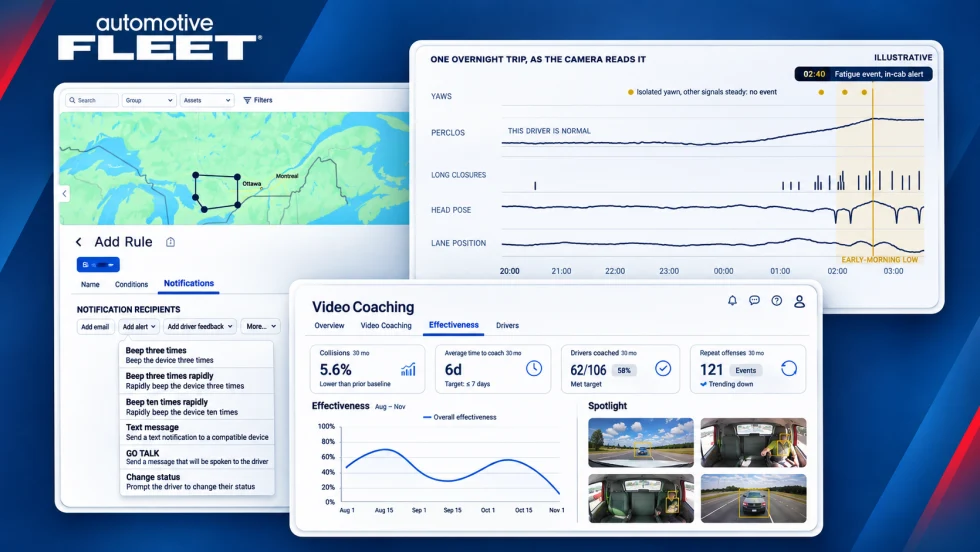
Geotab Adds AI-Powered Driver Coaching and Fatigue Detection Features
New capabilities include fatigue monitoring, two-way audio, coaching effectiveness analytics and location-based privacy controls for fleet safety management.
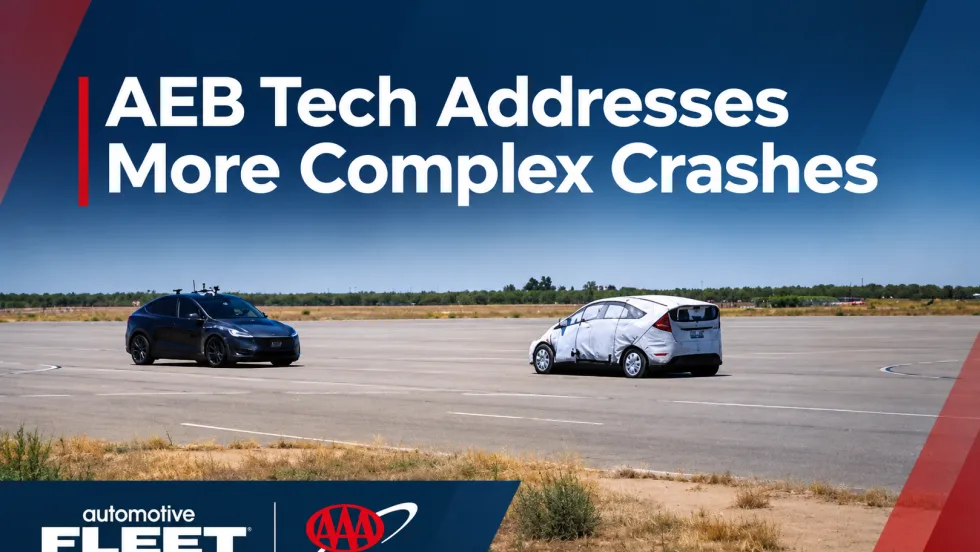
AAA Testing Finds Gaps in Intersection AEB Crash Prevention
Testing of four 2026 model-year vehicles found that automatic emergency braking prevented collisions in standardized intersection scenarios, but three vehicles failed to avoid crashes when another vehicle turned into their path.
Which Fleet Types Have the Highest Severe Speeding Rates?
New research from SambaSafety finds significant differences in speeding rates across fleet industries, even as nearly 90% of surveyed fleets report using telematics.

When a Cyberattack Hits Your Fleet: What Happens Next?
“You have two opportunities to test your plans: when you choose or when the threat actor chooses.” A cybersecurity expert reveals what fleet managers need to know before a cyberattack puts their operations at risk — and why the decisions made in the first moments can shape the entire recovery.
Tips for Driving Safely on Halloween Night
This video features a reminder from the Connecticut Department of Transportation (DOT) and the Connecticut Police Chiefs Association, urging drivers to prioritize safety this Halloween.
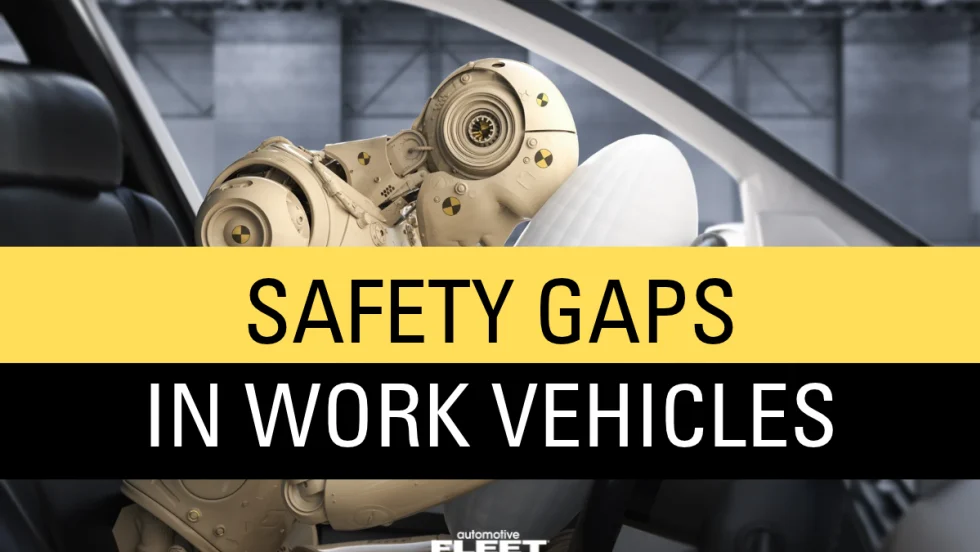
IIHS Crash Avoidance Tests Reveal Safety Gaps in Cargo Vans and Work Trucks
New IIHS crash avoidance ratings show uneven performance among cargo vans and heavy-duty pickups, with most struggling to avoid vehicle-to-vehicle collisions.

What’s Next for Fleet? Safety, AI & Industry Recognition | AF News Recap
Could your company's culture be encouraging distracted driving? This week, we're exploring how workplace expectations affect driver safety, what AI, EVs, and autonomous vehicles could mean for the future of fleet management, and how fleet professionals can strengthen their award nominations.

Does Your Fleet's Culture Encourage Distracted Driving?
What happens when the people responsible for enforcing safety rules are the ones setting the wrong example? The answer may reveal why some of the biggest risks to fleet drivers have little to do with what's written in the employee handbook.
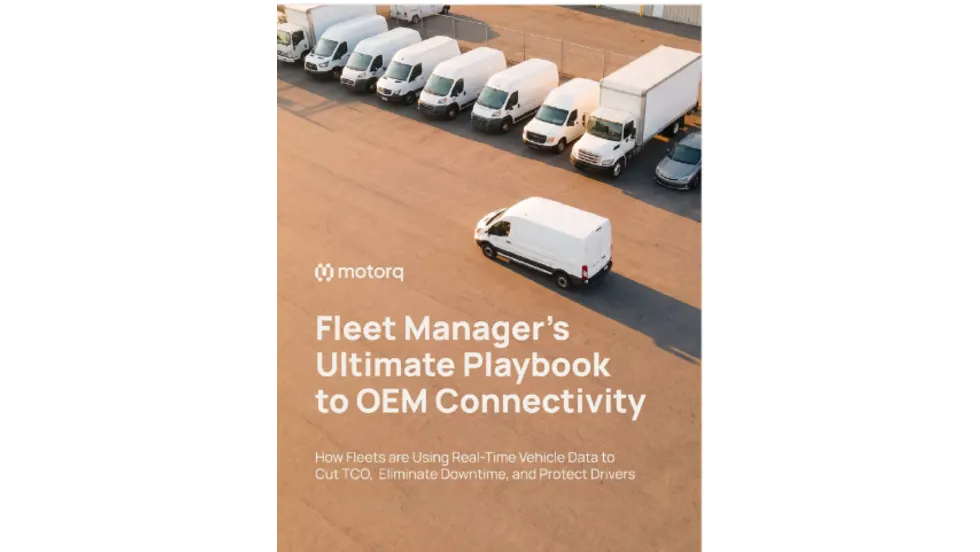
Sponsored•October 1, 2026
Fleet Manager’s Ultimate Playbook: Navigating the New Standard in OEM Connectivity
Rising operating costs, driver safety concerns, and unplanned downtime are putting unprecedented pressure on modern fleets. Discover how fleet managers use embedded OEM connectivity and real-time vehicle data to cut TCO, prevent downtime, and protect drivers without aftermarket telematics hardware.