




VW's Strategy to Grow Commercial Fleet Sales
The Passat continues to be VW’s top-selling fleet model, but changing buying preferences in both the retail and fleet markets are making VW’s growing portfolio of SUVs a strong alternative choice for more commercial fleets.

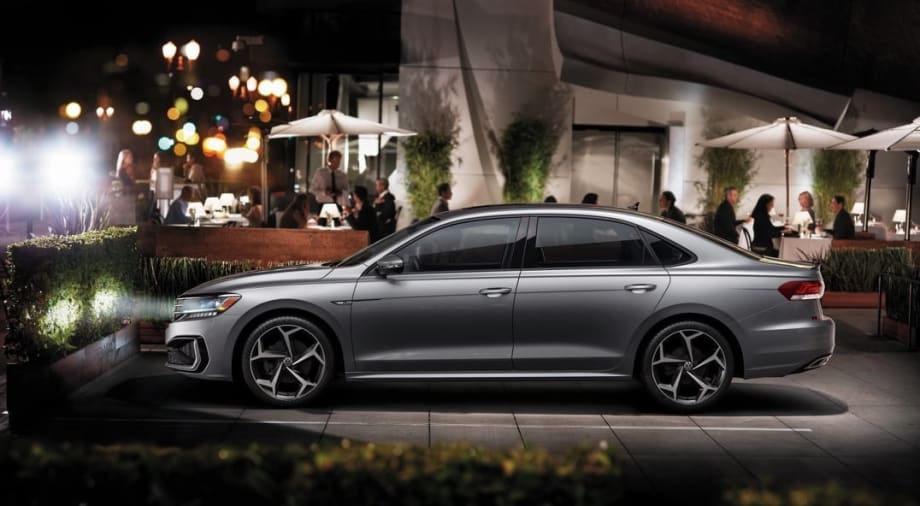
The Passat is VW’s top-selling fleet model. The redesigned 2020 Passat, which debuted at the North American International Auto Show, has generated strong interest from fleets.
Photo courtesy of Volkswagen of America.
On April 2, Volkswagen of America posted its March 2019 sales, which demonstrated the growing importance of SUV sales to VW. In March, VW sold 19,247 SUVs, a new monthly record for the brand. It was the second straight month that SUVs accounted for more than half of total VW sales.
Leading the way is the Tiguan compact SUV, which registered 11,805 units sold in March, the best month ever for a VW SUV. This represented a 43% increase in sales for the Tiguan, making it the sales volume leader for VW followed by the new Jetta. The Atlas generated 7,381 sales in March, a new record for the recently introduced full-size SUV. Launched in 2017, the Atlas, as of March, surpassed 100,000 total units sold.
The Passat continues to be VW’s top-selling fleet model, but changing buying preferences in both the retail and fleet markets are making VW’s growing portfolio of SUVs a strong alternative choice for a growing number of commercial fleets.
To learn more about VW’s sales strategy in the commercial fleet market, Automotive Fleet interviewed Martin Kiel, national fleet sales manager for Volkswagen of America. Below are excerpts from our interview.
Automotive Fleet: What is VW’s outlook for the commercial fleet market for the balance of calendar-year 2019?
Kiel: We don’t see much change year-over-year in demand. But what we do see is a change in is the mix of products and the segments that companies are moving toward – more SUVs than passenger sedans. But as far as the demand or any change in the business, it remains rather steady.
AF: What are VW’s top-selling models in the commercial fleet market?
Kiel: The Passat remains in the lead. However, since the all-new Tiguan came into the market in model-year 2018, as a much larger, more competitively configured vehicle, its sales have really accelerated. It’s close on the heels of the Passat. I feel that with the shift in fleet buying preferences, we’re eventually going to see the Tiguan take the lead. But demand in the fleet passenger sedan segment still remains strong. We have received strong interest from fleets about the redesigned model-year 2020 Passat, which will be in market Q3 of this year.
AF: What is your strategy to increase and grow VW’s commercial fleet sales in the coming years?
Kiel: It’s a continuation of a strategy we have had for many years. Our strategy is to build relationships. This has proven to be very successful for us. The foundation of Volkswagen’s fleet strategy has been about the relationship and the type of service that we provide. I have a really solid team. We consider ourselves a one-stop shop. Each of the team members is responsible for their account from the beginning.
Because we are considered by some to be more niche, meaning we don’t offer cargo vans or pickup trucks, the strategy we take is we want people to want to do business with us, to enjoy working with us by having a true relationship.
I believe that is what allows for steady, consistent growth, as well as long-term customers. While product is important, our strategy is to ensure that we continue to grow our relationships, establish new ones, and make sure these relationships continue for a long time.
AF: What initiatives does VW have in place or is developing to make it easier for fleets to do business with you?
Kiel: One fleet initiative we are exploring incorporates the all-new Volkswagen Car-Net Telematics system, which allows vehicle operators to use a smartphone app to control various vehicle features, and now, it’s capable of doing even more, such as enhanced navigation with real-time traffic and weather information. We are exploring ways with several fleet management companies on how the Car-Net telematics system can benefit and provide greater value to our fleet customers. I believe is important for us to explore and find ways to provide information to customers that allow their work be more efficient, which, in turn, will make it easier to work with Volkswagen.
AF: What are VW’s strengths in the fleet market?
Kiel: One of our strengths is our close relationships with our customers, and our responsiveness to their needs.
Our customers know that if they ask something of us, we’re going to find the answer and find it as quickly as we possibly can. We strive to be not only responsive, but also proactive and forward-thinking in our interactions with our customers.
The VW fleet team is a more intimate group. We are very much in touch with our clients and have a closer relationship. This is how we want to differentiate ourselves. I know this has won business for us because fleet managers will tell us they want to do business with us because you actually return calls, show up to meetings, follow-up on requests, and quickly provide answers. That’s where I see our strength in the fleet market.
AF: How does fleet fit into the overall VW brand strategy?
Kiel: Fleet has always been part of our sales plan and will be for many years to come. Fleet is something that is not just penciled in. It’s something that is actually in a sales plan going out many years. We’re already working on next calendar-year, making sure we understand what the expectations are and our production allocation. It is a consistent fleet strategy that is part of our overall sales plan. We execute our fleet strategy in a controlled manner.
The fleet plan is part of the overall sales plan for the company. Fleet sales tend to stay at about 10% of overall sales, which includes commercial and rental. Commercial has always been supported by Volkswagen.
AF: Are there specific industry segments that tend to gravitate toward VW fleet product?
Kiel: We’ve done quite well with pharmaceutical companies and have been successful with insurance companies. We also have had success with name-brand retailers that have been a long-time customer of ours. We have found pharma to be our No. 1 fleet segment.
AF: What is VW’s vision on the future of vehicle electrification or alternative fuels in the commercial fleet market?
Kiel: VW has made some very public statements about our investments in battery-electric vehicles and our MEB platform that we are utilizing for the development of all of these upcoming battery electric vehicles.
Volkswagen fleet has been involved in customer clinics, where we brought various members of the fleet industry to see an actual full lineup of our electric vehicles. We want to understand where these products fitting into their businesses, and how these vehicles can work within their fleets.
We believe that as the infrastructure grows, acceptance will grow as range anxiety decreases. There is a fit for battery electric vehicles in the commercial space. I’m excited about the products we have coming.
More Vehicle Research
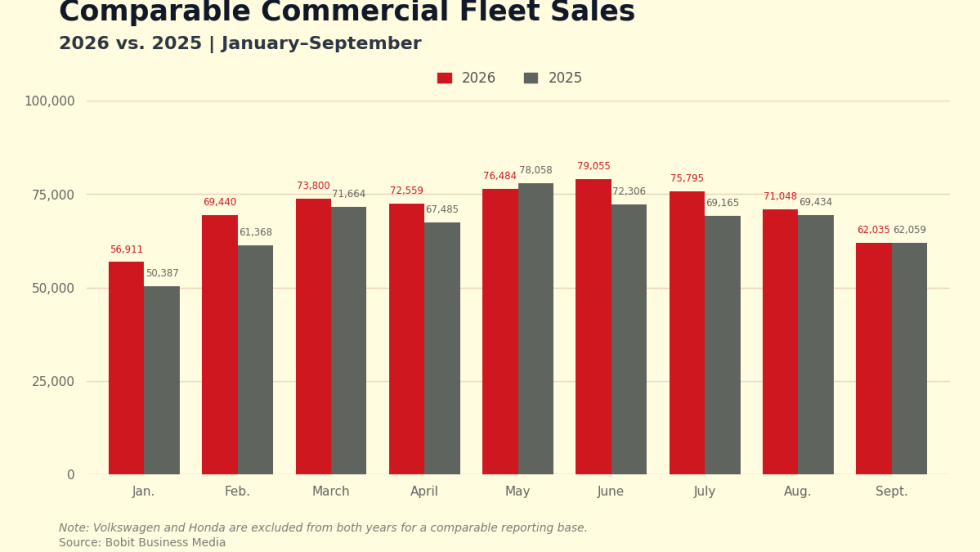
Commercial Fleet Sales Rise 5.8% Through September 2026
September commercial fleet sales were essentially unchanged from a year earlier, slowing year-to-date growth while keeping volume ahead of 2025.
Read More →
Hall of Fame Inductee: John Dmochowsky
The longtime Mondelēz International fleet executive joins the Automotive Fleet Hall of Fame.
Read More →
Hall of Fame Inductee: Lee Miller
After more than four decades at Boehringer Ingelheim, Lee Miller leaves a legacy built on fleet expertise.
Read More →
Hall of Fame Inductee: Mark F. Petersen
From managing fleets of thousands of vehicles to advancing safety and mentoring fellow professionals, Mark F. Petersen made his mark across both the corporate and supplier sides of fleet.
Read More →
When Charger Downtime Becomes a Fleet Availability Problem
As EV deployments move beyond pilot programs, charger reliability can directly affect vehicle readiness, driver productivity and route scheduling.
Read More →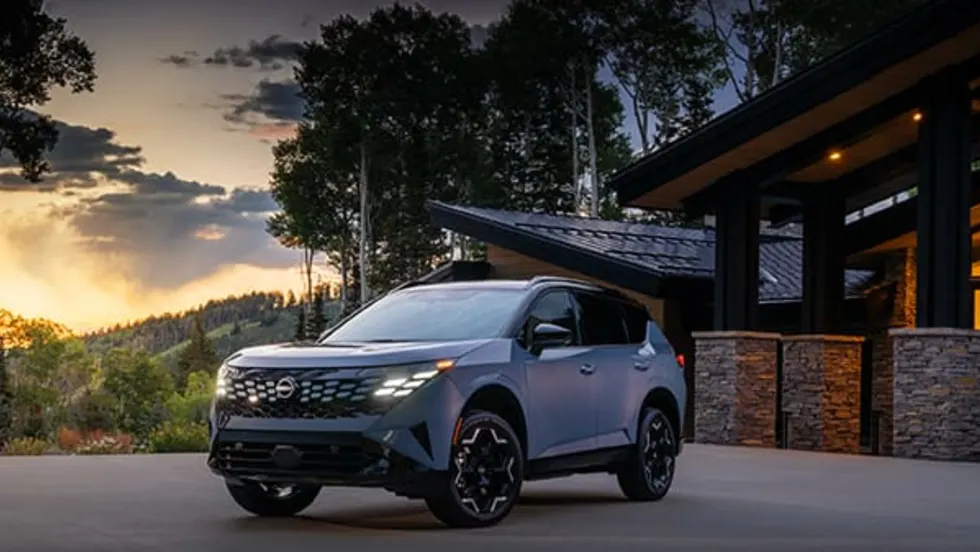
2027 Nissan Rogue Hybrid Adds e-POWER, Standard AWD
The new Rogue Hybrid uses Nissan’s e-POWER system with dual electric motors, offers an estimated 40 mpg and starts at $35,490.
Read More →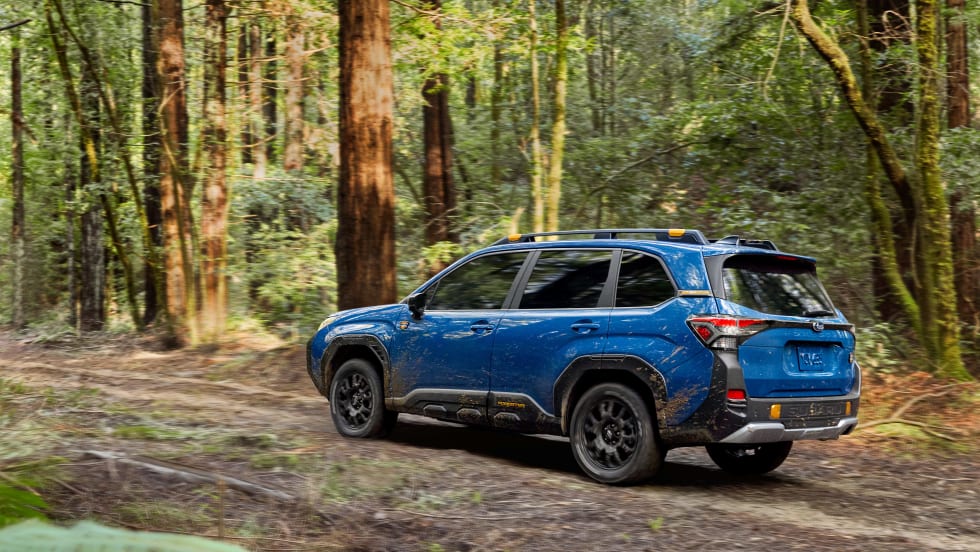
2027 Subaru Forester Adds First Wilderness Hybrid
The 2027 Forester lineup starts at $29,995 and adds a Wilderness Hybrid with 194 combined horsepower and 9.3 inches of ground clearance.
Read More →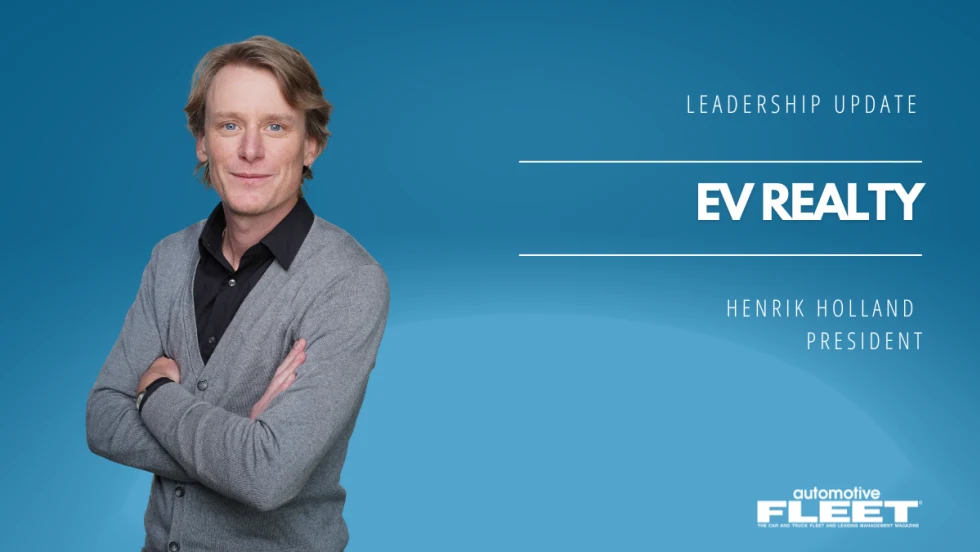
EV Realty Names Henrik Holland President as Charging Platform Expands
The former Prologis Mobility and Shell executive will help expand EV Realty’s truck charging business and move its power-first infrastructure model into autonomous vehicle depots and other fleet sectors.
Read More →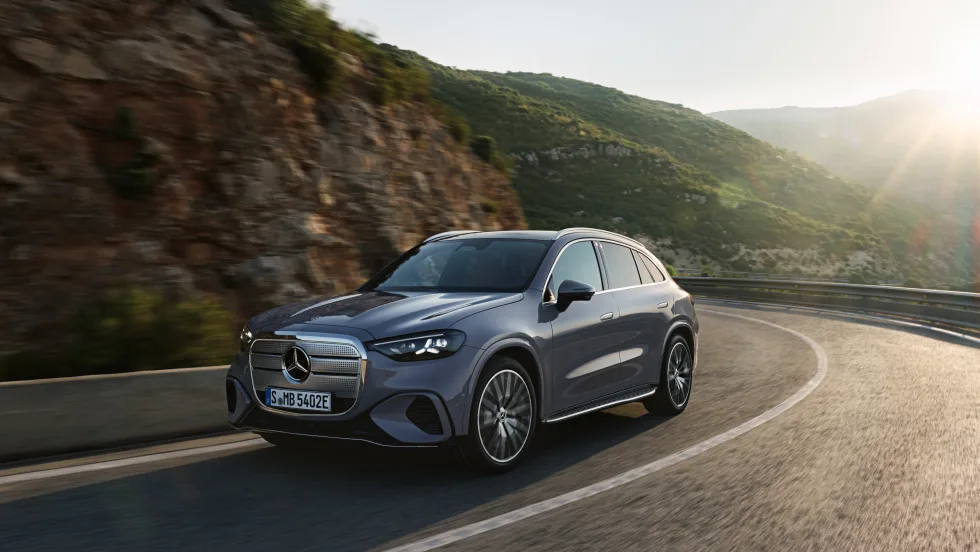
Mercedes-Benz Introduces Electric GLC With Up to 350 Miles of Range
The GLC 400 4MATIC Electric features an 800-volt architecture, 330-kW DC fast charging and a 94-kWh battery, along with Mercedes-Benz's new MB.OS operating system.
Read More →
Fleet Has a Talent Pipeline Problem, not a Talent Problem
Where will the next generation of fleet leaders come from, and what does the industry need to do differently to find them?
Read More →