




2019 Nissan Altima
Nissan's 2019 Altima midsize sedan gets a wide-ranging update led off by new powertrains and enough safety tech and to remain firmly planted as a reliable choice for the pharmaceutical and other commercial fleets now using it.

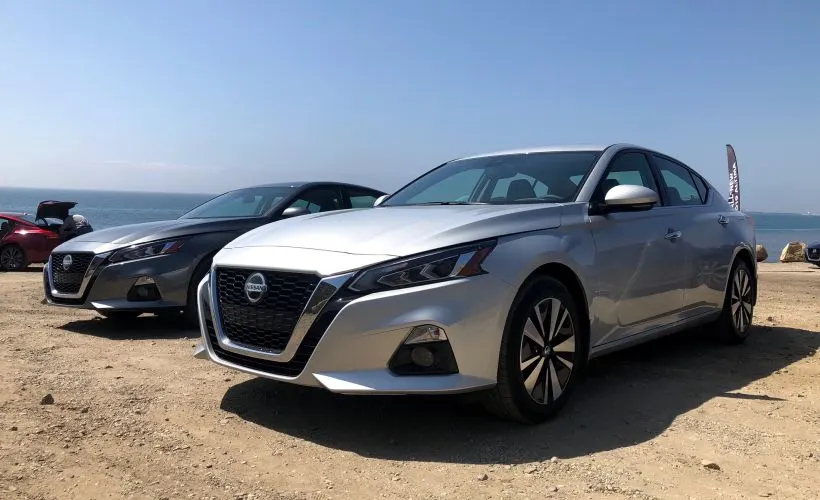
The 2019 Altima enters its sixth generation with new engines, optional all-wheel drive, and other new features.
Photo by Paul Clinton.
The surge in SUV sales has led some manufacturers to downsize or eliminate sedans. Not Nissan. With its 2019 Altima, Nissan doubles down on its reliable midsize model with a wide-ranging update that includes a pair of new engines, all-wheel drive, and five new or improved safety technologies that keep it firmly planted as a reliable choice for the pharmaceutical and other commercial fleets now using it. The base sedan should remain a staple in rental fleets as well.
We joined other automotive journalists in Santa Barbara, Calif., to test-drive the sixth-generation Altima. The event began when Nissan showed off a 1993 Altima just to remind us all how far the vehicle has come since its introduction to the U.S. market. In truth, the vehicle hasn't received a significant powertrain update in 15 years, as evidenced by the pair of engines that have powered the vehicle over that span.
For the 2019 Altima, Nissan is offering a unique turbocharged four-cylinder engine that debuted in the Infiniti QX50 luxury crossover.
Two New Engines and (Now) All-Wheel Drive
Most fleet buyers will opt for a trim grade with the standard engine — a 2.5-liter DOHC direct-injection inline-four cylinder engine that subtly increases power output over the engine it replaces. The engine makes 188 horsepower (a 9-hp increase) and 180 pound-feet (up 3 lb.-ft). The block and cylinder heads remain, but most of the parts are new, according to Nissan.
Nissan is also offering a Variable Compression Turbo (VC-T or VC-Turbo) — a 2.0-liter inline-four cylinder that's available on three of the six trim grades (SR, Platinum, and Edition One). What makes the engine special is its ability to change compression ratios depending on whether the driver needs fuel efficiency or power.
The trim grades progress from the base S to SR, SV, SL, Platinum, and Edition One. A new all-wheel-drive system is available on 2.5-liter models.
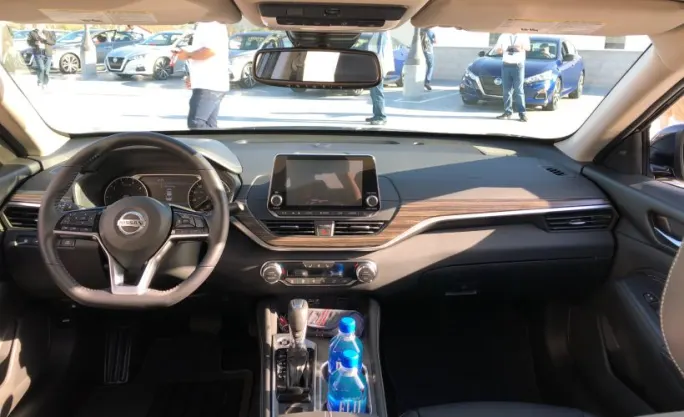
The midsize sedan adds five new safety technologies, including ProPilot Assist.
Photo by Paul Clinton.
More Safety Technology Bundled Together
Fleet managers are always looking to reduce their accident rate, and have seen a growing number of advanced driver-assisting systems arriving in new models to help them do it.
With the 2019 Altima, Nissan is introducing its Safety Shield 360 bundle on SV and above. The bundle includes five new technologies, including the semi-autonomous ProPilot Assist lane-centering feature previously added to Leaf and Rogue, as well as a drowsy driving alert, rear automatic braking, traffic sign recognition, and automatic emergency braking with pedestrian detection. The Altima previously offered a lane departure warning with lane keeping intervention and automatic braking, which adds the pedestrian detection feature.
Standard equipment across the lineup includes the drowsy driver alert, rear seat alert, eight-way driver's seat, 8-inch display for an upgraded NissanConnect infotainment system, Apple CarPlay and Android Auto, 7-inch instrument panel display, two USB-C ports, and remote engine start.
2019 Nissan Altima Specs:
Engines: 2.5L I-4 (188 hp, 180 lb.-ft.) or 2.0L turbo I-4 (248 hp and 273 lb.-ft.)
Transmission: CVT
All-wheel drive: Optional AWD with three torque distribution modes (50:50, 0:100, and 30:70)
Cargo space: 15.4 cu.-ft.
More Blog Posts

Fleet Review: 2026 Outback Is More SUV, Still an Outback
The redesigned Outback trades its station-wagon profile for a roomier, more conventional SUV shape while retaining the comfort and safety technology that give it fleet appeal.
Read More →
Why Should Fleets Choose the 2026 Mercedes-Benz GLC 300 SUV?
The GLC 300 offers corporate fleets attainable luxury, comfort, and practicality that transitions seamlessly to family duty.
Read More →
Fleet Review: Volvo EX90 & the Software-Defined Vehicle
Volvo’s new three-row electric SUV is designed for the corporate (and family) class.
Read More →
Fleet Review: Mercedes-Benz EQB 250+
With a reasonable entry point and the refinement of a Mercedes, The EQB 250+ defines “practical luxury” for fleets.
Read More →
Fleet Review: Volvo XC60 & XC90 PHEVs
Volvo’s XC60 and XC90 plug-in hybrid models are stylish, safe, sustainable — and surprisingly fast.
Read More →
Fleet Review: Volvo XC40 Recharge
The Volvo XC40 Recharge offers fleets the familiar premium Volvo experience, electrified.
Read More →
The 2023 Ford Mustang Mach-E Offers a Smooth Ride for New EV Drivers
A look at the bells and whistles on the car, plus how it drives, from the perspective of someone who’s never driven an EV.
Read More →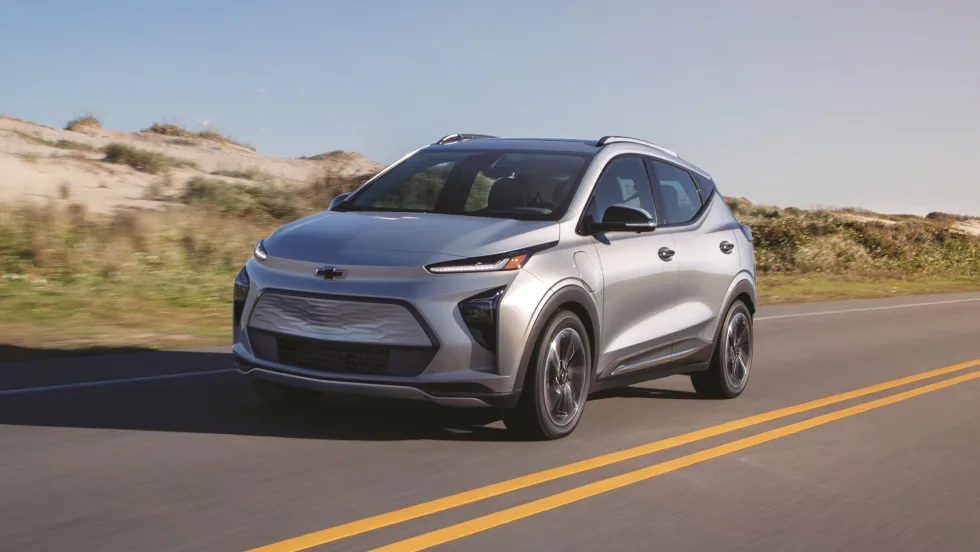
The 2022 Bolt EUV Lowers TCO While Meeting Sustainability Goals
The 2022 Bolt EUV expands Chevrolet’s EV lineup as a utility-type vehicle with a range of 250 miles on a full charge. It will be sold alongside the 2022 Bolt EV model. The Bolt EUV is approximately six inches longer than the Bolt EV.
Read More →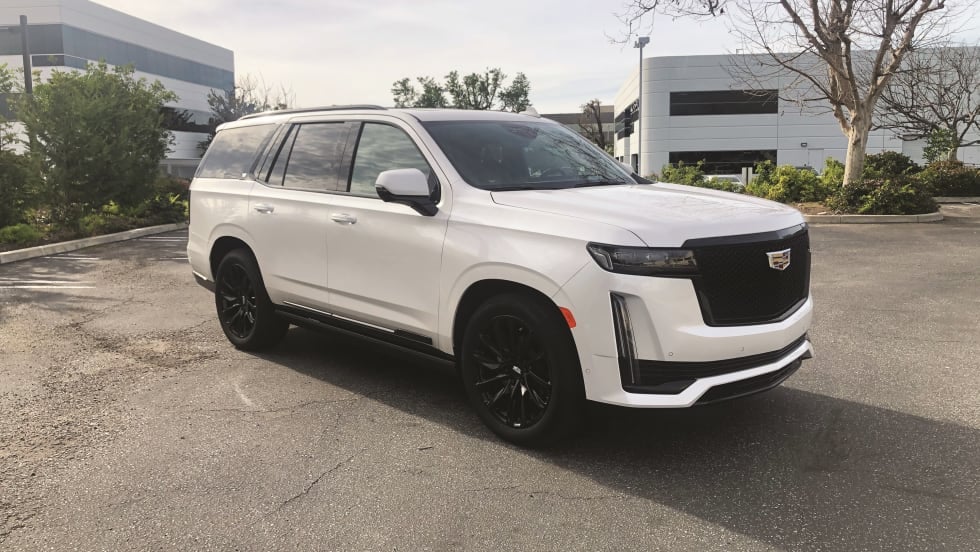
2021 Cadillac Escalade is C-Suite Material
The 2021 Cadillac Escalade 4WD Sport Platinum is the most expensive model sold by General Motors. But its brand cachet makes it the ideal pinnacle fleet vehicle to help retain high-value senior execs with a high-value luxury SUV.
Read More →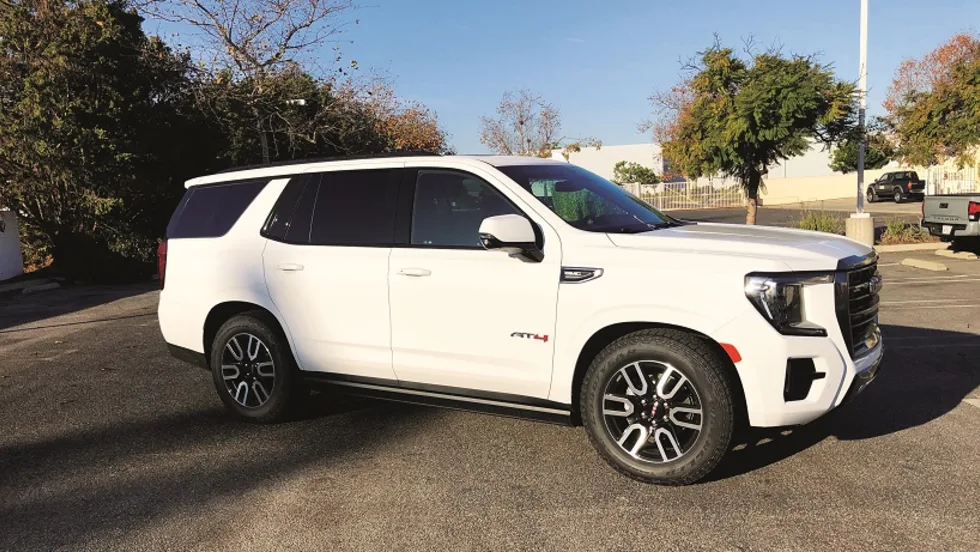
2021 GMC Yukon AT4 Excels as an Off-Road Crew Vehicle
Powered by a 5.3L V-8, generating 355 horsepower and 383 lb.-ft. of torque, the engine is paired to a10-speed automatic transmission. It is ideal for off-road work applications and can transport an eight-person work crew with tools and equipment.
Read More →