




Ford Launches Third-Gen 2019 Transit Connect Wagon
Ford debuted the 2019 Transit Connect Wagon with new gasoline and diesel powertrains, a new eight-speed transmission, and a suite of safety technology as standard equipment at the Chicago Auto Show.

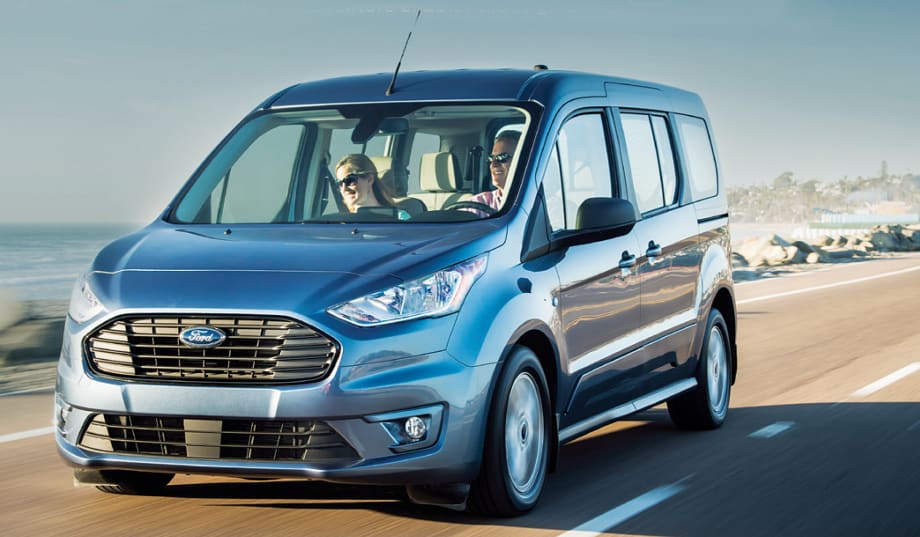
Photo courtesy of Ford.
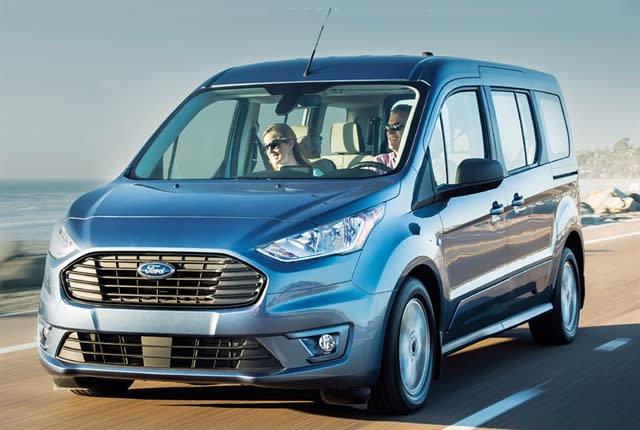
Photo courtesy of Ford.
Ford debuted the 2019 Transit Connect Wagon with new gasoline and diesel powertrains, a new eight-speed transmission, and a suite of safety technology as standard equipment at the Chicago Auto Show.
The passenger-hauling compact van is available in two wheelbases that can accommodate five or seven passengers and is offered in three trim levels — XL, XLT, and Titanium. The third-generation 2019 Transit Connect will go on sale in the fall of 2018.
On the exterior, the 2019 Transit Connect has a new front-end design incorporating the Ford-themed grille, which offers HID headlamps with LED lighting and LED fog lamps. Transit Connect Wagon offers dual sliding side doors and is available with roof rails that allow a number of accessories to be fitted to roof.
The 2019 Transit Connect Wagon can be powered by either a gasoline and diesel engine. The standard engine is a new 2.0L GDI four-cylinder gasoline engine with direct injection that comes with Auto Start-Stop. The engine is mated to a new eight-speed automatic transmission.
Also new for the 2019 Transit Connect Wagon is a class-exclusive diesel engine. The 1.5L EcoBlue diesel engine is targeted for an EPA-estimated fuel economy rating of at least 30 mpg on the highway. The diesel engine is also paired with the new eight-speed automatic transmission.
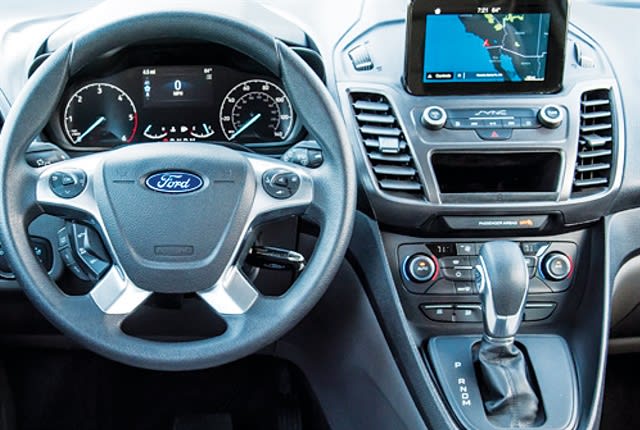
Photo courtesy of Ford.
The short wheelbase version of the Transit Connect Wagon has a turning radius of 38.3 feet to facilitate maneuvering in congested urban fleet applications. The long wheelbase version offers increased interior cargo volume. The 2019 Transit Connect Wagon will have a segment-exclusive third-row seating. The second and third row seats can fold flat to provide cargo-carrying capability. There are 12-volt power ports for passenger use in the second and third row seats.
The Transit Connect Wagon will offer a towing capability of 2,000 pounds when paired with the available trailer tow package.
There are seven new standard driver-assist technologies including standard Automatic Emergency Braking, which is included with the Pre-Collision Assist with Pedestrian Detection. Also available is Adaptive Cruise Control, Blind Spot Information System with Cross-Traffic Alert, and a Lane Keeping System.
On the interior, there is a redesigned dashboard with available 6.5-inch touchscreen, a digital driver information center in the cluster, and available wireless charging for a mobile device. There is an embedded 4G LTE modem as standard equipment.
More Operations
Here's When You Should Make an Exception to Fleet Policy
Fleet policies are designed to create consistency, but not every driver or situation fits neatly within standard rules.
Read More →
AI-Native or AI-Acquired: What Should Fleet Managers Look for in an AI Platform?
Six questions can help fleet managers look beyond AI marketing claims to evaluate integration, data access, and real-world operational performance.
Read More →
A buyer's guide to fleet management software in 2027
Buying fleet management software in 2027 means looking beyond features and price. As fleet operations, technology and expectations evolve, this guide explores what today’s fleet professionals should consider when choosing a system that can deliver value now and adapt to what comes next.
Read More →

What Will Shape the Next Era of Fleet Management?
EVs, AI, and autonomous vehicles are reshaping fleet management. Discover what’s ahead—and how fleet leaders can prepare for the next era.
Read More →
How Fleets Can Recruit and Train Veterans for Technician Roles
Here's how the technician shortage has affected uptime for fleets, and what to do about it.
Read More →
Avis Budget Group Deploys Neology Toll Management Technology Across Major Brands
Neology’s neoFleet platform will manage toll transactions and toll-authority operations for vehicles across Avis, Budget, Payless, Budget Truck and Zipcar.
Read More →
Fleet Personal-Use Charges Edge Higher in 2026
Nearly eight in 10 surveyed fleets allow personal use of company vehicles, while just over half of respondents report charging employees for the privilege.
Read More →
The Future of Fleet + What’s Changing Right Now | AF News Recap
Could developments overseas offer a preview of what’s coming for U.S. fleets? This week, we’re looking at the future of AI, autonomy, and electrification, plus Ford Pro’s new certified pre-owned program, smarter vehicle offboarding, and a new way for fleets to manage toll expenses.
Read More →
How to Handle Vehicle Offboarding
What do fleet managers need to do when a driver leaves?
Read More →
Fleet Manager’s Ultimate Playbook: Navigating the New Standard in OEM Connectivity
Rising operating costs, driver safety concerns, and unplanned downtime are putting unprecedented pressure on modern fleets. Discover how fleet managers use embedded OEM connectivity and real-time vehicle data to cut TCO, prevent downtime, and protect drivers without aftermarket telematics hardware.
Read More →