




Related: The Value of a Fleet Accident Packet
How Preventative Maintenance Can Improve Driver Safety
Regularly monitoring tire pressure, brakes, windshield wipers, and vehicle recalls can help make a vehicle a safer place to do business.

Andy Lundin・Former Senior Editor
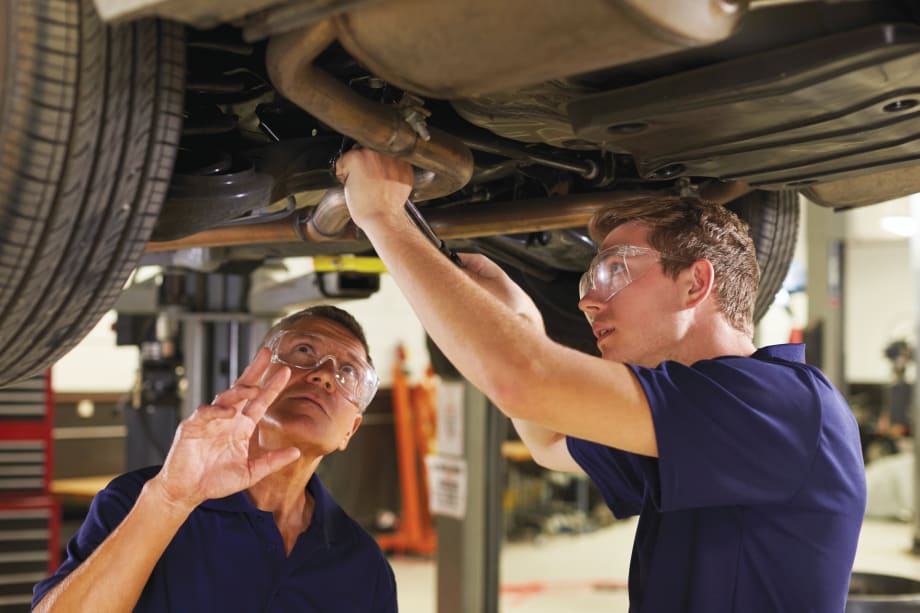
Photo courtesy of istockphoto.com
3 min to read

Photo courtesy of istockphoto.com
Human-related errors are the primary reason for vehicle crashes. With the rise of distracted driving over the past decade becoming a bigger issue, it’s not hard to understand why this is the case.
However, even though the way drivers conduct themselves on the road is crucial to safe driving, drivers should also be mindful of the maintenance aspects that could affect how safe a vehicle is to drive.
“Fleet maintenance is not any different than personal car maintenance, other than the fact that it is typically required more often, because the cars get more use and pile up more miles,” said Michael Calkins, AAA, manager of technical services.
There are five primary components that have the most direct impact on driver safety, according to Calkins.
Tire Pressure
Calkins said that tire pressure is one of the most overlooked things for vehicle maintenance, and added that tire pressure should be checked at least once a month. He said the tire sidewalls should be analyzed for bulges, cuts, and tears, and tire tread depth should be checked.
“We use the quarter test, where you put a quarter upside down into the various tread grooves and if you can see the top of Washington’s head it doesn’t mean you’re tires are worn out but it’s probably time to start shopping. Tires worn to that point have longer stopping distances, particularly on wet pavement and are more likely to hydroplane,” he said.
Brakes
When braking, anytime a driver hears any kind of noise, if the steering pulls, or there’s a vibration, the vehicle should be inspected for potential brake issues, said Calkins.
“During routine servicing, most shops will check the brake pad wear,” he said. “In other cases, if they don’t, if it gets down to a point you’ll hear a squealing.”
He said it’s better to repair the brakes before they get too worn down.
Windshield Wipers
He also said to make sure the windshield wipers are in good shape, and depending on where the vehicle resides, it’s not uncommon to replace the wiper blades twice a year, including hot climates due to how the heat affects the wipers.
“A general rule of thumb is if the wiper can’t clear the windshield in a single swipe, you can try cleaning the blades,” he said. “If that doesn’t work you may need to replace them.
He also suggested that drivers make sure vehicle windshield washer fluid is full, and using a fluid solution that is season/location appropriate. This would include solutions that can clear bugs off more easily or types that won’t freeze in the winter.
Airbags
Calkins said that if a vehicle has an airbag warning light turn on, it should be checked immediately. If the light is on, the airbags won’t work.
“Cars have anywhere from six to 14 airbags,” he said. “Large numbers of airbags can protect your torso, your face, and knee airbags.”
Recalls
Fleets should regularly check if any of their vehicles have a safety recall, Calkins said. All recalls are fixed by the dealer free of charge for whoever owns the vehicle, regardless of vehicle age or mileage.
He said that fleet managers should visit www.recalls.gov to see if there are any outstanding recalls on a vehicle in their fleet.
How Fleets Can Be Proactive
To keep track of all these elements, Calkins said that fleets can offer basic training for drivers to teach them how to identify any problematic maintenance issues.
“If you hear scraping, or if the steering wheel vibrates or pulls, or the windshield wipers smear, let the fleet manager know so they can do the appropriate service,” he said.
He said it’s just as important for the fleet to keep up with maintenance schedules based on time and mileage, especially since certain fleet vehicles may undergo more strenuous driving.
“A delivery vehicle that will stop and go in town is under much more severe service needs than a car that’s used to drive long distances on the highway,” he said.
Subscribe to Our Newsletter
More Safety

Sponsored•October 1, 2026
Fleet Manager’s Ultimate Playbook: Navigating the New Standard in OEM Connectivity
Rising operating costs, driver safety concerns, and unplanned downtime are putting unprecedented pressure on modern fleets. Discover how fleet managers use embedded OEM connectivity and real-time vehicle data to cut TCO, prevent downtime, and protect drivers without aftermarket telematics hardware.
Read More →
From Driver Well-Being to EV Charging | AF News Recap
Mental health belongs in the fleet safety conversation. This week, we’re looking at five ways fleets can support employee well-being before a crisis, plus Holman’s expansion in Mexico, new one-day Fleet Forward passes, and why EV charging demand is outpacing infrastructure growth.
Read More →
Nexar-Nauto Merger Aims to Give Fleets Better Safety Intelligence Through Larger Driving Dataset
Stefan Heck tells Automotive Fleet that combining more than 10 billion miles of driving history with Nexar's AI models will give fleets deeper insights into driver risk and roadway conditions than either company could provide independently.
Read More →
Don't Wait for a Crisis: 5 Ways to Build Mental Health Into Your Fleet Safety Program
For Suicide Prevention Month, fleet and safety leaders have an opportunity to put mental health where it belongs: at the center of workplace safety.
Read More →
How Camera Data Can Strengthen a Fleet’s Insurance Renewal
Insights from a commercial insurance carrier and a broker show how fleets can turn video telematic data, driver coaching, and improved claims results into a stronger case at insurance renewal.
Read More →
The Safest Fleets Aren’t the Ones with the Most Technology
You’ve made the telematics investment. Here’s how to capture the other half of its value and build the safest fleet on the road.
Read More →
Sponsored•August 7, 2026
Hidden in Plain Sight: Fleet Compliance Risks
Fleet compliance isn't just about having policies — it's about consistently enforcing them. This practical guide reveals six hidden compliance risks common in public sector and shared fleet operations and outlines proven strategies to improve visibility, accountability, and audit readiness
Read More →
NETS Sets 2026 Fleet Safety Benchmark Conference for Indianapolis
The Sept. 15–17 program will feature fleet benchmarking data, case studies, emerging technologies, and implementation strategies while running alongside the NSC Safety Congress & Expo.
Read More →
Off-the-Job Crashes Account for 43% of Employers’ $61.7 Billion Crash Burden
NETS quantifies costs dispersed across fleet, risk, HR, and other departments while providing new per-crash benchmarks for employers.
Read More →
Ram Recalls More Than 1.27 Million 1500 Pickups for Seat Belt Anchor Issue
The recall affects certain 2019-2026 Ram 1500 pickups that may have improperly attached second-row seat belt buckle anchors.
Read More →