




Ford's 2017-MY Fleet-Only Options
Ford offers optional equipment available only to fleets that includes police telematics, orange seatbelts, and adjustable pedals.

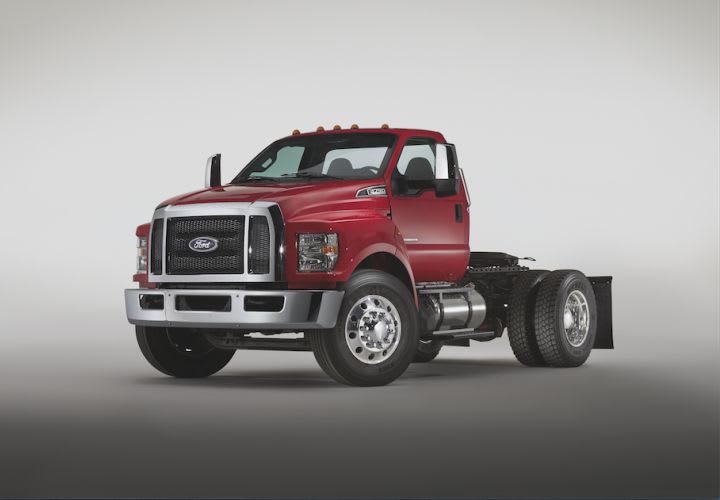
Photo of 2017 F650/F-750 courtesy of Ford.
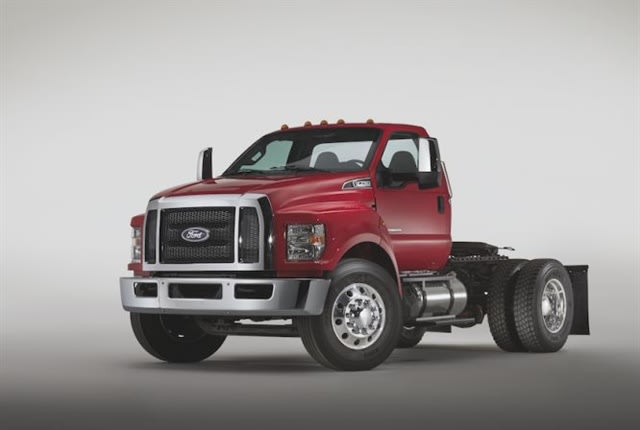
Photo of 2017 F650/F-750 courtesy of Ford.
Fleet ordering guides provide commercial, government and rental fleets, as well as fleet management companies, with detailed information about the vehicles and option packages available to them. A closer look at these guides can unearth treasures hidden to the retail buyer.
We poured through the 2017-model-year guides of the three Detroit automakers and identified options and vehicles available exclusively to fleets. A detailed list of optional equipment from Ford's trucks and vans follows, as well as an overview of police vehicles not available to retail buyers. Other articles highlight optional equipment for fleets offered by Fiat Chrysler and General Motors for its Chevrolet models.
Ford relies on customer feedback when determining which options to offer fleet customers, said Tim Stoehr, Ford's general fleet marketing manager.
"At Ford, we recognize that hardworking people rely on our trucks and vans to get their jobs done every single day," Stoehr said. "That’s why we continually seek feedback from our customers about how we can make our vehicles even better tools. Sometimes this feedback results in overall vehicle design changes and other times we determine that a fleet-exclusive option is the best way to meet our commercial customers' needs."
Ford offers an array of fleet-only options with its Transit, Transit Connect and E-Series van lineup.
Transit buyers can add an engine governor that restricts the top speed to 65, 70, or 75 mpg. Buyers can delete the center console to improve access by drivers to walk into the cargo compartment without leaving the vehicle. Fleets can also add daytime running lamps, delete exterior mirrors, and add manual locks or mirrors. Fleets can add steel wheels painted white with black hubcaps or white wheels for a dual real wheel Transit.
Transit buyers can also purchase a van with orange seat belts, which can lower insurance premiums because they enhance visibility. The School Bus Yellow exterior paint color is not offered to retail buyers.
"High-visibility seat belts like the orange belts available for Transit make it much easier for fleet managers and others to see at a glance if their drivers are buckled up," Stoehr said.
Transit Connect buyers can order a 65-mph or 75-mph speed limiter or delete third-row rear seats on long wheelbase passenger wagons.
Fleets can order the E-Series cutaway and stripped chassis with a 75-mph speed limitation, as well as an auxiliary heater, daytime running lamps and a front maximum GAWR (gross axle weight rating). The engine console cover can be deleted for fleet buyers. Prep packages available for E-Series include ambulance, multifunctional school activity bus, school bus and shuttle bus.
On the truck side, the Ford F-150 offers a range of fleet-exclusive features, including a backup alarm system, black step bars on XLT models, daytime running lamps, an engine block heater, LT245/70R17E BSW all-terrain tires, and skid plates on 4x4 models.
Fleet-only options for Ford's redesigned Super Duty pickup trucks include speed limitation for a top speed of 65 mph or 75 mph. Fleets can add power-adjustable pedals to accommodate drivers with various heights, daytime running lamps, a tool or cargo box, loading ramps, and an upfitter interface module to control any equipment. Fleets can also add the XL Décor Group that includes bright chrome hub covers and center ornaments, as well as chrome front and rear bumpers.
Items that can be deleted on Super Duty trucks include the spare wheel and tire, individual tire pressure monitoring system (TPMS), and the air conditioning system.
Ford's Super Duty Chassis Cab, which can be purchased in Classes 3 to 5, offers fleet options including an ambulance prep package, power-adjustable pedals, daytime running lamps, cruise control, a fire and rescue prep package, and speed limitation at 65 mph or 75 mph.
Items that can be deleted from the Super Duty Chassis Cab include the radio, air conditioning system, carpet, and TPMS.
Ford offers two options on its F-650 and F-750 trucks, including an ambulance prep package and fire and rescue package.
Ford offers a lineup of fleet-only vehicles for police fleet buyers, including the Police Interceptor sedan, Police Interceptor Utility, F-150 XL SSV, Expedition SSV, and Transit PTV prisoner transport van. These vehicles may share a platform with retail vehicles, but they have been modified significantly for the duty cycle.
Ford also offers factory-installed telematics branded as Ford Telematics powered by Telogis that's designed for commercial and law enforcement fleets. Fleet managers can monitor vehicle location, speed, hard-braking or acceleration, excessive idling, seat belt use, oil life and engine temperature. It also provides access to diagnostic data that's not available through other fleet management systems.
View Ford's fleet ordering guide here.
More Operations
Here's When You Should Make an Exception to Fleet Policy
Fleet policies are designed to create consistency, but not every driver or situation fits neatly within standard rules.
Read More →
AI-Native or AI-Acquired: What Should Fleet Managers Look for in an AI Platform?
Six questions can help fleet managers look beyond AI marketing claims to evaluate integration, data access, and real-world operational performance.
Read More →
A buyer's guide to fleet management software in 2027
Buying fleet management software in 2027 means looking beyond features and price. As fleet operations, technology and expectations evolve, this guide explores what today’s fleet professionals should consider when choosing a system that can deliver value now and adapt to what comes next.
Read More →

What Will Shape the Next Era of Fleet Management?
EVs, AI, and autonomous vehicles are reshaping fleet management. Discover what’s ahead—and how fleet leaders can prepare for the next era.
Read More →
How Fleets Can Recruit and Train Veterans for Technician Roles
Here's how the technician shortage has affected uptime for fleets, and what to do about it.
Read More →
Avis Budget Group Deploys Neology Toll Management Technology Across Major Brands
Neology’s neoFleet platform will manage toll transactions and toll-authority operations for vehicles across Avis, Budget, Payless, Budget Truck and Zipcar.
Read More →
Fleet Personal-Use Charges Edge Higher in 2026
Nearly eight in 10 surveyed fleets allow personal use of company vehicles, while just over half of respondents report charging employees for the privilege.
Read More →
The Future of Fleet + What’s Changing Right Now | AF News Recap
Could developments overseas offer a preview of what’s coming for U.S. fleets? This week, we’re looking at the future of AI, autonomy, and electrification, plus Ford Pro’s new certified pre-owned program, smarter vehicle offboarding, and a new way for fleets to manage toll expenses.
Read More →
How to Handle Vehicle Offboarding
What do fleet managers need to do when a driver leaves?
Read More →
Fleet Manager’s Ultimate Playbook: Navigating the New Standard in OEM Connectivity
Rising operating costs, driver safety concerns, and unplanned downtime are putting unprecedented pressure on modern fleets. Discover how fleet managers use embedded OEM connectivity and real-time vehicle data to cut TCO, prevent downtime, and protect drivers without aftermarket telematics hardware.
Read More →