




Moving Forward and Beyond with Telematics
Organizations and businesses running a fleet of any type or size can gain deep insights into operations using telematics data today. What began as track and trace technology has become so much more — but what’s next?
Photo courtesy of iStockphoto.com.
Photo courtesy of iStockphoto.com.
The telematics industry has come a long way since the early days of dumping data when a vehicle would return to home base or considering it as “dots on a map” technology. Now, telematics can give fleet managers instant reports on location, driver behavior, vehicle diagnostic alerts, and more. But where are we headed in the next few years? Where will the integration between technology, vehicles, and fleet polices and procedures take us? Here are a few of the current trends that are within our reach, and just beyond it.
Mining the Mounds of Data
To put in technical terms, data mining refers to applying advanced analytical/statistical techniques to the data gathered by software systems — such as telematics — to discover, understand, and learn from different trends. Fleet managers can learn so much more from the data derived through their telematics systems, not just locating vehicles and calculating the best routes. A fleet can find the best routes, as well as better understand the costs involved with servicing certain locations. For example, they can compare time spent at locations to understand employee or customer needs, or maybe improvements that need to be made to that particular service stop. By viewing this data beyond “dots on a map,” fleets can make serious strides with operational efficiencies.
It might also save you the expense of dealing with employee issues that might have otherwise gone unnoticed. For example, after seeing a string of drivers leaving the company, one fleet manager decided to look at related data trends to those particular employees. In most cases, the drivers had recently been involved in some sort of collision. The standard protocol in those instances were automated text messages sent to the driver’s phone reprimanding them about the accident without offering training or other feedback. For many, it was the tipping point in their decision to leave the company, hence the numerous employees quitting.
The highlighted factor here was that the fleet manager understood the usefulness of the data. It’s important to know how to extrapolate it without causing too much work or confusion. But in general, the data can be used to investigate seemingly ancillary issues to help paint a broader picture of what’s going on in your operations.
More Data, More Security
With the availability of more data comes the need to protect it. Fleet managers need to understand where the weak spots could exist and find ways to plug any obvious, and not so obvious, holes. Taking a step-by-step approach, telematics providers should be able to tell you the security of not only the devices on each vehicle, but also where the data lives, who has access to it and why, and what securities are in place to protect against hacking. That’s right, hacking. Some “helpful hackers” have already shown new outlets of how they can tap into a vehicle’s controller area network, giving them access to a vehicle’s engine, braking, and security systems. It’s an area fleets should make sure their provider is considering and working to stay on top of.
In many cases, there already exists a strong defense against hacking within telematics. For example, many data systems use public-key infrastructure, which has the ability to not only create, manage, store, and distribute data, but also revoke access to non-authenticated users.
Getting the Most Out of Resale
More and more fleets use telematics to ensure that vehicles follow scheduled preventive maintenance services. Using this data, fleet managers can gain more control over resale values with concrete proof that the vehicle was properly maintained. The “virtual odometer” can verify how much the vehicle was used, and the vehicle’s route history can show which conditions the vehicle worked through.
If repairs were made, fleet managers can again point to their telematics data to help prove it. Potential buyers can see if the fleet used OEM parts, how often repairs were made, and even whether or not the repairs were performed by a certified or OEM dealer/repair shop. Maintenance logs can also show that the fleet kept vehicles maintained according to the OEM’s recommendations.
Telematics can also reduce the risk of collisions by way of better driver behavior via tailored driver coaching. By reducing these collisions fleets can reduce accidents and help keep the vehicle’s resale value on solid footing. Plus, by setting up a geofence, fleet managers can be instantly notified when a car or truck travels outside predetermined boundaries. This means being able to quickly respond to theft, another unfortunate act that can easily lead to damage and negatively impact resale value.
Assessing Risk with Predictive Analytics
Pulling MVRs won’t be the only way to figure out which drivers need more training when it comes to safety. Going beyond just monitoring hard braking and speeding, predictive analytics can look at past events, as well as how long the driver has been on the road, which could predict instances of drowsy driving. Using algorithms, the system can analyze all the data together to give fleet managers a snapshot of their drivers and potential risks.
Consider the fact that fleet drivers are on the road an average of 20,000 miles annually. Multiply that by more than 3 million fleet vehicles and that is a combined 60 billion fleet miles every year. Each mile is filled with data that can be used to improve driver behavior, fuel and route efficiency, and overall productivity. Working with providers, fleets can figure out the most important data points to sift through so that they can get the most out of the telematics system.
Connecting Vehicles to Vehicles
As telematics and even autonomous vehicle technology improves and safety-related functions continue to be an up-and-coming trend, vehicles will become smarter and start communicating with each other. The vehicle might also act as a data hub through which different, separate machines can communicate, not just as machine to hub, but machine to machine. Fleets will have access to data previously unavailable, as well as data they use to keep their vehicles moving down the road. The connected vehicle, whether it’s a sedan with one or two passengers or a big rig loaded with freight, will be the ability to communicate with each other, reduce risk and improve traffic flow.
Connecting these vehicles will be the work of the software. Less emphasis will be placed on the hardware installed and more on the operating system running it behind the scenes. Safety-related functions will continue to see advancements, with vehicles becoming smarter. By communicating with each other, the vehicles will have a better chance of moving down the highways safer than they can today.
Currently, there are a number of connected assets, such as refrigerated trailers, cameras, and trailer-mounted sensors that have the ability to detect temperature, cargo, or weight. Over time, this will evolve to include vehicle-to-vehicle and vehicle-to-infrastructure communication, which may ultimately lead to improved autonomous vehicle capabilities already built into vehicles.
It is likely that we are still only scratching the surface of what telematics can offer fleet operations.
More Telematics
Samsara Driver Perks Adds New Benefit for Corporate Fleet Drivers
The rewards program gives eligible professional drivers access to discounts from more than 50 brands while giving fleets another way to support recruitment, retention, and the driver experience.
Read More →
Inside the Church of Jesus Christ of Latter-day Saints’ Two-Track Telematics Strategy
With 20,000 vehicles and two fundamentally different driver populations, the Church faced a fleet management problem that a single telematics program couldn't solve. How it responded offers a replicable framework for any fleet where one size doesn't fit every driver.
Read More →
How Conversational AI Can Make Fleet Tasks Easier for Drivers
While most generative AI tools help fleet managers interpret data at their desks, Connex2X is applying voice interaction to tasks behind the wheel.
Read More →
Why Fleets Are Creating Dedicated Fleet Analyst Positions
Are fleet analyst positions the new norm? Listen here to find out.
Read More →
Teletrac Navman Begins Next Chapter as Standalone Private Company
What's new with Teletrac Navman and its new owner?
Read More →
Why Fleets Are Creating Dedicated Fleet Analyst Positions
Telematics, AI, EVs, and connected technologies are generating more fleet data than traditional teams can effectively manage. Reed Jackson explains why dedicated fleet analytics roles are emerging to turn that information into better operational decisions.
Read More →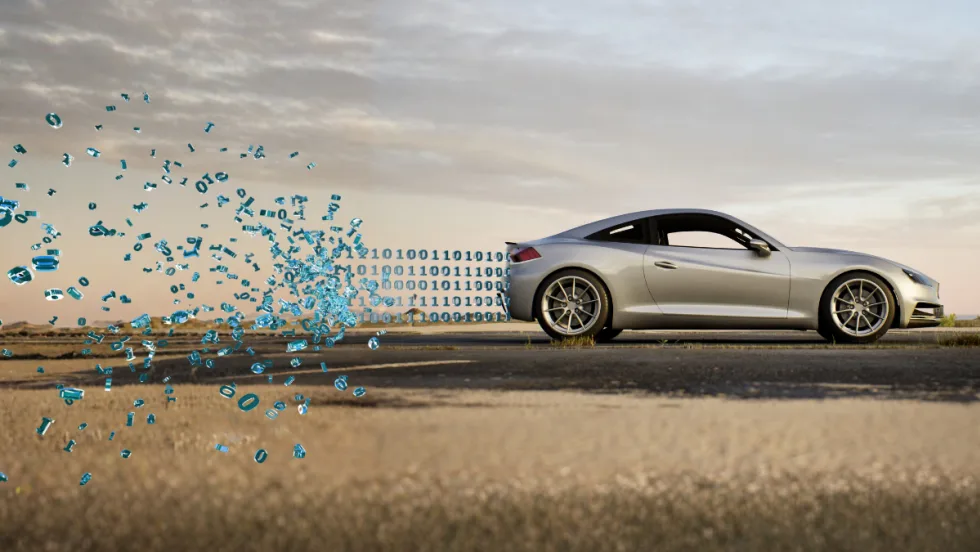
Deleting Driver Data Is No Longer Enough in Connected Vehicles
A factory reset may erase what's stored inside a vehicle, but it doesn't always end a former driver's digital connection. Here's how fleets can make digital offboarding part of every vehicle transition to reduce privacy, security, and compliance risks.
Read More →
How AI Can Help Fleet Managers Build Their Own Solutions
Syneos Health Fleet Manager Kristin Leary is exploring how AI-powered development tools, telematics data, and predictive analytics could help fleets solve operational challenges without waiting for a vendor roadmap.
Read More →
Cameras, Safety and Insurance: From Reactive Claims to Real-Time Prevention (Part 2 of 2)
Part Two: Commercial auto remains one of the most challenging and costly lines of coverage for fleet operators and insurers alike. Continue learning more about how to effectively address these issues from Onur Aksan, Enterprise Business Development Executive, Geotab
Read More →
100% Fleet Uptime? Here's Stellantis' Strategy
Keeping commercial vehicles on the road is becoming just as important as getting them into service. Stellantis’ U.S. fleet chief Michael Ferreira shares how connected technology and AI are changing the way fleets manage uptime.
Read More →