





Related: Keeping Trucks Safely on the Road
Fleet Safety Conference Inspires Action
Fleet managers and stakeholders learned firsthand how to avoid safety pitfalls and improve job efficiency and sustainability through communication, technology, and training.
September 23, 2015
4 min to read
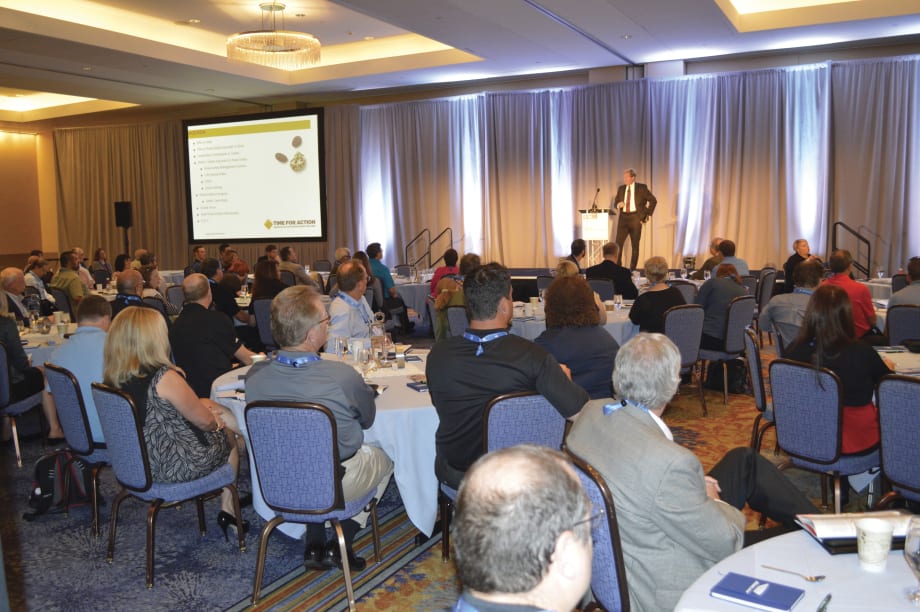
The fourth annual Fleet Safety Conference was held July 14-15, 2015, at the Renaissance Schaumburg Convention Center Hotel in Schaumburg, Ill.
More than 260 fleet managers and key fleet stakeholders learned how to make their companies’ fleets safer and more efficient in a wide-ranging array of speaker and panel presentations.
In five packed general and keynote sessions, speakers thoroughly explored the pressing issues facing fleets today.
These topics included the nuts and bolts of setting up an effective safety program, selling the idea of a safety program to senior leadership, how to navigate the tricky legal landscape of medical marijuana use by drivers, why cell-phone bans are in the best interest of fleets and society in general, and a look back on the key trends that have shaped fleet safety and how they are affecting the industry today and what to expect tomorrow.
Concurrent sessions drilled down even further into how data is being used to improve fleet safety. Sessions included details on how to find “hidden risks” that may be increasing fleet liability, the unintended downsides of relying too heavily on crash avoidance technologies, the pros and cons of developing an in-house versus an out-sourced fleet safety program, and best practices in driver risk management.
New for this year’s conference was a heavy-duty truck track designed specifically for the particular needs of fleets using heavy-duty trucks.
Shell's Journey To 'Goal Zero'

Mike Watson
Presenter: Mike Watson, Global Road Safety Manager, Shell.
Key Takeaways: Shell has a holistic approach to road safety for its global fleet, focusing on its “Goal Zero,” i.e., zero fatalities and no incidents that harm people, the environment, or put the company’s neighbors or facilities at risk. This goal is supported by:
Leadership at all levels.
Management Controls to reduce/eliminate risk.
Driver behavior, including safety rules governing vehicle operation and driver training.
Vehicle specifications and vehicle maintenance.
Journey management.
Assurance and sustainability.
Developing Fleet Policies to Address the Legalization of Marijuana
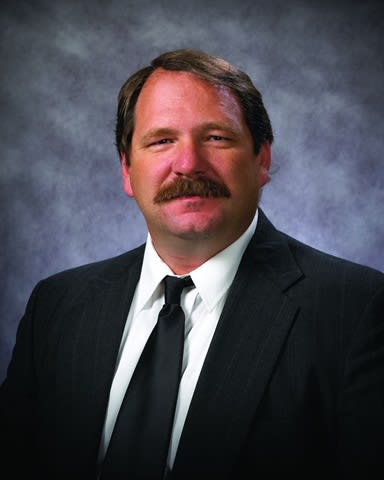
Tom Bray
Presenter: Tom Bray, Senior Editor, Transportation Management, J.J. Keller
Key Takeaways: More than half of U.S. states have “legalized” marijuana in some way, including for recreational or medical use. However, fleets should keep in mind:
DOT regulations are clear on Schedule I and II drug use, including prohibiting the use of marijuana, even if testing is not.
Positive lab results are still positive even if a driver has a prescription or claims use was in a "legal" state.
A solid policy, which includes training, should be implemented and enforced.
Do not rely on testing and policy. Supervisors need to be well trained on reasonable suspicion signs and processes.
Senior Leadership Engagement

Joe Mckillips
Presenter: Joseph McKillips CSP, Director, Global Commercial Environment, Health & Safety, Abbott
Key Takeaways: Gaining senior leadership support and financial backing is paramount to a fundamentally sound and sustainable commercial EHS/fleet safety program. Strategically engaging leadership in the following manner will help ensure success:
Actively pursue educational and networking forums to ensure leadership remain current with the very latest automotive trends, research and risk reduction measures.
Define clear expectations and performance standards, which allow all levels of management to "know the score" with their EHS program at all time.
Solicit support and endorsement from senior leaders who have shown genuine interest in EHS and appoint them as program champions and ambassadors for the program.
Partner with functions outside fleet safety such as risk management and fleet procurement personnel to leverage additional insight and wisdom from their areas of expertise.
Routinely share "real-world testimonials" with senior leaders (as well as all associates) to allow them to directly witness the impact their support and endorsement has had on the program.
Making the Case to Implement a No Cell-Phone-While-Driving Ban

Dave Teater
Presenter: David Teater, Senior Director, Transportation Strategic Initiatives, National
Safety Council
Key Takeaways: Driving while using a cell-phone is among the biggest factors contributing to driver crashes. Fleet managers need to keep the following in mind when advocating and implementing a total cell-phone-while-driving ban for the company:
Employees need full attention for the task of driving — cognitive distraction is real; multitasking is a myth.
Hands-free is not risk free.
Risk exposure is what makes cell-phone use the biggest threat.
A total ban on employee cell-phone use while driving is a "best safety practice" and a company's best defense against liability exposure.
Looking Back to Build a Vision of the Future

Jack Hanley
Presenter: Jack Hanley, Executive Director, Network of Employers for Traffic Safety (NETS)
Key Takeaways: Established in 1989, NETS has 100-plus corporate members. It helps to develop policies and programs to increase fleet safety, by preventing traffic crashes both on and off the job. Its efforts and programs include:
Benchmarking fleet safety through a comprehensive publication, "Strength in Numbers," measuring all aspects of the fleet safety programs of NETS' members.
Helping to engage the entire corporate culture from leadership down.
Taking an active part in the U.N.'s Decade of Action, whose aims include promoting safer roads, vehicles, and road users.
Identifying trends and new safety techniques to help member companies remain safe and efficient.
Subscribe to Our Newsletter
More Safety

Sponsored•October 1, 2026
Fleet Manager’s Ultimate Playbook: Navigating the New Standard in OEM Connectivity
Rising operating costs, driver safety concerns, and unplanned downtime are putting unprecedented pressure on modern fleets. Discover how fleet managers use embedded OEM connectivity and real-time vehicle data to cut TCO, prevent downtime, and protect drivers without aftermarket telematics hardware.
Read More →
From Driver Well-Being to EV Charging | AF News Recap
Mental health belongs in the fleet safety conversation. This week, we’re looking at five ways fleets can support employee well-being before a crisis, plus Holman’s expansion in Mexico, new one-day Fleet Forward passes, and why EV charging demand is outpacing infrastructure growth.
Read More →
Nexar-Nauto Merger Aims to Give Fleets Better Safety Intelligence Through Larger Driving Dataset
Stefan Heck tells Automotive Fleet that combining more than 10 billion miles of driving history with Nexar's AI models will give fleets deeper insights into driver risk and roadway conditions than either company could provide independently.
Read More →
Don't Wait for a Crisis: 5 Ways to Build Mental Health Into Your Fleet Safety Program
For Suicide Prevention Month, fleet and safety leaders have an opportunity to put mental health where it belongs: at the center of workplace safety.
Read More →
How Camera Data Can Strengthen a Fleet’s Insurance Renewal
Insights from a commercial insurance carrier and a broker show how fleets can turn video telematic data, driver coaching, and improved claims results into a stronger case at insurance renewal.
Read More →
The Safest Fleets Aren’t the Ones with the Most Technology
You’ve made the telematics investment. Here’s how to capture the other half of its value and build the safest fleet on the road.
Read More →
Sponsored•August 7, 2026
Hidden in Plain Sight: Fleet Compliance Risks
Fleet compliance isn't just about having policies — it's about consistently enforcing them. This practical guide reveals six hidden compliance risks common in public sector and shared fleet operations and outlines proven strategies to improve visibility, accountability, and audit readiness
Read More →
NETS Sets 2026 Fleet Safety Benchmark Conference for Indianapolis
The Sept. 15–17 program will feature fleet benchmarking data, case studies, emerging technologies, and implementation strategies while running alongside the NSC Safety Congress & Expo.
Read More →
Off-the-Job Crashes Account for 43% of Employers’ $61.7 Billion Crash Burden
NETS quantifies costs dispersed across fleet, risk, HR, and other departments while providing new per-crash benchmarks for employers.
Read More →
Ram Recalls More Than 1.27 Million 1500 Pickups for Seat Belt Anchor Issue
The recall affects certain 2019-2026 Ram 1500 pickups that may have improperly attached second-row seat belt buckle anchors.
Read More →