




Rail's Role in Vehicle Transport
Rail’s role in vehicle transport can be glimpsed up-close at Union Pacific’s auto facility in Mira Loma, Calif., where new vehicles are shipped from manufacturers via rail.

Rail’s role in vehicle transport can be glimpsed up-close at Union Pacific’s auto facility in Mira Loma, Calif., where new vehicles are shipped from manufacturers via rail, then unloaded, and transferred to vehicle transport trucks for delivery at auto dealers throughout California.
The 250-acre facility, which is open around the clock, offloads an average of 200-220 vehicle-filled rail cars per day, according to Jeff Grandstaff, general manager of ShipCarsNow, an auto transport company that is a subsidiary of Union Pacific. Nationwide, Union Pacific transported over 5 million vehicles in 2014.
“About 70 percent of all new vehicles move on rail, but we don’t see that network — it takes place behind the scenes,” Grandstaff said.
The Mira Loma facility receives new vehicles from Ford, Chrysler, General Motors, Nissan, and Toyota. And, two types of rail cars transport vehicles to the facility: tri-level, for vehicles 60 inches or lower in height (passenger cars); and bi-level, for vehicles 90 inches or lower (trucks, SUVs, and minivans).
The following steps are what it takes to get a car ready for transport to a dealership.
Step 1: Rail cars containing new vehicles shipped directly from manufacturers arrive at the Mira Loma location.
Step 2: Rail cars are unlocked and opened.
Step 3: Each vehicle is inspected for exterior damage prior to unloading, and VIN number tags are scanned to ensure all of the rail car's vehicles are present. An estimated 99.8 percent of transported vehicles arrive damage free.
Step 4: Bridge plates connecting bi-level railcars are set prior to unloading of vehicles. Each bi-level rail car holds 8-10 trucks, SUVs, and minivans, while each tri-level railcar holds 14-15 passenger cars.
Step 5: Wheel chocks are removed to prepare vehicles for unloading. The chocks clamp onto the wheels so that vehicles remain steady during transport.
Step 6: Vehicles are unloaded from rail cars via rail ramps. With a crew 0f 15, unloading each 90-foot-long rail car can take up to a half-hour.
Step 7: Spotters from both Union Pacific and Alliance Inspection Management (AiM) inspect recently unloaded vehicles for exterior damage. If damage is detected, the tag for the corresponding damaged area is scanned, and the information is sent to the main Union Pacific office.
Step 8: After the vehicles have been inspected, they are loaded onto vehicle transport trucks, which deliver the vehicles to dealerships through California.
Step 9: Once rail cars are emptied of vehicles, bridge plates and levels are removed, and rail cars are closed.
More Operations
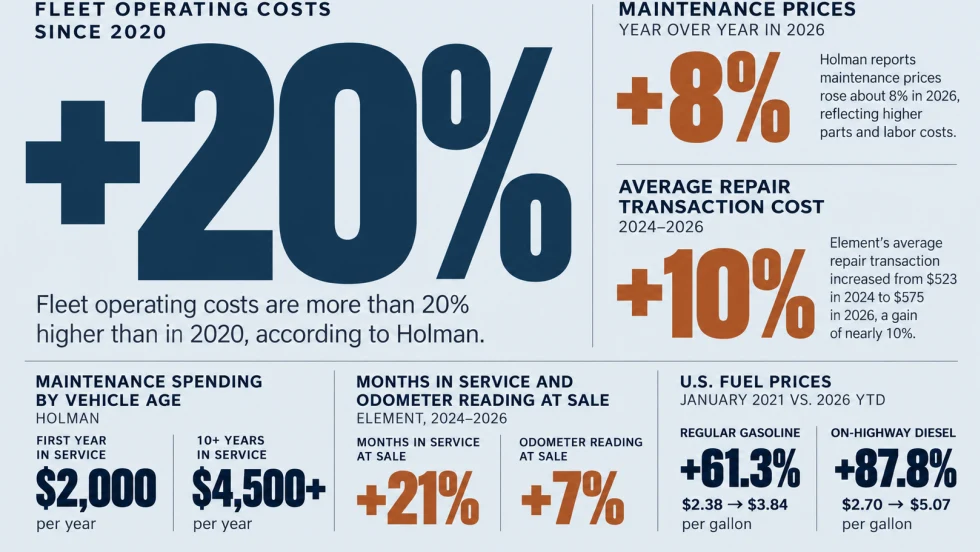
Managing Fleet Costs in an Era of Permanent Volatility
Fleet operating costs have risen more than 20% since 2020, raising a key question: When does extending a vehicle's service life stop making financial sense?
Read More →
The Next Evolution of Fleet Management: Autonomous Operations
This opening keynote session at the Fleet Forward Conference highlights the future of autonomous driving for fleets.
Read More →
How to Reduce the Total Cost of Risk From Catalytic Converter Theft
A stolen catalytic converter can cost fleets far more in downtime and lost productivity than in repairs. A total-cost-of-risk approach can help fleet managers quantify their exposure and prioritize theft prevention.
Read More →

Personal-Use Charges Rise as Vehicle Values Fall | AF News Recap
Personal-use charges are climbing, wholesale used-vehicle values are declining, and commercial fleet sales growth is slowing. This week, we're breaking down the latest fleet data, plus how Element Fleet Management is helping Waymo prepare for its first Canadian robotaxi market.
Read More →
Here's When You Should Make an Exception to Fleet Policy
Fleet policies are designed to create consistency, but not every driver or situation fits neatly within standard rules.
Read More →
AI-Native or AI-Acquired: What Should Fleet Managers Look for in an AI Platform?
Six questions can help fleet managers look beyond AI marketing claims to evaluate integration, data access, and real-world operational performance.
Read More →
A buyer's guide to fleet management software in 2027
Buying fleet management software in 2027 means looking beyond features and price. As fleet operations, technology and expectations evolve, this guide explores what today’s fleet professionals should consider when choosing a system that can deliver value now and adapt to what comes next.
Read More →
What Will Shape the Next Era of Fleet Management?
EVs, AI, and autonomous vehicles are reshaping fleet management. Discover what’s ahead—and how fleet leaders can prepare for the next era.
Read More →
How Fleets Can Recruit and Train Veterans for Technician Roles
Here's how the technician shortage has affected uptime for fleets, and what to do about it.
Read More →
Avis Budget Group Deploys Neology Toll Management Technology Across Major Brands
Neology’s neoFleet platform will manage toll transactions and toll-authority operations for vehicles across Avis, Budget, Payless, Budget Truck and Zipcar.
Read More →