





Related: OEM Report Card: Courtesy Delivery
OEM Report Card: Order to Delivery
For commercial fleet managers, the delivery times of light-duty vehicles can often fall prey to the availability of rail cars, quality holds, weather-related delays, and other production factors.
May 12, 2015
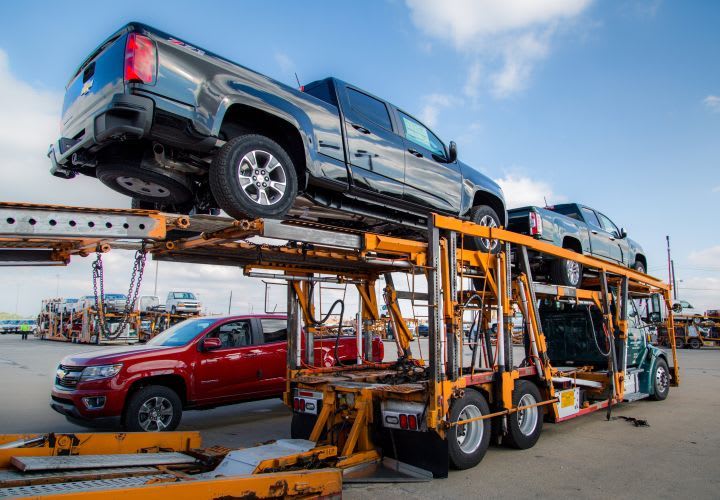
Photo courtesy of General Motors.
3 min to read
Photo courtesy of General Motors.
Want to learn more? We have more recent data on order-to-delivery! Check out the updates from 2021 and the unprecedented supply constraints.
For commercial fleet managers, the delivery times of light-duty vehicles can often fall prey to the availability of rail cars, quality holds, weather-related delays, and other production factors. Fleet managers provided feedback on the process for Automotive Fleet's annual "Industry Report Card" feature.
Follow links below for stories focusing on the OEMs, fleet management companies, and the courtesy delivery practice.
Long Order-to-Delivery Times
"Order-to-delivery (OTD) times have lengthened and need to be improved.
"What they need to improve is the ability to pre-build and create pools of units managed by the manufacturer. This decreases/reduces lead times considerably; however, OEMs are only offering these to huge clients (100-plus of the same unit) and to the upfitters. My suggestion is to not provide pools on everything, but pick the 16-plus-week-lead-time units (pickup trucks and cargo vans) and provide a product that is not specific to any one client, and can be accessed by the clients that purchase five to 20 units at a time. It might not be my specifically spec'd unit, but if I don't have to wait 24 weeks, beggars can't be choosers.
"OEMs are getting too comfortable without needing fleet business anymore, which often shows in delivery times and access to reliable information. Fleets were important to the manufacturers when times were tough, but not as much now.
"On-time delivery times have escalated. Rail car shortages, weather, and delivery from and to upfitters all have an impact; however, we don't see a lot of evidence that breakthrough thinking and strategy by a combined auto industry working to resolve this issue. I am not sure how this might be accomplished, but it seems like there should be multiple distribution methods available."
OTD Consistency is Needed
"There needs to be consistency in OTD, with more commitment to and agility in turning around big misses. Supplier contracts should allow manufacturers to ramp up production when needed. Manufacturers should set, publicize, and hold themselves to OTD targets for fleet production."
Better Management of Fleet Order Delivery Process
"OEMs fail to manage my orders. In short, I seem to be the one who watches my orders progress from initial input to delivery at the dealership, and I am the only one watching for anomalies and delays. Not only should the OEMs be managing each and every order, our FMC should be doing the same."
The Cost of OTD Delays
"In the past few years, we have been hammered by terrible transportation/deliveries of vehicles from upfitters back to OEM transportation/logistics and to dealers. I had two vans this season that left upfitters in October. We have yet to get them delivered. Neither the OEM nor the leasing company did anything about it, until I blew a fuse. In both cases, I am paying for temporary rentals, as the old vans could not be repaired. This will cause an expense in the thousands of dollars, and no one will reimburse me for that."
OTD is Erratic
"Transportation and dealer delivery efforts post-manufacturing is an area that needs improvement. Light-duty OEMs still remain erratic on efficient delivery methods; this includes transportation methods utilized and the lack of urgency displayed by the dealer networks to turn the vehicle in a timely manner. With medium- and heavy-duty, the delivery companies that stack units have left us dealing with improperly torqued and leaking axles and, at times, missing bolts."
Improve OTD Transparency
"The auto manufacturers have the most need to improve transparency to the OTD timeline, utilizing real-time tracking. If we, as customers, are prepared enough to communicate to our internal stakeholders the changes that are affecting OTD in real-time, the less exception acquisitions (and cost) we would have to endure to meet customer needs."
Subscribe to Our Newsletter
More Operations

Smith System Launches Driver Risk Management Program
Fleets have more driver data than ever, but identifying risky behavior doesn't necessarily correct it. Smith System's new Driver Risk Management program combines monitoring, training, and follow-up coaching to help fleets connect risk signals with driver intervention.
Read More →
Automotive Fleet Opens 2026 Personal Use Survey for Commercial Fleet Managers
Less than two weeks left! Commercial and corporate fleet managers are invited to share how their organizations handle company vehicle personal-use policies, charges, and driver eligibility.
Read More →
From AI Prompts to AI-Generated Safety Songs | AF News Recap
Can better prompts make AI more useful for fleet managers? This week, we’re breaking down smarter fleet analysis, an AI-assisted experiment that turned safety training into music, and what happened to fuel prices in August.
Read More →


How to Write Better AI Prompts for Fleet Analysis
Include these six elements in your fleet prompts to generate more relevant analysis and accurate answers.
Read More →
Fleet Meets: Eric Kilgore
This edition of the Fleet Meets series features one of the industry's best leaders driving multi-market and national operations.
Read More →
Sponsored•August 13, 2026
Why Reactive Fleet Management Is Becoming Too Expensive to Sustain
Research highlights a growing need for proactive management strategies to address rising costs in fleet operations effectively.
Read More →
Sponsored•August 12, 2026
What Your Fleet KPIs Aren’t Telling You
Tracking fleet metrics is only useful when the data leads to better decisions. This guide helps fleet leaders assess cost, utilization, and downtime more accurately, identify performance gaps, and prioritize the actions that can improve operational results.
Read More →
Sponsored•August 7, 2026
Hidden in Plain Sight: Fleet Compliance Risks
Fleet compliance isn't just about having policies — it's about consistently enforcing them. This practical guide reveals six hidden compliance risks common in public sector and shared fleet operations and outlines proven strategies to improve visibility, accountability, and audit readiness
Read More →
Turning Fleet Payment Data into Executive Insights
Does data alone drive results in operations?
Read More →
Gary Van Orden Retires After Nearly Four Decades in Commercial Fleet
From answering customer calls at Ford Motor Company to leading fleet sales across multiple OEMs and a fleet management company, Gary Van Orden's career reflects nearly four decades of leadership in commercial fleet.
Read More →