




What To Do (And Not To Do) After a Highway Breakdown
Depending on the setting, there are different ways to handle the aftermath of a vehicle breakdown.
All highway breakdowns are not created equal.
The procedure for what do in the event of a vehicle breakdown has a lot to do with where the vehicle is being driven at the time it sputters to a stop. Metropolitan-area freeways and rural highways each bring different problems and require markedly different solutions to a vehicle breakdown.
Regardless of the setting, however, it’s important to remember to use the vehicle’s hazard lights and pull onto the shoulder (if it can be done safely to avoid becoming a road hazard to other drivers) to get out of the way of other passing vehicles flying by at high speeds.
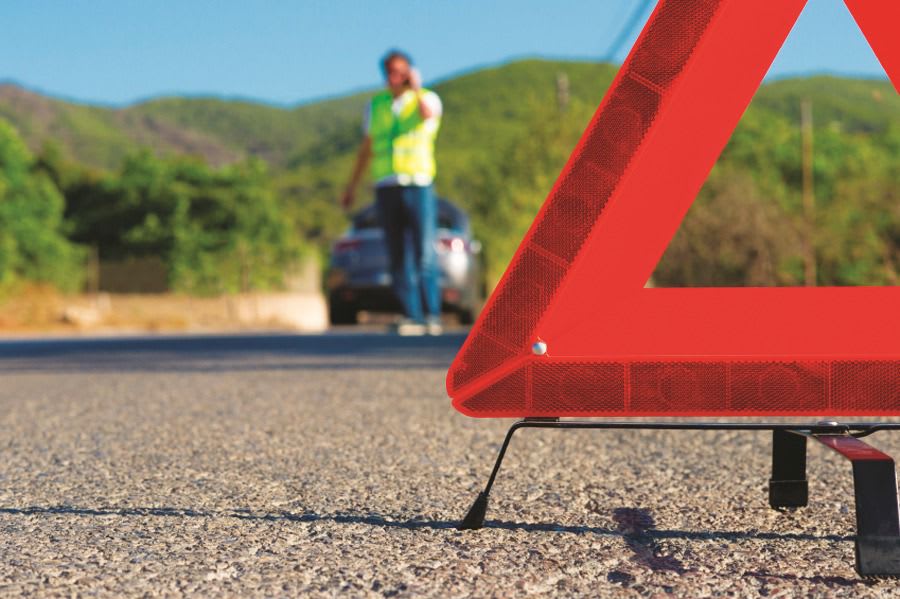
Once the driver has cleared the road and is safely on the shoulder, he or she can make the vehicle more visible by turning on the vehicle’s dome light and leaving the headlights on, in addition to the vehicle hazard lights. All vehicles should be equipped with an emergency kit. Put reflective triangles behind the vehicle if it can be done safely.
A copy of the fleet’s safety and accident policy should be stored in the glovebox and reviewed when an incident occurs.
Once the policy has been quickly studied, several questions should be asked: Is it safe to exit the vehicle? Is the neighborhood/stretch of road safe or should caution be exercised? The answers to these questions, or the obvious nature of the breakdown, will determine what to do next.
It is recommended to only exit the vehicle if it’s a residential or rural/low traffic area. In high-trafficked metropolitan areas, stay in the car until assistance can be rendered by a tow truck driver or law enforcement personnel.
Exiting or standing around a stranded vehicle greatly increases the risk of injury or death. Staying safe is much more important than staying on schedule.
If the car is beyond repair, it’s best to wait for a professional. After calling a tow truck directly or the fleet manager or fleet management company (if required by policy), the driver should wait patiently for official help to arrive.
Never accept unofficial assistance in the wake of a breakdown.
The National Safety Council recommends the following:
Do not try to flag down other vehicles, i.e., don’t solicit the help of passing motorists.
Raise the vehicle’s hood and tie something white to the radio antenna or hang it out the window so police officers or tow truck operators will know help is needed.
Don’t stand behind or next to the vehicle.
FIVE FREEWAY BREAKDOWN TIPS
1. Pull over and out of traffic if possible. Even if all of the emergency lights are activated, some highway drivers do not pay close attention and could rear-end the disabled fleet vehicle, causing further damage or injury.
2. The driver shouldn’t attempt to fix the vehicle, even if it appears it’s going to be a quick or easy fix. Wait for professional help to arrive.
3. Only exit the vehicle if it is necessary or safe to do so. If possible, raise the vehicle hood to alert passing authorities that the vehicle is disabled and help is needed.
4. Patience is a virtue in breakdown situations. Particularly in heavily trafficked metropolitan areas, highways are regularly patrolled by police and tow truck operators — help will arrive soon.
5. Lastly, make sure to keep a copy of the fleet’s roadside assistance or accident policy in the vehicle at all times.
Originally posted on Work Truck Online
More Global Fleet
GeoFencing Adds to Your Truck Security Arsenal
Geofencing is a familiar fleet tool today, but its early adoption marked a major shift in vehicle tracking, route monitoring, and the debate over employee privacy.
Read More →
Holman Takes Full Ownership of ARIZA in Mexico
Holman is bringing its Mexican fleet management operation fully under its own brand after more than 30 years as a joint venture. The change gives multinational fleet customers a single Holman operation across the U.S., Canada, and Mexico.
Read More →
5 Tire Maintenance Tips to Help Prevent Work Truck Downtime
Regular tire checks can do more than extend tread life. These five maintenance practices can help work truck fleets catch problems early, reduce costs, and prevent downtime.
Read More →

Proven Ways to Reduce Work Truck Downtime
The age-old problem of downtime will always be a reality, but with new strategies at hand, fleets have more ways to keep trucks on the road longer.
Read More →


Cameras, Safety and Insurance: From Reactive Claims to Real-Time Prevention (Part 2 of 2)
Part Two: Commercial auto remains one of the most challenging and costly lines of coverage for fleet operators and insurers alike. Continue learning more about how to effectively address these issues from Onur Aksan, Enterprise Business Development Executive, Geotab
Read More →
Cameras, Safety and Insurance: From Reactive Claims to Real-time Prevention
Commercial auto remains one of the most challenging and costly lines of coverage for fleet operators and insurers alike. Learn more about how to effectively address these issues from Onur Aksan, Enterprise Business Development Executive, Geotab.
Read More →
Fleet Costs Are Rising: Here’s How Leaders Are Responding
Fleet leaders are under pressure to reduce costs, adapt to economic uncertainty, and make smarter decisions. See how peers across North America are responding with real data, proven strategies, and forward-looking insights. Download the 2026 Market Pulse Report to benchmark your strategy and uncover where you can gain an edge.
Read More →
Enterprise Fleet Management Surpasses 900,000 Vehicles in U.S. & Canada
Enterprise Mobility connects with mobility solutions around the globe
Read More →