




8 Key Elements of Driver Safety
One in 45 average American drivers will experience an injury-producing crash over the next year. Of those who drive as part of their job function, 20 percent are likely to experience an incident.
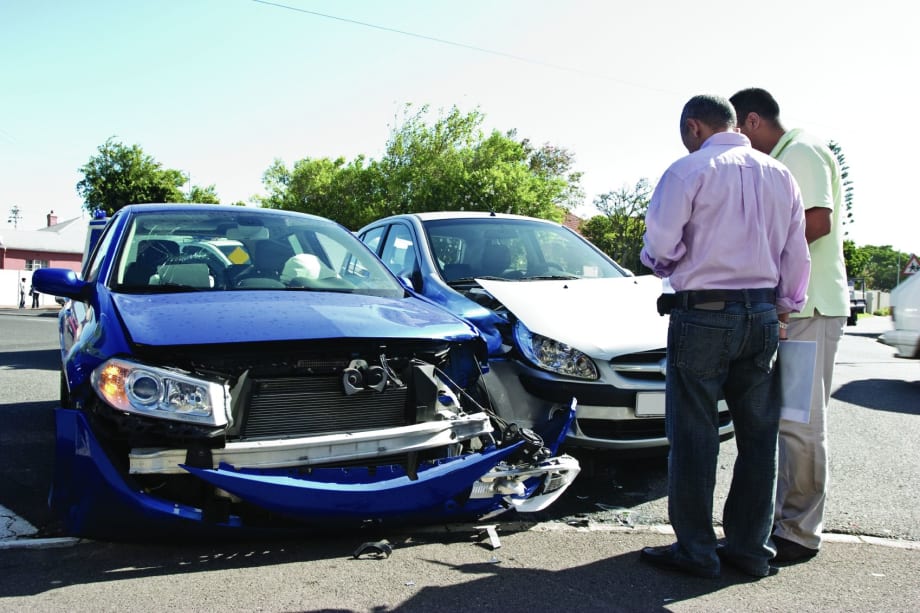
A person who drives as part of his or her job is three times more likely to be killed in the workplace than a person who works in a manufacturing environment.
A person who drives as part of his or her job is three times more likely to be killed in the workplace than a person who works in a manufacturing environment.
When it comes to driver safety, there are no mystical solutions. Waving a magic wand, having a séance around a Ouija board, or consulting a Magic 8-Ball will not provide the answers that will help eliminate an organization’s motor vehicle crashes.
There is a common element among fleets that have successful driver safety initiatives. They all have a driver safety culture that reaches from the top of their organization to the bottom. Driver safety isn’t a “once-and-done” event for them and they don’t take a one-prong approach. They understand that to achieve and maintain success they need to make a true commitment to driver safety.
Understanding the Problem
To gain support for a driver safety initiative, the problem must be clearly defined. The risks associated with driving must be presented in a manner that leaves no room for argument or misinterpretation. Begin with government-issued crash statistics and then present the statistics for your own organization. U.S. statistics that may help gain support for driver safety initiatives include:
In 2010, 32,788 people lost their lives on the roadways in the U.S., which equates to 90 lost lives every day.
In 2010, someone died in a car crash every 16 minutes.
One in 15 average Americans will be involved in a motor vehicle crash over the next year.
One in 45 average Americans will be involved in an injury-producing crash over the next year.
One in 65 average Americans will be involved in a fatality-producing crash during their driving lifetime.
Look at the common denominator in the above statements: average. People who drive as part of their job function are at a much higher risk of being involved in motor vehicle crashes due to the fact they drive more than the average driver. Their risk exposure is greater. In fact, a person who drives as part of their job is three times more likely to be killed in their workplace than a person who works in a manufacturing environment. This creates a very compelling argument regarding why creating a safe driving culture is vital.
Year after year, traffic crashes are the leading cause of death for American workers and the leading cause of workplace death for most industrialized nations. Safety in the driving workplace must be given the same amount of attention as safety in the manufacturing workplace. Too often, the safety of employee drivers receives little or no attention. Considering that drivers are the employees who are most likely to lose their lives while working, it is surprising that more organizations do not address this issue.
Your own organization’s statistics may provide another compelling argument for the creation of a driver safety initiative. It would be nice to think most organizations address driver safety based solely on the welfare of their employees. However, in reality, the costs associated with motor vehicle crashes is what comes into play. Traffic crashes are expensive. Recent studies have shown that the average cost of a corporate motor vehicle collision is $18,500. This is the average cost. Some may be lower and some may be much higher. There are numerous items associated with this cost. These include:
Vehicle repair and replacement
Property damage
Medical expenses
Workers’ compensation claims
Lost earnings
Temporary and permanent employee replacement expenses
Litigation
There are many other unseen expenses that always seem to crop up. Some of these expenses are unpredictable and are often very costly.
There are eight key elements to reducing motor vehicle collisions that will help achieve the safety success other organizations have realized.
Perform Driver Record Checks
If nothing else, ensure driving records of employee drivers are reviewed. Make sure this is done on a regular basis, and whenever a compelling need arises that requires more frequent record checks.
Be prepared to act when these records are run. The fleet is completely exposed to claims of negligent entrustment if motor vehicle record (MVR) checks are not reviewed. Your organization is even more exposed if you identify a problem driver and fail to take action.
Counsel New-Hire Drivers
Statistically, new-hire drivers crash more frequently. Considering that these individuals are learning new jobs and territories, are driving unfamiliar vehicles, are often overloading their schedules, and are preoccupied with all that is involved with starting a new job, it isn’t hard to understand why they have problems.
During initial training, these individuals are taught much of what they need to know to complete their job tasks. It is equally important that they are taught the most important task they accomplish each day is arriving at their destinations safely. They need to put safety first when getting behind the wheel. Providing driver safety training during the new-hire process provides them with the skill sets needed to stay safe in the workplace, and it elevates the importance of safe driving from the beginning of employment.
[PAGEBREAK]Determine Driver Risk Levels
Consistently, a small percentage of drivers are involved in the majority of fleet crashes. The typical ratio holds that 80 percent of the problems are caused by 20 percent of the drivers. Typically, the drivers who experience crashes are also the drivers who have a history of moving violations.
Be aware that not all crashes appear in driver records. For most areas, only the reportable collisions appear on driving records. Reportable crashes are those collisions where somebody was injured, or the crash was so severe that one or more vehicles had to be towed from the scene. Non-reportable crashes are the fender benders where the vehicles are driven from the scene and nobody was hurt. All crash history must be reviewed when identifying risk-level drivers.
Once a driver’s risk level is identified, it is imperative to take a corrective action that is equal to the seriousness of the driver’s history. It is a good practice to be proactive with this approach.
Categorize driver risk levels in three groups. It is not a good idea to wait until a driver becomes a serious risk before intervening. Provide interventions equal to the level of risk with the interventions escalating as the risk level increases.
Initiate Post-Incident Coaching
It is not possible to take something as negative as a motor vehicle collision and turn it into a positive. However, it is a lost opportunity if a driver does not learn from the crash. Provide training that addresses the type of collision that the driver was in. The level of the intervention should be equal to the seriousness of the incident.
Acquire Field Manager Support
Managers who have direct responsibility for employee drivers play a vital role in the efforts to reduce fleet crash rates. It is important for these managers to understand that they set the tone for the drivers that they manage.
If field-level managers do not support fleet safety initiatives, safety will not be important to the drivers and the initiatives will fail. These managers need to know that the safety of these drivers is part of their responsibility. Either the managers are simply telling the drivers to “GO-GO-GO,” or they are telling them “Now safely GO-GO-GO!!”
It does make a difference.
Work on Behavior Modification
Driving is a series of behaviors learned from the first time we sit behind the wheel. It is important to help drivers understand which of their driving behaviors are safe, and which ones are unsafe.
Drivers need to work to retain the safe habits and work even harder to remove the unsafe ones. To be successful with this, drivers must be motivated to accomplish this task. Motivation can be accomplished through training, rewards, and disciplinary measures.
Organizational Hazard Recognition
Layoffs, realignments, acquisitions, and product launches are all examples of how changes within a company can affect an employee’s ability to concentrate while they are driving. Drivers become stressed, stress leads to driver distraction, and driver distraction leads to crashes.
Be aware of how the changes within the organization are affecting drivers. Create awareness and provide whatever support is necessary to help drivers stay safe when these events occur.
Maintain to Retain
Driver safety is not a “once-and-done” proposition. It truly does not make sense to provide a driver safety initiative and not maintain the effort. Achieving and maintaining the results should be very cost effective. Safety messages, newsletters, and safe driving recognition programs are all examples of methods that can be employed in order to accomplish this.
Worth the Effort
Creating a culture of driver safety within an organization may seem like a daunting task. In reality, it probably is, but it is certainly not impossible and the rewards are numerous.
The return-on-investment will be substantial. At a time when most organizations are looking for methods to reduce expenditures, many are learning how simply reducing crash rates provides a very welcome financial gain.
The far more important benefits of driver safety include the reduced risk and increased overall driver safety. There are few things in life that change so many lives as quickly and drastically as a vehicle crash. An incident that may take only split seconds to occur will create heartaches that may not be recovered from over a lifetime.
Get out your “Magic 8-Ball.” Shake it up and ask, “Is a driver safety initiative worth the effort?” The answer you will receive will undoubtedly be, “You may rely on it.”
About the Author
Phil Moser is the vice president for Advanced Driver Training Systems (ADTS). He can be reached at philm@adtsweb.com.
More Safety
IIHS Crash Avoidance Tests Reveal Safety Gaps in Cargo Vans and Work Trucks
New crash-avoidance ratings from the Insurance Institute for Highway Safety reveal inconsistent performance among commercial vehicles, with several popular cargo vans and heavy-duty pickups struggling to avoid collisions with other vehicles and pedestrians.
Read More →
What’s Next for Fleet? Safety, AI & Industry Recognition | AF News Recap
Could your company's culture be encouraging distracted driving? This week, we're exploring how workplace expectations affect driver safety, what AI, EVs, and autonomous vehicles could mean for the future of fleet management, and how fleet professionals can strengthen their award nominations.
Read More →
Does Your Fleet's Culture Encourage Distracted Driving?
What happens when the people responsible for enforcing safety rules are the ones setting the wrong example? The answer may reveal why some of the biggest risks to fleet drivers have little to do with what's written in the employee handbook.
Read More →
Fleet Manager’s Ultimate Playbook: Navigating the New Standard in OEM Connectivity
Rising operating costs, driver safety concerns, and unplanned downtime are putting unprecedented pressure on modern fleets. Discover how fleet managers use embedded OEM connectivity and real-time vehicle data to cut TCO, prevent downtime, and protect drivers without aftermarket telematics hardware.
Read More →
From Driver Well-Being to EV Charging | AF News Recap
Mental health belongs in the fleet safety conversation. This week, we’re looking at five ways fleets can support employee well-being before a crisis, plus Holman’s expansion in Mexico, new one-day Fleet Forward passes, and why EV charging demand is outpacing infrastructure growth.
Read More →
Nexar-Nauto Merger Aims to Give Fleets Better Safety Intelligence Through Larger Driving Dataset
Stefan Heck tells Automotive Fleet that combining more than 10 billion miles of driving history with Nexar's AI models will give fleets deeper insights into driver risk and roadway conditions than either company could provide independently.
Read More →
Don't Wait for a Crisis: 5 Ways to Build Mental Health Into Your Fleet Safety Program
For Suicide Prevention Month, fleet and safety leaders have an opportunity to put mental health where it belongs: at the center of workplace safety.
Read More →
How Camera Data Can Strengthen a Fleet’s Insurance Renewal
Insights from a commercial insurance carrier and a broker show how fleets can turn video telematic data, driver coaching, and improved claims results into a stronger case at insurance renewal.
Read More →
The Safest Fleets Aren’t the Ones with the Most Technology
You’ve made the telematics investment. Here’s how to capture the other half of its value and build the safest fleet on the road.
Read More →
Hidden in Plain Sight: Fleet Compliance Risks
Fleet compliance isn't just about having policies — it's about consistently enforcing them. This practical guide reveals six hidden compliance risks common in public sector and shared fleet operations and outlines proven strategies to improve visibility, accountability, and audit readiness
Read More →