




The Green Fleet Price Tag
Taking a hard-numbers approach to your vehicles’ tailpipe emissions and lifecycle cost data will help you improve your ecological footprint without breaking the bank.

Fleet vehicles are a financial asset and an environmental liability. They keep businesses running, but they're often a company's No. 1 source of greenhouse gas emissions (GHGs) and smog-forming pollutants. Cleaner-running vehicles represent a great opportunity to reduce one's ecological footprint. But becoming a better environmental steward comes with a price tag, which is especially tough in a down economy.
Business Fleet asked the lifecycle experts at Vincentric to provide cost data for popular fleet sedan and crossover models along with their outputs of smog-forming pollutants and greenhouse gases. We wanted to see which models offer the best combination of lifecycle cost and environmental benefit.
Vincentric weighed eight cost factors for configurations in the 2011 model year to determine overall lifecycle costs for three years and 60,000 miles. The eight factors are depreciation, fuel, insurance, opportunity cost, financing, maintenance, taxes, and state fees and repairs. These costs were integrated with the Vincentric Fleet Price, which estimates the acquisition cost for each vehicle in the study.
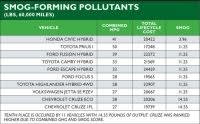
Using data from the Environmental Protection Agency, Vincentric then calculated GHGs (tons per year) and smog (pounds per year) emissions for the 60,000-mile/three-year period.
The Winner
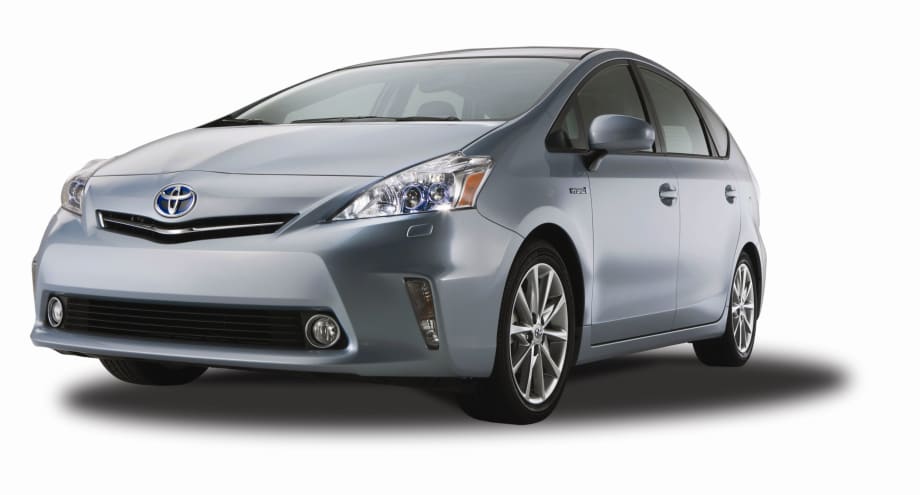
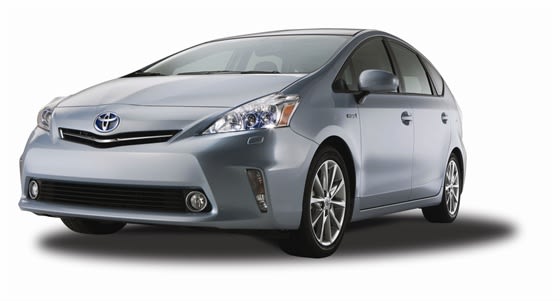
After weighing GHGs and smog outputs against total lifecycle cost, Toyota Prius won hands down. The nation's best-selling hybrid finished first in the lifecycle cost and GHG categories and second in the smog category.
The Fleet Model Environmental Impact and Cost Analysis chart compares lifecycle costs with smog-forming pollutants and greenhouse gas emissions by segment.
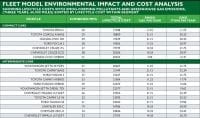
While the Prius has higher acquisition costs than many models, much of those costs are recouped in fuel savings and higher residual values. The other hybrids in the analysis reaped similar fuel and residual value payback, though to a lesser extent. As to be expected, all six of the hybrid models in the analysis ranked in the Top 10 in lowest levels of GHG and smog output.
Click here for the top 10 vehicles in outputs of Greenhouse Gas Emissions (GHG).
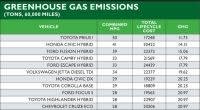
The Ford Focus S, Chevrolet Cruze 1FL and Chevrolet Cruze Eco also placed in the Top 10 in all three categories, proving that vehicles with traditional internal combustion engines (ICEs) also can be cost-effective and environmentally friendly. Volkswagen's Jetta SE finished just outside the Top 10.
Click here for the top 10 vehicles in outputs of Smog-forming Pollutants.
[PAGEBREAK]
Cylinder Savings
Where can fleets look for a combination of cost savings and environmental improvement?
The engine analysis chart calculates examples of possible cost savings and GHG savings within the same model, when looking at six- and four-cylinder ICE versions compared to their hybrid counterparts.
Click here for an analysis of the percentage savings in greenhouse gas outputs when changing cylinders and engines in like models.
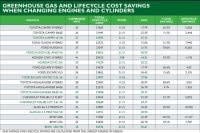
For instance, moving from the Toyota Camry V-6 to its four-cylinder Base counterpart will save 11.5 percent in GHG output and $2,446 in cost over the three-year and 60,000-mile lifecycle. Moving from Camry V-6 to the hybrid version saves 30.7 percent - a much greater percentage of GHG output - and puts $2,026 back in your pocket.
Moving from Camry Base to Camry Hybrid will still save 21.2 percent in GHG, though at a cost premium of $879.
Looking at Ford Fusion, moving from the six-cylinder Fusion SEL to the four-cylinder Fusion S model will reap 29.6 percent GHG savings and also save a whopping $8,565 in total cost. Switching from the six-cylinder SEL to Fusion Hybrid results in an impressive 51.3 percent GHG savings and $7,440 in cost.
Similar to Camry, moving from the four-cylinder Fusion S to Fusion Hybrid will yield an impressive 30.8 percent in GHG savings, though at a cost premium of $1,125 over the lifecycle.
Regarding Honda Civic, moving from the four-cylinder Civic DX to Civic hybrid results in 29.3 percent GHG savings, though it will cost you $1,193 over the lifecycle to make that switch.
We included Chevrolet Malibu with six- to four-cylinder engines to further demonstrate that simply moving down in cylinders results in substantial GHGs and cost savings.
Analyzing current model-year SUVs and crossovers produced a similar result. Vincentric found that switching from the six-cylinder models to their hybrid versions shows significant GHG savings as well, though the cost component varies.
Moving from the Toyota Highlander Base V-6 to Highlander Hybrid saves 28.6 percent in GHGs and $1,001. The move from Ford Escape Limited 3.0-liter V-6 to Escape Hybrid cuts GHGs by 36.4 percent, though at a slight $432 cost premium.
On both models, switching from six- to four-cylinder engines offers GHG savings - albeit a smaller amount than going to the hybrid model - along with a cost savings.
We also asked for an analysis of savings on two luxury models, Audi A6 and BMW 5 Series, when moving from eight to six cylinders. In both instances, stepping down in engine size reaps substantial savings in both GHGs and cost.
Smart Decision Making
This analysis is only a small sample of models and is intended to provide a basis for your own cost analysis, minus many other important factors such as driver preference and vehicle utility.
While alternatively fueled and powered vehicles grab the spotlight, a more complete view of your own company's environmental impact requires a measurement of your fleet's total emissions of greenhouse gas and smog-forming pollutants. By doing this, less dramatic changes - such as merely switching cylinders on similar models - will show their impact.
The Master List
The analysis references selected trim levels and options available for each model. Click here for Vincentric's complete list of models, trim levels and options, including emissions output figures for both California-based and federal emissions standards.
Notes
Smog-forming pollution is created by two types of vehicle emissions: hydrocarbons (including non-methane organic compounds, or NMOG) and oxides of nitrogen (NOx). When combined with sunlight, they create smog.
Greenhouse gas emissions are a function of fuel combustion. Such gases trap heat in the atmosphere, creating a greenhouse effect. Greenhouse gases emitted from vehicles include carbon dioxide (CO2), methane (CH4) and nitrous oxide (N2O), and relatively small amounts of hydrofluorocarbons (HFCs) and black carbon.
BF used federal emissions (rather than California-based) standards to simplify comparisons.
This analysis used models with automatic transmissions or fleet model designations.
Two-wheel-drive only versions were included, unless model or engine level is exclusively four-wheel drive.
Originally posted on Work Truck Online
More Vehicle Research

Hall of Fame Inductee: John Dmochowsky
The longtime Mondelēz International fleet executive joins the Automotive Fleet Hall of Fame.
Read More →
Hall of Fame Inductee: Lee Miller
After more than four decades at Boehringer Ingelheim, Lee Miller leaves a legacy built on fleet expertise.
Read More →
Hall of Fame Inductee: Mark F. Petersen
From managing fleets of thousands of vehicles to advancing safety and mentoring fellow professionals, Mark F. Petersen made his mark across both the corporate and supplier sides of fleet.
Read More →
When Charger Downtime Becomes a Fleet Availability Problem
As EV deployments move beyond pilot programs, charger reliability can directly affect vehicle readiness, driver productivity and route scheduling.
Read More →
2027 Nissan Rogue Hybrid Adds e-POWER, Standard AWD
The new Rogue Hybrid uses Nissan’s e-POWER system with dual electric motors, offers an estimated 40 mpg and starts at $35,490.
Read More →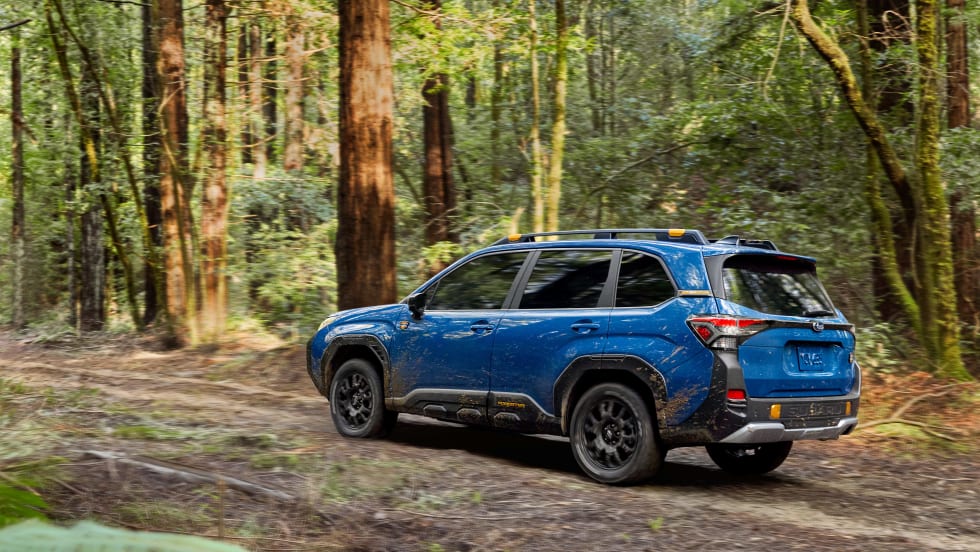
2027 Subaru Forester Adds First Wilderness Hybrid
The 2027 Forester lineup starts at $29,995 and adds a Wilderness Hybrid with 194 combined horsepower and 9.3 inches of ground clearance.
Read More →
EV Realty Names Henrik Holland President as Charging Platform Expands
The former Prologis Mobility and Shell executive will help expand EV Realty’s truck charging business and move its power-first infrastructure model into autonomous vehicle depots and other fleet sectors.
Read More →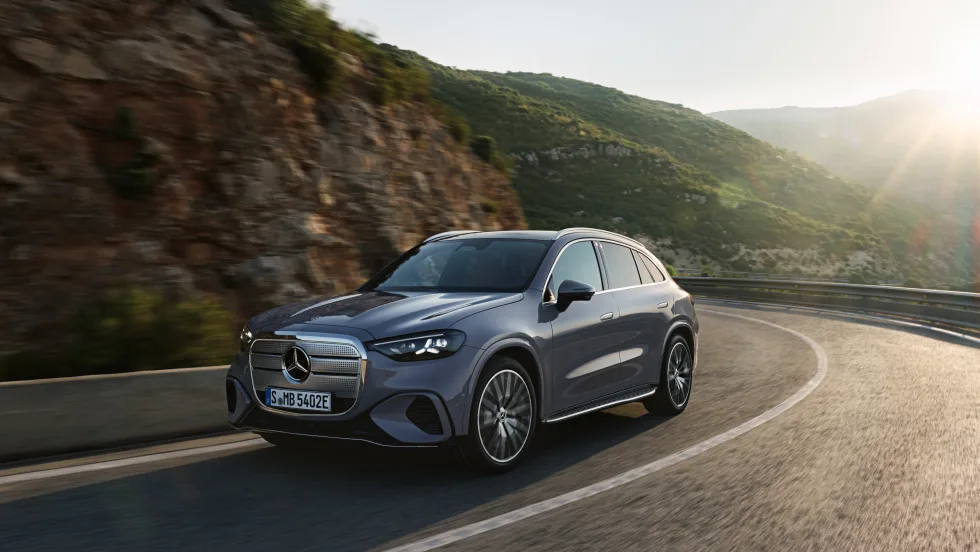
Mercedes-Benz Introduces Electric GLC With Up to 350 Miles of Range
The GLC 400 4MATIC Electric features an 800-volt architecture, 330-kW DC fast charging and a 94-kWh battery, along with Mercedes-Benz's new MB.OS operating system.
Read More →
Fleet Has a Talent Pipeline Problem, not a Talent Problem
Where will the next generation of fleet leaders come from, and what does the industry need to do differently to find them?
Read More →
Fleet Hacks: What Are You Still Doing Manually?
From daily recaps to repeatable workflows, fleet professionals share how AI can cut through busywork while keeping human judgment at the center.
Read More →