




Cellular Phones Ring Productivity for Fleets
No longer considered luxuries for executives, cellular phones are steadily making their way onto equipment option lists of fleets. Studies show that cellular phones lead to increased productivity.
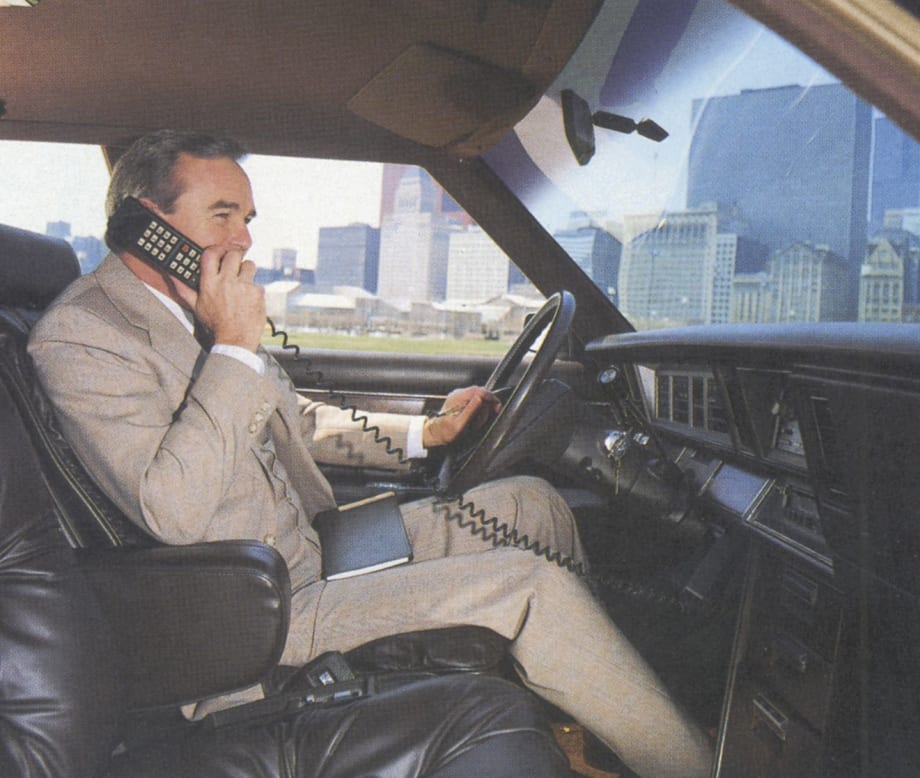
At the end of 1989, the number of cellular phone subscribers grew to 3,508,944. Industry experts predict over 5 million people will have cellular phones by the end of 1990.
Three years ago, Consolidated Freightways, headquartered in Palo Alto, CA, decided to equip its fleet cars with cellular phones. At the time, mobile phones were beginning to be recognized by fleets as time-saving assets and Consolidated Freightways wanted to see what effect they would have on its drivers.
At the end of 1989, the number of cellular phone subscribers grew to 3,508,944. Industry experts predict over 5 million people will have cellular phones by the end of 1990.
"The main reason we got cellular phones was to increase the productivity of our account managers," says Cliff Allen, junior communications analyst for Consolidated Freight-ways who oversees the company's cellular phone program.
To measure the level of increased productivity, Consolidated Freightways conducted a six-month study in 1988 that showed cellular phones increased available work time by 500 minutes per month per driver. Calculated into yearly figures, each account manager for Consolidated Freightways gained an additional 100 hours of work time due to cellular phones.
In today's marketplace, cellular phones are no longer considered luxuries. Rather, they are looked upon as vital business tools. More fleets are equipping drivers with cellular phones in hopes of turning wasted driving time into productive work time.
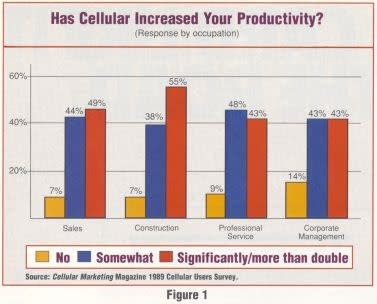
According to Cellular Marketing magazine's 1989 Cellular Users Survey, 81 percent of the 2,000 respondents said business productivity was the biggest influence in the purchase of a cellular telephone. Approximately 91 percent of the respondents said cellular phones had increased their productivity.
Fleet Costs
Fleets without cellular phones usually are concerned about costs and phone abuse by employees, according to Hershel Shosteck, president of Hershel Shosteck Associates, Ltd., a firm of international telecommunication economists focusing on the cellular market. However, there are preventive measures.
"Many fleet managers grant their salespeople a given limit that the company will pay," he says. "Anything over the limit, the user pays."
Shosteck recommends a minimum monthly limit of $150 per driver, and says that good salespeople won't mind paying for additional usage because they will make up for the expense in increased sales commissions.
Shosteck also says that fleets which install phones in all cars often qualify for fleet cellular discount rates, discounts for airtime, and a centralized payment option.
In addition, because the phones will be used in business settings, Shosteck recommends that fleets use quality equipment to get the clearest reception.
The Cellular Boom
From 1984 to 1989, the number of cellular subscribers in the United States grew from 91,600 to 3,508,944. Industry experts predict that by the end of 1990 more than five million people in the U.S. will have cellular phones.
A primary reason behind the growth of cellular phone usage appears to be reduced equipment prices. In past years, only upper-level executives had ear phones. Today, most salespeople would be dead without them.
"The key factor driving subscriber growth has been the decline in the costs of owning and using a cellular telephone," says Shosteck. "When the cost of the phone, service, and the effect of inflation are all considered, the cost of owning and using a cellular phone in June, 1989, was 51.1 percent of the cost in October, 1983, when commercial cellular service began."
One consequence of the decreasing cost of cellular phones has been the increased growth rate of subscribers. According to figures released by the Cellular Telecommunications Industry Association (CTIA), an average of 133,000 new subscribers were added each month in the second half of 1989, compared to 110,000 per month in the first half of 1989.
Digital vs. Analog Systems
Due to the rapid growth of the cellular industry, the airwaves are becoming increasingly crowded. For example, cellular callers in Los Angeles and New York must sometimes wait several minutes for a dial tone.
"There are certain downtown areas or heavily-traveled highways where usage is so high at rush hour that calls just get blocked." says Gregory Voight, chief of the Federal Communications Commission's Mobile Services Bureau.
The cellular industry hopes that a switch to digital technology will alleviate the crowded airways, reduce costs, and encourage continued growth.
Full-digital systems, which will be compatible with existing analog cellular phones, are expected to increase airwave utilization six to seven times over today's equipment. These systems will transmit voices in a series of pulses instead of the continuous radio waves that are carried now by radio transceivers. As a result, the digital systems will enable a cellular system to compress more voice conversations on a single channel.
At the same time, digital systems are expected to continue the trend of reducing operating costs. Experts say the greater capacity of the digital systems should produce lower costs on a per-channel basis by 10 to 15 percent. In addition, the digital technology will boost data transmission speeds.
Digital systems now being installed in Los Angeles and New York are expected to be on-line by early 1991. The rest of the country should get the technology within the next five years.
Cellular Safety
Despite the many advantages, many fleet managers are concerned with the safety risks involved with cellular phone usage. The concern is that phone calls can sometimes distract a driver from paying attention to the road. However, some cellular industry analysts argue that using a phone is similar to changing a radio station. A study conducted by AT&T. Bell American Mobile Systems, and the Potomac Division of the American Automobile Association concluded that cellular phones are not a serious threat to vehicle safety.
Technology also is contributing to the development of cellular safety features. Many cellular phones offer speakers, memory dialing, and voice-activated answering which allow a driver to watch the road and keep both hands on the steering wheel while using the cellular phone.
"All Consolidated Freightways' vehicles are equipped with phones that offer hands-free service," says Allen. "Also, we tell our drivers that cellular calls shouldn't last more than four minutes."
In addition, Consolidated Freightways sends its cellular users a training tape on how to properly use the mobile phones.
Equipment Options
Cellular phones are available in three different models: mobile, transportable, and portable. Mobile phones have a permanently mounted cradle and transceiver and only operate while in the vehicle. The larger transportable models can be used either in the car or can be removed from the vehicle. Portable phones, can be carried in a briefcase or suit pocket.
Auto manufacturers also are starting to recognize the demand for cellular phones. Chrysler Motors launched a cellular phone system in March, 1990 called "Visorphone." The system is available in selected 1990-model Chrysler and Dodge vehicles through participating dealers in California. The program is expected to be available nationwide by the end of 1990.
Developed exclusively for Chrysler by Cartell, Inc., and OKI Telecom, the "Visorphone" is integrated into the car's sun visor, where it is unobtrusive. The unit features a 100-number memory, one-touch dialing, and hands-free operation.
"Chrysler is providing the car buyer with an integrated system of unique phone hardware, installation, airtime purchase, and activation, all handled through the car dealership, like any other equipment option," says Steven Bruyn, manager of Chrysler's cellular phone programs.
Ford Motor Co. announced the Ford Cellular System in June, 1990. The system includes factory-installed phones on the Lincoln Town Car, Continental, and Mark VII, as well as access to a national carrier airtime network.
"Our decision to introduce the Ford Cellular System was based on several key factors," says Frank Macher, general manager of Ford's Electronics Division. "These included the strong growth of the cellular industry, as well as the results of customer research indicating high levels of satisfaction with cellular phones."
Since the phones are factory installed, subscribers can begin using the equipment immediately because dealers will be able to activate the phones prior to customer delivery.
Standard operating features of Ford's cellular program include such safety devices its hands-free operation, audio mute, and an omni-directional microphone which allows everyone in the vehicle to participate in the call. Other features include: super-speed dialing, last number recall, and electronic voice control.
Cellular Service
Once a car phone is purchased, users must contract with a service company to provide airtime. Because most cities have more than one company providing service, it's advisable to shop around and inquire about each company's service and price.
People familiar with the industry suggest cellular users also inquire about "dead spots" - areas blocked by mountains or buildings that interrupt phone service.
In addition, before deciding on a service company, read the fine print on how charges are made. One system may charge for a full minute even if the call was only 15 seconds. A common cellular industry practice is to charge in tenths-of-a-minute, which can be a cost-saving benefit to fleets.
Cellular Safety Features
1. Hands-free Operation: The user can hold a conversation while the phone is in the cradle.
2. Memory: Telephone numbers can be stored and recalled with the touch of a button. This prevents having to dial numbers while driving.
3. Auto Redial: Automatically redials a busy or no-answer number at fixed intervals.
4. Voice Activation: Calls can be placed when the user speaks the name of the party being called. Also, it allows a user to answer calls while the phone is still in the cradle without removing hands from the steering wheel or eyes from the road.
5. Electronic Lock: A user can prevent unauthorized use of the phone by keying in a special code.
6. Audio Muting: Automatically turns off the radio when the phone rings.
7. Microphone Mute: A user can converse with another person in the vehicle without being overheard by the party dialed.
8. Alphanumeric Capability: Names, addresses, or related information can be stored along with telephone numbers. This eliminates having to remember numbers.
9. On/Off Button: Gives the user the option on when to receive calls. Also, it prevents distractions when a driver wants to be undisturbed.
10. Volume Controls: Allows the user to control the volume of the ringer, earpiece, and speaker.
More Operations

Avis Budget Group Deploys Neology Toll Management Technology Across Major Brands
Neology’s neoFleet platform will manage toll transactions and toll-authority operations for vehicles across Avis, Budget, Payless, Budget Truck and Zipcar.
Read More →
Fleet Personal-Use Charges Edge Higher in 2026
Nearly eight in 10 surveyed fleets allow personal use of company vehicles, while just over half of respondents report charging employees for the privilege.
Read More →
The Future of Fleet + What’s Changing Right Now | AF News Recap
Could developments overseas offer a preview of what’s coming for U.S. fleets? This week, we’re looking at the future of AI, autonomy, and electrification, plus Ford Pro’s new certified pre-owned program, smarter vehicle offboarding, and a new way for fleets to manage toll expenses.
Read More →
How to Handle Vehicle Offboarding
What do fleet managers need to do when a driver leaves?
Read More →
Fleet Manager’s Ultimate Playbook: Navigating the New Standard in OEM Connectivity
Rising operating costs, driver safety concerns, and unplanned downtime are putting unprecedented pressure on modern fleets. Discover how fleet managers use embedded OEM connectivity and real-time vehicle data to cut TCO, prevent downtime, and protect drivers without aftermarket telematics hardware.
Read More →
U.S. Bank Adds Verra Mobility Toll Management to Voyager Fleet Platform
The integration allows U.S. Bank Voyager fleet customers to manage toll payments and violations alongside fuel, EV charging and maintenance expenses.
Read More →
ADAS Prevents Crashes. But Repairs Cost More | AF News Recap
ADAS-equipped vehicles may crash less often, but they can cost more when they do. This week, we’re breaking down what that tradeoff means for fleets, plus Subaru’s first Forester Wilderness Hybrid, Nissan’s new e-POWER Rogue, and why Calstart has become Catalyst Mobility.
Read More →
Moventum Fleet Management Names Mark Iorillo Head of Sales
Iorillo brings nearly 20 years of fleet management and sales experience to the role, including previous positions at Element Fleet Management, CEI, Donlen and Ryder.
Read More →
Fleet Has a Talent Pipeline Problem. What Comes Next? | AF News Recap
Where will fleet’s next generation of leaders come from? This week, we’re looking at the industry’s talent pipeline, what certification can add to a fleet career, how to build an award-worthy track record, and the return of Automotive Fleet’s Personal Use Survey.
Read More →
Smith System Launches Driver Risk Management Program
Fleets have more driver data than ever, but identifying risky behavior doesn't necessarily correct it. Smith System's new Driver Risk Management program combines monitoring, training, and follow-up coaching to help fleets connect risk signals with driver intervention.
Read More →