




Report from the Editor
Safety is one of the most important aspects of overall fleet operations, yet it often is one of the most overlooked. Too often, a fleet manager will be up on the latest maintenance procedures, know all about car replacement and controlling of costs, but little about safety operations.
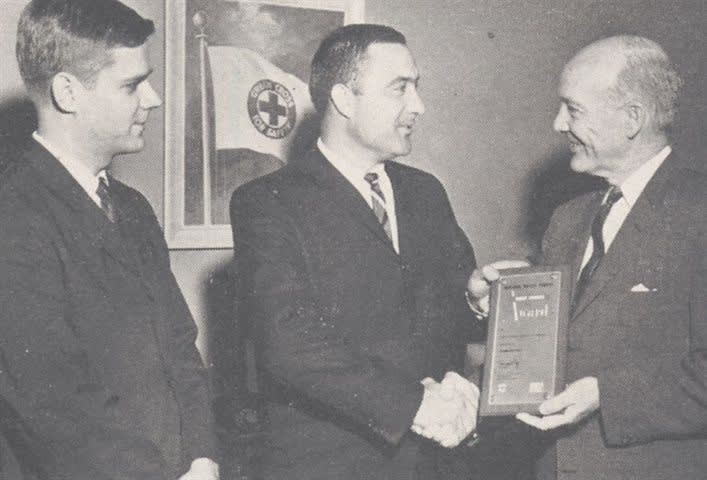
Ed Bobit (center), editor/publisher of Automotive Fleet, receives a plaque from Howard Pyle, president of the National Safety Council. Looking on is Roy Wiley, executive editor of AF.
Rarely has an award given me as much pleasure as the one presented to Automotive Fleet by the National Safety Council. The award was presented for outstanding coverage in the field of safety. The award, presented by Howard Pyle, president of the council, was gratifying because it marked recognition of a job well done. And from a group that knows what it is talking about when it talks about safety. The award also was gratifying because if the National Safety Council feels that AF is contributing something to safety, then we are performing our #1 function -- serving the fleet operator.

Safety is one of the most important aspects of overall fleet operations, yet it often is one of the most overlooked. Too often, a fleet manager will be up on the latest maintenance procedures, know all about car replacement and controlling of costs, but little about safety operations. Too few fleets have comprehensive safety programs. The fleet with a good safety program not only is performing a vital public service, but it is also cutting down on fleet expenses. The more time and money that a fleet is willing to spend on a safety program, the less expensive is the overall operations. Remember, accidents cost money, both in lost time and replacement expenses. And accidents don't happen; they are caused. The well-trained driver is less likely to become involved in an accident than the untrained driver.
On the subject of safety, it is heartening to learn that all of the auto companies will install seat belts in their cars after the first of the year. However, if your fleet is not now equipped with seat belts, or if you are planning to purchase ne vehicles before January 1, make sure that you purchase belts. Don't wait for belts to become standard. It may be too late.
Item: I've long known that Automotive Fleet has rated high among fleet men, but I've never realized the extent of our readership. We have just received a subscription order from the State Scientific and Technical Library of the USSR in Moscow, Russia. The order has been filled.
More Operations
Company Vehicle or Reimbursement? How Fleets Are Rethinking Assignments
As fleet costs and insurance pressures rise, fleet managers are taking a closer look at which employees need company-provided vehicles and when a reimbursement program may make more sense.

Fleetio, ASE Launch Scholarship Program for Automotive Technicians
The second annual program will award 15 scholarships totaling $35,000 to support ASE certification, testing fees, and equipment costs.

Reading the Global Signals: What AI and the Energy Transition Mean for Fleets Now
In this opening keynote of the 2026 Fleet Forward Conference, John Rossant, founder of CoMotion, How can fleet managers navigate a never-ending, changing industry landscape?

90% Use Telematics. Are Fleets Getting Safer? | AF News Recap
This week, we're breaking down which industries have the highest rates, how Jamie McKay manages 2,400 vehicles, what's happening with the 2027 fleet awards, and why software-defined vehicles could introduce new costs.

What's Best Handled by an FMC, and What's Better Done Directly?
Fleet managers continue to rely on FMCs for essential services but are taking a closer look at where working directly with suppliers can improve efficiency and responsiveness.

Fleet Meets: Erin Gilchrist
Meet Erin Gilchrist, the inaugural Mike Antich Spirit of Fleet Award winner, as she shares insights on leadership, mentorship, the power of industry connections, and why people remain at the heart of fleet's future.

How 2026 Fleet Visionary Jamie McKay Manages 2,400 Vehicles Across 37 States
How do you keep 2,400 vehicles running across 37 states? Fleet Visionary Award winner Jamie McKay shares how collaboration, flexibility, and a few simple strategies help her tackle fleet management challenges at Aptive Pest Control.

Managing Fleet Costs in an Era of Permanent Volatility
Fleet operating costs have risen more than 20% since 2020, raising a key question: When does extending a vehicle's service life stop making financial sense?

The Next Evolution of Fleet Management: Autonomous Operations
This opening keynote session at the Fleet Forward Conference highlights the future of autonomous driving for fleets.

How to Reduce the Total Cost of Risk From Catalytic Converter Theft
A stolen catalytic converter can cost fleets far more in downtime and lost productivity than in repairs. A total-cost-of-risk approach can help fleet managers quantify their exposure and prioritize theft prevention.