Automotive Fleet
MenuMENU
SearchSEARCH

First-Ever Breakout of Maintenance Costs by Trucks, Vans, & SUVs

This study of 40,701 trucks breaks out costs for 12 maintenance categories ranging from brakes to suspensions. These costs are broken out for eight truck segments, spanning full-size pickups to cargo minivans, over seven mileage ranges.

by Staff
March 1, 1999
4 min to read


In a first-ever maintenance study to break out maintenance costs by truck categories, PHH Vehicle Management Services has ascertained that expenses have remained relatively stable, for all truck categories, for the past 12 months. It also concludes that new technological enhancements being introduced in new-model trucks will furthermore help hold down fleet maintenance costs for the immediate future. The study, conducted for Automotive Fleet magazine, analyzed the maintenance expenses for 40,701 trucks over seven mileage ranges. The vehicles analyzed in the study sample broke down as follows:

  • 669 compact pickups,

  • 4,545 full-size pickups,

  • 952 compact sport/utilities,

  • 156 full-size SUVs,

  • 8,397 full-size cargo vans,

  • 43 full-size passenger vans,

  • 8,299 cargo minivans, and

  • 17,640 passenger minivans.

Ad Loading...

Although the costs of parts and service have remained relatively flat over the past year, PHH Vehicle Management Services notes that enhancements being implemented at the manufacturer level are sure to have an impact on future costs and fleet policies. For instance, the fleet industry has already seen the benefits of synthetic lubricants being used in certain applications. These synthetic lubricants have all but eliminated the need to change transmission fluid or engine coolant under normal driving conditions in certain vehicles. Other products such as platinum-tipped spark plugs have a much greater life expectancy – 100,000 miles (versus the traditional 30,000). High-tech rubber compounds being used to manufacture tires have less rolling resistance, which reduces friction, and the tires last longer. New vehicle technology being implemented by certain manufacturers will offer the information fleet managers need to become more accurate in scheduling necessary maintenance. As an example, for the first time on light trucks, GM has implemented an Oil Life Monitor System on its 1999 Chevrolet Silverado and GMC Sierra pickups. This system monitors specific computer inputs such as engine revolutions, operating temperatures, actual engine run time, and other inputs to calculate when the oil should be changed. Some vehicles may establish new maximum oil-change intervals of up to 15,000 miles, while other vehicles that experience extended periods of idling time could potentially need to increase their oil change frequency. The benefits of these new technologies are numerous. In addition to the obvious benefits of reduced oil change frequency, less driver down-time, and lower operating cost, there are other benefits that are not so obvious. For instance, because the oil change light is a constant reminder that service is needed, there should be fewer instances when major engine damage occurs as a result of driver neglect. In addition, improved compliance should result in more consistent odometer input information, which is critical in accurately forecasting and budgeting maintenance cost. And the positive impact on the environment is substantial. Potentially millions of quarts of waste oil can be eliminated every year, not to mention the reduction in used oil filter solid waste. “The general trend of the new technologies is positive for reducing maintenance costs. But because each manufacturer is taking its own path on what new technologies to implement on its vehicle lines, it becomes more and more important to know what technology is used in what product line, especially if you want to knowledgeably cut costs by doing only the maintenance that is necessary,” said Bruce Horan, product manager of maintenance offerings at PHH Vehicle Management Services. “We recommend that you double check your preventive maintenance policies to make sure they’re in line with the reality of the newer vehicles. You don’t want to over-maintain a vehicle, but at the same time you don’t want to miss key maintenance events and damage the vehicle, increase safety risks, or decrease the service life.” Also, technology enhancements in medium-duty trucks have helped reduce maintenenace expenses. For instance, Navistar’s new electronic engines have helped lower maintenance costs for Loomis, Fargo & Co. in Dallas, says Loomis executive vice president-fleet management Tommy Harden. “With computer-controlled maintenance, our mechanics are putting in less diagnostic and repair time,” Harden said. “That has caused maintenance to go down.” Harden says that since his fleet switched from performing preventive maintenance every three months to once a month, his maintenance costs have decreased. Since his fleet consists of armored trucks, they are constantly left running. Harden says that is equivalent to the vehicles running 14 miles per hour, every hour of operation.


Subscribe to Our Newsletter

More Operations

SponsoredMay 15, 2026

Hybrids: Electrification Without the Challenges

For fleet managers, fuel is one of the biggest line items in the budget — and it's one hybrids can shrink without changing how your people work. Download the eBook to see the numbers, understand the technology, and get a step-by-step guide to making the switch.

Read More →
Man speaking during an Automotive Fleet interview beside text reading “The 60% Driver Improvement Nobody Expected!” with blue motion graphics background.
Operationsby Chris BrownMay 14, 2026

How NOV Uses Telematics to Improve Fleet Safety Across 160 Locations

James Victory of NOV discusses how the company manages fleet safety, maintenance, and telematics across more than 150 locations supporting oilfield operations throughout the U.S.

Read More →
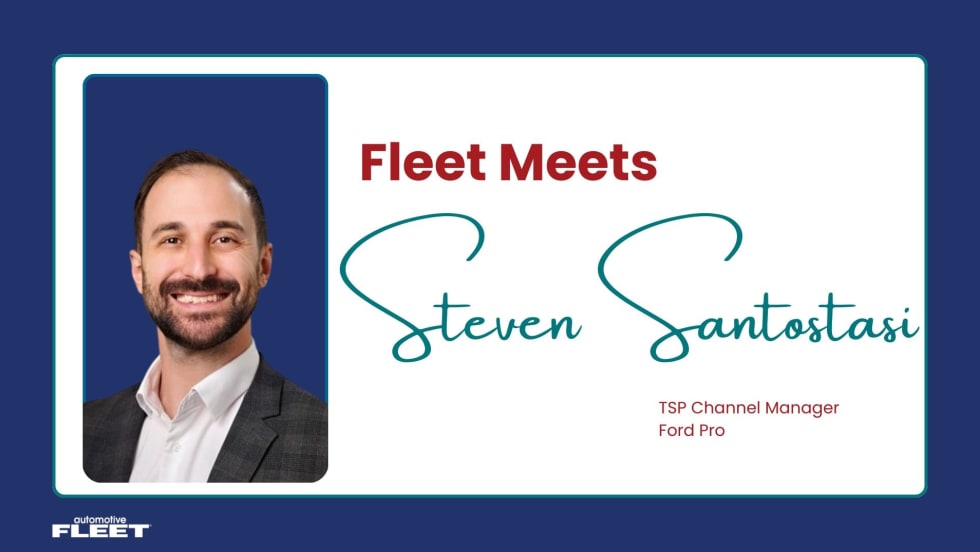
A graphic with Ford Pro's Steven Sanstostasi's headshot on it representing the Fleet Meets series.
Operationsby Faith HowellMay 14, 2026

Fleet Meets: Steven Santostasi

This edition of the Fleet Meets series features Steven Santostasi, the current TSP channel manager for Ford Pro.

Read More →
Ad Loading...
Cover of a whitepaper titled “The Hidden Costs of Departmentally Assigned Vehicles on Your Fleet” featuring a black fleet vehicle driving on a road at sunset. Subheadline reads: “Discover how your fleet can reduce costs and minimize risk by implementing vehicle sharing.” The document focuses on fleet optimization, vehicle sharing, cost reduction, utilization tracking, and risk management for fleet operations.
SponsoredMay 13, 2026

Why Fleet Managers Are Replacing Departmental Vehicles with Shared Motor Pools

Departmentally assigned vehicles often create hidden costs through underutilization, poor visibility, and increased administrative burden. This white paper explores how shared motor pool strategies help fleets reduce costs, improve accountability, and optimize vehicle utilization.

Read More →
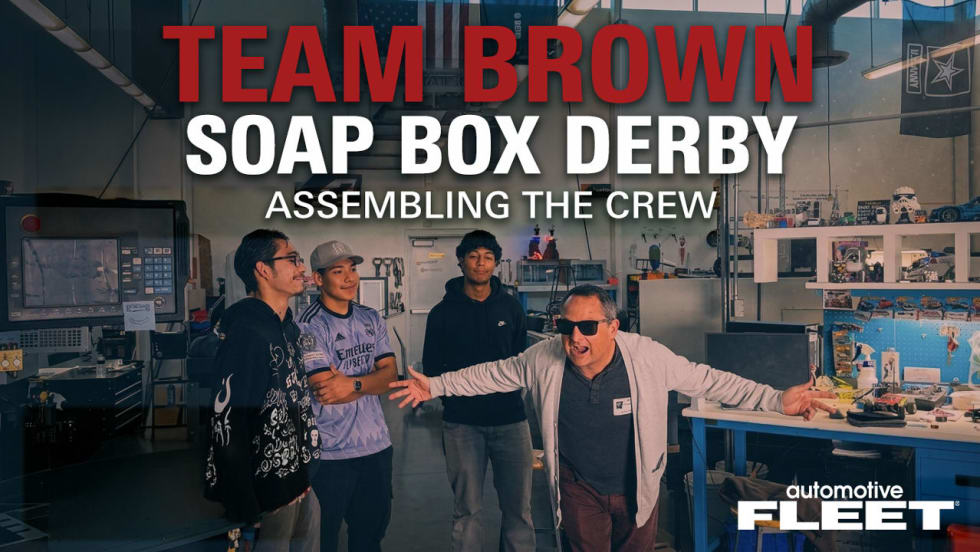
Three team members in shop with Chris
Operationsby Chris BrownMay 12, 2026

Soap Box Derby Challenge: Assembling the Crew

Meet Gabriel, Matthew, and Angel — the team helping bring this soap box derby build to life.

Read More →
Handshake graphic featuring BBL Fleet and Velcor Leasing Corporation logos announcing BBL Fleet’s acquisition of Velcor to expand fleet management services nationwide.
Operationsby News/Media ReleaseMay 8, 2026

BBL Fleet Acquires Velcor Leasing Corporation

BBL Fleet expanded its footprint in the fleet management industry with the acquisition of Velcor Leasing Corporation of Madison through a stock purchase agreement finalized Feb. 27, 2026.

Read More →
Ad Loading...
Graphic reading “What’s New From Lytx at Protect 2026?” over a blue digital network background highlighting Lytx fleet technology and AI-powered safety solutions.
Operationsby News/Media ReleaseMay 6, 2026

Lytx Introduces New AI Fleet Technologies at Protect 2026

The company introduced new AI-driven fleet safety and operations technologies during its annual user conference.

Read More →
Cover image for the “5th Annual Market Pulse Report” by Element titled “Navigating fleet management in 2026: Data and insights shaping the future of fleet and mobility.” The design features an aerial view of a cable-stayed bridge with vehicles traveling on a highway beside a dense green forest. A teal graphic panel overlays the lower portion of the image, with the Element logo and tagline “Intelligence in motion” at the bottom.
SponsoredMay 6, 2026

Fleet Costs Are Rising: Here’s How Leaders Are Responding

Fleet leaders are under pressure to reduce costs, adapt to economic uncertainty, and make smarter decisions. See how peers across North America are responding with real data, proven strategies, and forward-looking insights. Download the 2026 Market Pulse Report to benchmark your strategy and uncover where you can gain an edge.

Read More →
A blue Automotive Fleet graphic representing the weekly AF News Recap series.
Operationsby Faith HowellMay 4, 2026

From Waffle House to AI: Fleet Trends You Need to Know

In this AF news recap, host Faith Howell covers how Waffle House stepped up during disaster response and new AI tech on the market.

Read More →
Ad Loading...
OperationsApril 30, 2026

Fleet Operations in the Age of AI: Navigating Ethical and Legal Challenges

AI is no longer a future concept for fleets—it’s already embedded in the tools, data, and decisions that operators rely on every day. In this episode of the Fleet Forward Podcast, recorded live at Fleet Forward, industry leaders take the conversation beyond hype to examine what responsible AI adoption really looks like in fleet operations.

Read More →