




“As of right now, what they’re asking for doesn’t exist."
Southern California Mayors Aim for Zero Emissions at Ports
The mayors of Los Angeles and Long Beach, California, are aiming for zero emissions at the ports or Los Angeles and Long Beach by 2035 as part of their commitment to adopting the Paris Climate Agreement goals in their cities.
by Staff
June 19, 2017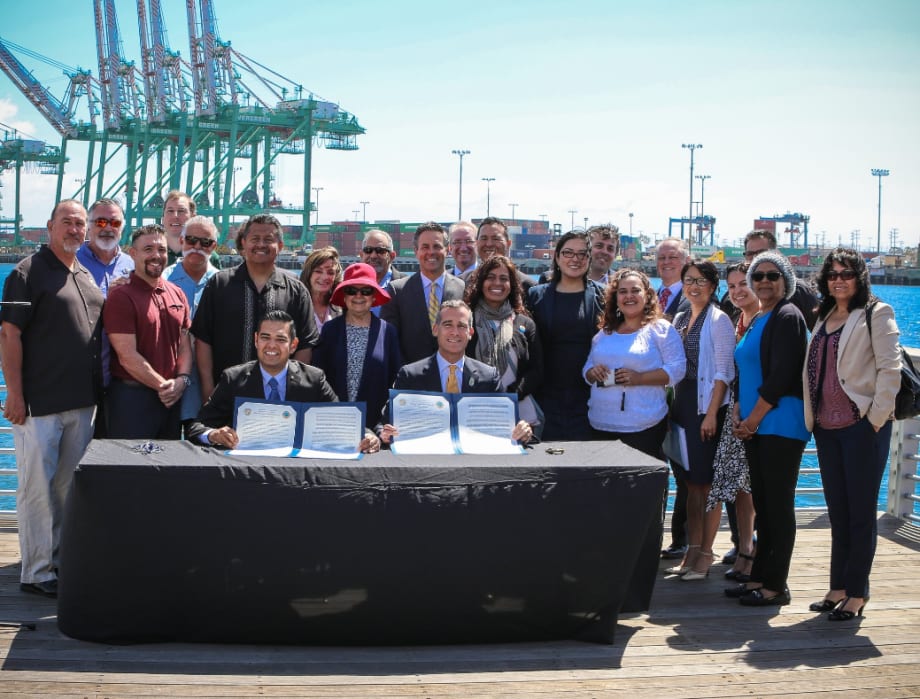
(Left) Long Beach Mayor Robert Garcia and L.A. Mayor Eric Garcetti signed a joint declaration to set goals for the transition to zero emissions at Southern California ports. Photo: Office of Mayor Eric Garcetti
3 min to read
(Left) Long Beach Mayor Robert Garcia and L.A. Mayor Eric Garcetti signed a joint declaration to set goals for the transition to zero emissions at Southern California ports.Photo: Office of Mayor Eric Garcetti
The mayors of Los Angeles and Long Beach, California, are aiming for zero emissions at the ports or Los Angeles and Long Beach by 2035 as part of their commitment to adopting the Paris Climate Agreement goals in their cities.
Mayor Eric Garcetti of Los Angeles and Mayor Robert Garcia of Long Beach signed a joint declaration to set goals for the twin ports to make the transition to zero emissions in their Clean Air Action Plan. The CAAP will include new investments in clean technology, expanding emissions reductions, and launching a zero-emissions drayage truck pilot in the next few years.
“Our ports are the engines that power our economy — they must also be the forces that drive our region toward a greener, more sustainable future,” said Garcetti. “I am proud to stand with my fellow Climate Mayor Robert Garcia today, as we renew our commitment to cleaning our air, and moving boldly toward our goal of zero emissions goods movement at the ports.”
A spokesman for the Harbor Trucking Association, an advocacy group of intermodal carriers in California, is supportive of clean air technology but told HDT the group is skeptical that the goals stated by the two mayors were actually achievable.
“We’re not against clean technology or clean air, but you need to be careful in the goals you set,” said Weston LaBar, the executive director of the HTA. “You can’t set hard goals and milestones to get to zero emissions when the technology does not really exist today.”
The two mayors also launched the Green Ports Collaborative, a program aimed at creating shared environmental standards for ports and cities in the U.S., and to demonstrate demand for zero emissions equipment. The mayors’ declaration also puts in place a CAAP implementation Stakeholder Advisory Group, which will bring together stakeholders from the government, maritime industry, utility and community leaders, to oversee the 2017 update.
The HTA states that the technology has a long way to go before the zero emissions goals and deadlines can be realized. It says the technology needs to be available and commercially viable before trucking companies should be held accountable for missing emissions goals.
“As of right now, what they’re asking for doesn’t exist,” said LaBar. "You can't penalize the trucking community in the form of bans or fines if there's no suitable technology out there. It needs to be an affordable technology that the industry can really find a return on investment, otherwise the whole system breaks down."
The two ports are the busiest container ports in the U.S., and play a vital role in achieving cleaner air and emissions goals for the state. Nearly 40% of the cargo that comes to the U.S. moves through the Southern California ports complex.
More Operations

The Next Evolution of Fleet Management: Autonomous Operations
This opening keynote session at the Fleet Forward Conference highlights the future of autonomous driving for fleets.
Read More →
How to Reduce the Total Cost of Risk From Catalytic Converter Theft
A stolen catalytic converter can cost fleets far more in downtime and lost productivity than in repairs. A total-cost-of-risk approach can help fleet managers quantify their exposure and prioritize theft prevention.
Read More →
Personal-Use Charges Rise as Vehicle Values Fall | AF News Recap
Personal-use charges are climbing, wholesale used-vehicle values are declining, and commercial fleet sales growth is slowing. This week, we're breaking down the latest fleet data, plus how Element Fleet Management is helping Waymo prepare for its first Canadian robotaxi market.
Read More →

Here's When You Should Make an Exception to Fleet Policy
Fleet policies are designed to create consistency, but not every driver or situation fits neatly within standard rules.
Read More →
AI-Native or AI-Acquired: What Should Fleet Managers Look for in an AI Platform?
Six questions can help fleet managers look beyond AI marketing claims to evaluate integration, data access, and real-world operational performance.
Read More →
Sponsored•October 14, 2026
A buyer's guide to fleet management software in 2027
Buying fleet management software in 2027 means looking beyond features and price. As fleet operations, technology and expectations evolve, this guide explores what today’s fleet professionals should consider when choosing a system that can deliver value now and adapt to what comes next.
Read More →
What Will Shape the Next Era of Fleet Management?
EVs, AI, and autonomous vehicles are reshaping fleet management. Discover what’s ahead—and how fleet leaders can prepare for the next era.
Read More →
How Fleets Can Recruit and Train Veterans for Technician Roles
Here's how the technician shortage has affected uptime for fleets, and what to do about it.
Read More →
Avis Budget Group Deploys Neology Toll Management Technology Across Major Brands
Neology’s neoFleet platform will manage toll transactions and toll-authority operations for vehicles across Avis, Budget, Payless, Budget Truck and Zipcar.
Read More →
Fleet Personal-Use Charges Edge Higher in 2026
Nearly eight in 10 surveyed fleets allow personal use of company vehicles, while just over half of respondents report charging employees for the privilege.
Read More →