




Related: 2018 Volvo XC60 Starts at $41,500
Google to Develop Volvo’s Future Infotainment System
Volvo Cars has partnered with Google to develop the carmaker’s next-generation in-car infotainment and connectivity solution based on the technology company’s Android platform that will launch on new models within two years.
by Staff
May 18, 2017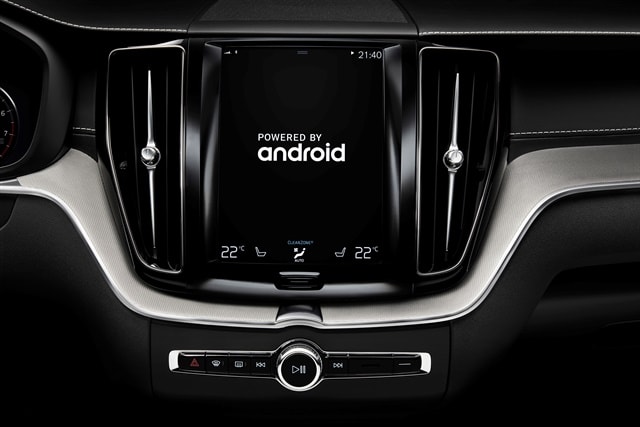
Photo courtesy of Volvo.
2 min to read
Photo courtesy of Volvo.
Volvo Cars has partnered with Google to develop the carmaker’s next-generation in-car infotainment and connectivity solution based on the technology company’s Android platform. According to officials, the system will launch on new Volvo models within two years.
The partnership promises to “revolutionize how Volvo customers engage and interact with their cars.” The large catalogue of popular Android apps — developed by Google, Volvo, or third party app developers — will offer connected and predictive services in and around the car.
“We are making an important strategic step with the Google partnership. Google’s platform and services will enhance the user experience by enabling more personalization possibilities, while Android will offer increased flexibility from a development perspective,” said Henrik Green, senior vice president of research and development at Volvo Car Group.
Volvo Cars’ partnership with Google reflects the ongoing convergence between the automotive and technology industries as cars become increasingly connected. Officials said using Android as the base operating system will increase speed and flexibility in the development, and offer its customers the ability to personalize the connected in-car experience.
“We’re thrilled to partner with Volvo to bring Android into their next-generation connected cars,” said Patrick Brady, vice president of Android engineering at Google. “This partnership gives us the opportunity to deliver a more seamless experience to Volvo drivers through a full-featured infotainment platform and rich ecosystem of Android applications and Google services.”
Volvo is also collaborating with Google on another initiative to update recent Volvo models by adding Google Local Search, a location-based service application. This will be released through an update to customers with Sensus Navigation.
“With the advent of Android we will embrace a rich ecosystem while keeping our iconic Volvo user interface. We will offer hundreds of popular apps and the best integrated experience in this broad, connected environment,” Volvo’s Green said.
Further details on the partnership and Android OS will be announced at Google’s annual tech show, Google I/O on May 17.
More Operations

U.S. Bank Adds Verra Mobility Toll Management to Voyager Fleet Platform
The integration allows U.S. Bank Voyager fleet customers to manage toll payments and violations alongside fuel, EV charging and maintenance expenses.
Read More →
ADAS Prevents Crashes. But Repairs Cost More | AF News Recap
ADAS-equipped vehicles may crash less often, but they can cost more when they do. This week, we’re breaking down what that tradeoff means for fleets, plus Subaru’s first Forester Wilderness Hybrid, Nissan’s new e-POWER Rogue, and why Calstart has become Catalyst Mobility.
Read More →
Moventum Fleet Management Names Mark Iorillo Head of Sales
Iorillo brings nearly 20 years of fleet management and sales experience to the role, including previous positions at Element Fleet Management, CEI, Donlen and Ryder.
Read More →
Fleet Has a Talent Pipeline Problem. What Comes Next? | AF News Recap
Where will fleet’s next generation of leaders come from? This week, we’re looking at the industry’s talent pipeline, what certification can add to a fleet career, how to build an award-worthy track record, and the return of Automotive Fleet’s Personal Use Survey.
Read More →
Smith System Launches Driver Risk Management Program
Fleets have more driver data than ever, but identifying risky behavior doesn't necessarily correct it. Smith System's new Driver Risk Management program combines monitoring, training, and follow-up coaching to help fleets connect risk signals with driver intervention.
Read More →
Automotive Fleet Opens 2026 Personal Use Survey for Commercial Fleet Managers
Less than two weeks left! Commercial and corporate fleet managers are invited to share how their organizations handle company vehicle personal-use policies, charges, and driver eligibility.
Read More →
From AI Prompts to AI-Generated Safety Songs | AF News Recap
Can better prompts make AI more useful for fleet managers? This week, we’re breaking down smarter fleet analysis, an AI-assisted experiment that turned safety training into music, and what happened to fuel prices in August.
Read More →
How to Write Better AI Prompts for Fleet Analysis
Include these six elements in your fleet prompts to generate more relevant analysis and accurate answers.
Read More →
Fleet Meets: Eric Kilgore
This edition of the Fleet Meets series features one of the industry's best leaders driving multi-market and national operations.
Read More →
Why Reactive Fleet Management Is Becoming Too Expensive to Sustain
Research highlights a growing need for proactive management strategies to address rising costs in fleet operations effectively.
Read More →