




Related: Delphi, Mobileye to Unveil Automated Driving System
Intel to Acquire Self-Driving Tech Firm Mobileye
Intel will acquire Israeli autonomous driving technology provider Mobileye for $15 billion under an agreement announced March 13 that brings the Silicon Valley chipmaker into the emerging autonomous-driving sector.
by Staff
March 13, 2017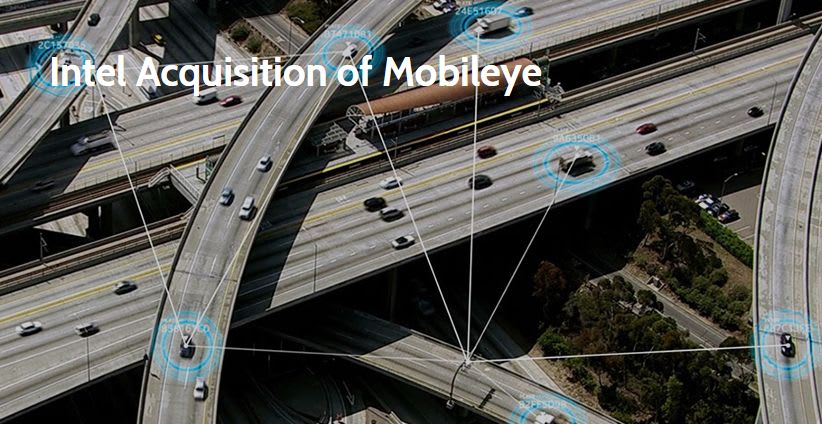
Photo courtesy of Intel.
2 min to read
Photo courtesy of Intel.
Intel will acquire Israeli autonomous driving technology provider Mobileye for $15 billion under an agreement announced March 13 that brings the Silicon Valley chipmaker into the emerging autonomous-driving sector.
Intel will spend $63.54 per share in cash for Jerusalem-based Mobileye, which specializes in collision detection and mapping technology. Santa Clara-based Intel will bring to bear its expertise to create automated cloud-based driving solutions.
Together the companies will combine efforts around connectivity, computer vision, data center, sensor fusion, high-performance computing, localization and mapping, machine learning and artificial intelligence.
With the merger, Intel will combine its Automated Driving Group with Mobileye. The new organization will be based in Israel and led by Amnon Shashua, Mobileye’s co-founder, chairman and CTO. Doug Davis, Intel's senior vice president, will oversee the combined organization’s engagement across Intel’s business groups. He will report to Shashua.
The organization will support both companies’ existing production programs and build upon relationships with automotive OEMs, Tier-1 suppliers and semiconductor partners to develop advanced driving assist, highly autonomous and fully autonomous driving programs.
The market for vehicle systems, data, and services supporting autonomous driving could reach $70 billion by 2030, according to an Intel estimate. By 2020, automated vehicles should generate 4,000 GB per day.
Intel and Mobileye began collaborating in July under a three-way partnership with BMW to develop a fleet of 40 autonomous vehicles by the second half of 2017 using Intel's GO solution and Mobileye's EyeQ5.
The Intel GO solution offers a platform for functions such as sensor fusion, driving policy, environment modeling, path planning and decision making. Mobileye’s EyeQ5 is responsible for processing and interpretation of input from the 360-degree surround view vision sensors as well as localization.
Mobileye formed a partnership with Delphi Automotive in August to develop a fully autonomous vehicle system by 2019. Mobileye ended its partnership with Tesla in July following a high-profile traffic fatality in May.
More Safety
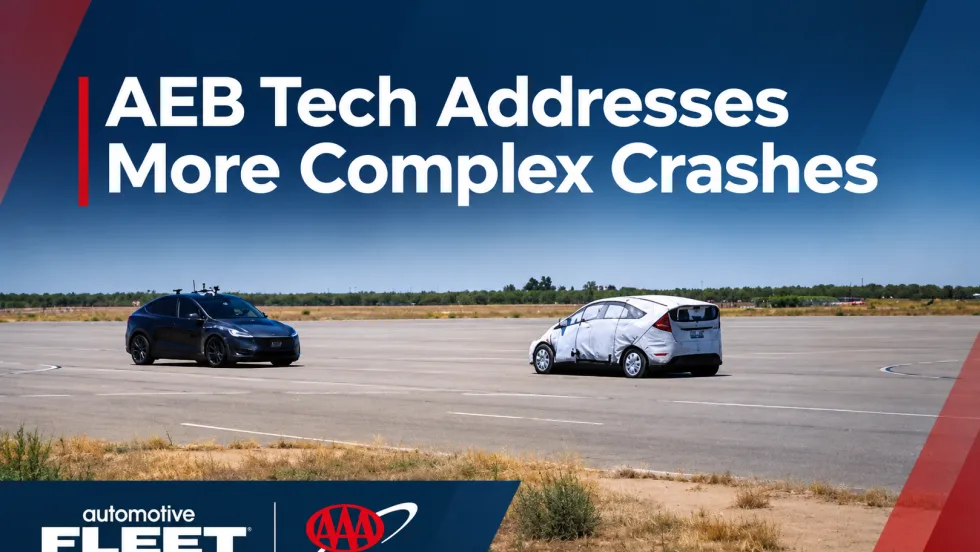
AAA Testing Finds Gaps in Intersection AEB Crash Prevention
Testing of four 2026 model-year vehicles found that automatic emergency braking prevented collisions in standardized intersection scenarios, but three vehicles failed to avoid crashes when another vehicle turned into their path.
Read More →
Which Fleet Types Have the Highest Severe Speeding Rates?
New research from SambaSafety finds significant differences in speeding rates across fleet industries, even as nearly 90% of surveyed fleets report using telematics.
Read More →
When a Cyberattack Hits Your Fleet: What Happens Next?
“You have two opportunities to test your plans: when you choose or when the threat actor chooses.” A cybersecurity expert reveals what fleet managers need to know before a cyberattack puts their operations at risk — and why the decisions made in the first moments can shape the entire recovery.
Read More →
Tips for Driving Safely on Halloween Night
This video features a reminder from the Connecticut Department of Transportation (DOT) and the Connecticut Police Chiefs Association, urging drivers to prioritize safety this Halloween.
Read More →
IIHS Crash Avoidance Tests Reveal Safety Gaps in Cargo Vans and Work Trucks
New IIHS crash avoidance ratings show uneven performance among cargo vans and heavy-duty pickups, with most struggling to avoid vehicle-to-vehicle collisions.
Read More →
What’s Next for Fleet? Safety, AI & Industry Recognition | AF News Recap
Could your company's culture be encouraging distracted driving? This week, we're exploring how workplace expectations affect driver safety, what AI, EVs, and autonomous vehicles could mean for the future of fleet management, and how fleet professionals can strengthen their award nominations.
Read More →
Does Your Fleet's Culture Encourage Distracted Driving?
What happens when the people responsible for enforcing safety rules are the ones setting the wrong example? The answer may reveal why some of the biggest risks to fleet drivers have little to do with what's written in the employee handbook.
Read More →
Sponsored•October 1, 2026
Fleet Manager’s Ultimate Playbook: Navigating the New Standard in OEM Connectivity
Rising operating costs, driver safety concerns, and unplanned downtime are putting unprecedented pressure on modern fleets. Discover how fleet managers use embedded OEM connectivity and real-time vehicle data to cut TCO, prevent downtime, and protect drivers without aftermarket telematics hardware.
Read More →
From Driver Well-Being to EV Charging | AF News Recap
Mental health belongs in the fleet safety conversation. This week, we’re looking at five ways fleets can support employee well-being before a crisis, plus Holman’s expansion in Mexico, new one-day Fleet Forward passes, and why EV charging demand is outpacing infrastructure growth.
Read More →
Nexar-Nauto Merger Aims to Give Fleets Better Safety Intelligence Through Larger Driving Dataset
Stefan Heck tells Automotive Fleet that combining more than 10 billion miles of driving history with Nexar's AI models will give fleets deeper insights into driver risk and roadway conditions than either company could provide independently.
Read More →