




Revised CARB Plan Includes $150 Million For Heavy Duty Vehicles
CARB recently approved a revised $363 million funding plan that includes $150 million for heavy-duty vehicles and off-road equipment, aimed at putting more clean vehicles in disadvantaged communities.


The $150 million for a range of heavy-duty vehicle and off-road equipment includes funding for advanced technology demonstration projects and zero-emission buses for transit agencies and rural school districts.
Photo: Bobit
The California Air Resources Board recently approved a revised $363 million funding plan that includes $150 million for heavy-duty vehicles and off-road equipment, aimed at putting more clean vehicles in disadvantaged communities.
The revised plan for fiscal year 2016-2017 keeps much of the original funding intact while addressing the smaller budget appropriation of $363 million under AB 1613 and additional direction from the California legislature.
“The investment of $360 million from our cap-and-trade program for these low-carbon transportation projects will continue to drive the market for new technologies, and put more ultra-clean and zero-emission trucks, buses and cars into the communities throughout California that need them the most,” said Mary D. Nichols, CARB chair.
The $150 million for a range of heavy-duty vehicle and off-road equipment includes funding for advanced technology demonstration projects and zero-emission buses for transit agencies and rural school districts.
Also included is a voucher incentive project to encourage commercial deployment of hybrid, low-NOx and zero-emission trucks, buses and engines, and large-scale pilot projects to commercialize zero-emission trucks and buses.
CARB also voted to increase the maximum incentive amount for the Low NOx Engine Incentives with renewable fuel to $25,000 per truck. In total, these heavy-duty investments are aimed at bringing the cleanest trucks and buses to California’s most impacted communities, transportation corridors, and freight hubs.
Low-income residents often live in areas of California that are most affected by air pollution, which is why the investments are aimed at disadvantaged communities. The revised version of the plan doubles the funding for scrap-and-replace pilot projects that could allow residents of low-income communities to afford cleaner vehicles.
The increase will ensure that existing programs in the San Joaquin Valley and South Coast air districts will have funding beyond the fiscal year and provides for the expansion of similar programs to other interested air districts.
More Operations
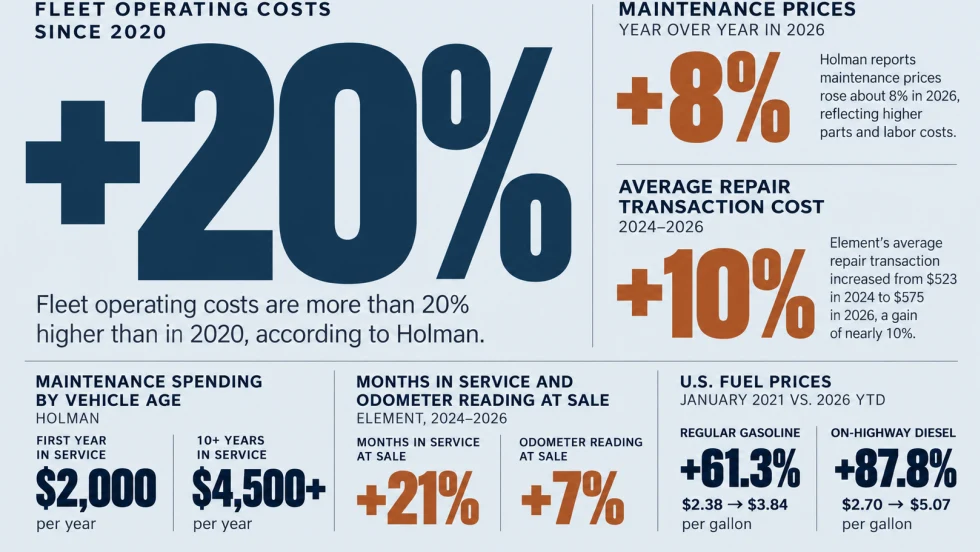
Managing Fleet Costs in an Era of Permanent Volatility
Fleet operating costs have risen more than 20% since 2020, raising a key question: When does extending a vehicle's service life stop making financial sense?
Read More →
The Next Evolution of Fleet Management: Autonomous Operations
This opening keynote session at the Fleet Forward Conference highlights the future of autonomous driving for fleets.
Read More →
How to Reduce the Total Cost of Risk From Catalytic Converter Theft
A stolen catalytic converter can cost fleets far more in downtime and lost productivity than in repairs. A total-cost-of-risk approach can help fleet managers quantify their exposure and prioritize theft prevention.
Read More →

Personal-Use Charges Rise as Vehicle Values Fall | AF News Recap
Personal-use charges are climbing, wholesale used-vehicle values are declining, and commercial fleet sales growth is slowing. This week, we're breaking down the latest fleet data, plus how Element Fleet Management is helping Waymo prepare for its first Canadian robotaxi market.
Read More →
Here's When You Should Make an Exception to Fleet Policy
Fleet policies are designed to create consistency, but not every driver or situation fits neatly within standard rules.
Read More →
AI-Native or AI-Acquired: What Should Fleet Managers Look for in an AI Platform?
Six questions can help fleet managers look beyond AI marketing claims to evaluate integration, data access, and real-world operational performance.
Read More →
A buyer's guide to fleet management software in 2027
Buying fleet management software in 2027 means looking beyond features and price. As fleet operations, technology and expectations evolve, this guide explores what today’s fleet professionals should consider when choosing a system that can deliver value now and adapt to what comes next.
Read More →
What Will Shape the Next Era of Fleet Management?
EVs, AI, and autonomous vehicles are reshaping fleet management. Discover what’s ahead—and how fleet leaders can prepare for the next era.
Read More →
How Fleets Can Recruit and Train Veterans for Technician Roles
Here's how the technician shortage has affected uptime for fleets, and what to do about it.
Read More →
Avis Budget Group Deploys Neology Toll Management Technology Across Major Brands
Neology’s neoFleet platform will manage toll transactions and toll-authority operations for vehicles across Avis, Budget, Payless, Budget Truck and Zipcar.
Read More →