




Honda's Sporty Ridgeline Truck Debuts in Detroit
Honda debuted its second-generation 2017 Ridgeline with a sporty refresh for the mid-size pickup at the North American International Auto Show in Detroit.

Photo by Mike Antich.

Photo by Mike Antich.
Honda debuted its second-generation 2017 Ridgeline with a sporty refresh for the mid-size pickup at the North American International Auto Show in Detroit.
The 2017 Ridgeline adds technology updates, improved driving dynamics, and a more versitable bed that includes an "in-bed truck" storage locker, dual-action tailgate, and in-bed audio system.
The truck improves ride quality with a unibody platform, as well as independent front and rear suspension. It offers a roomier interior than competitive models, according to Honda. For 2017, the truck sheds its quirky first-generation looks for a more traditional design.
A 3.5L direct-injected V-6 powers the Ridgeline, delivering power via a 6-speed transmission. Honda is targeting "segment-leading EPA fuel economy ratings."
Honda has increased the size of the bed to better accommodate flat hauling of items like plywood sheeting or drywall. The bed measures 5 feet wide and 5-foot-4-inches long, which is 5.4 inches wider and 4 inches longer than the previous model. The truck's bed provides 4 feet of width in the flat bed space with 48 inches between the rear wheel arches.
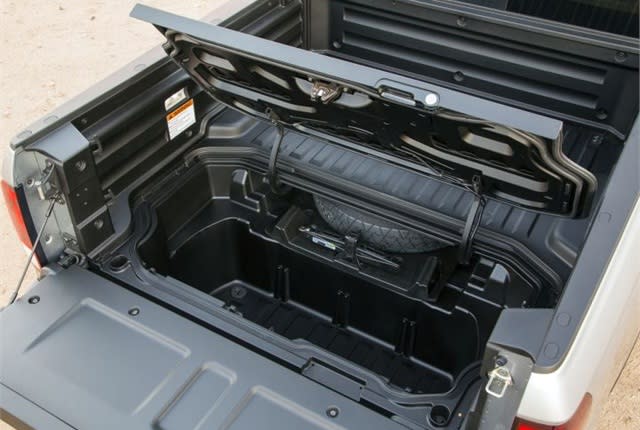
Photo of 2017 Ridgeline courtesy of Honda.
The truck includes the lockeable In-Bed Truck secure storage space. The dual action tailgate is hinged at the bottom and along its left side, opening down or to the side for easier loading and unloading of heavy and bulky items without having to reach over the open tailgate. The bed also features eight 350-pound tie down cleats and an available 400-watt power inverter, located behind an access panel in the right bed wall with the capacity to recharge power tools.
The Ridgeline will offer a payload capacity near 1,600 pounds. Final specifications will be released closer to launch.
More Operations

Fleet Has a Talent Pipeline Problem. What Comes Next? | AF News Recap
Where will fleet’s next generation of leaders come from? This week, we’re looking at the industry’s talent pipeline, what certification can add to a fleet career, how to build an award-worthy track record, and the return of Automotive Fleet’s Personal Use Survey.
Read More →
Smith System Launches Driver Risk Management Program
Fleets have more driver data than ever, but identifying risky behavior doesn't necessarily correct it. Smith System's new Driver Risk Management program combines monitoring, training, and follow-up coaching to help fleets connect risk signals with driver intervention.
Read More →
Automotive Fleet Opens 2026 Personal Use Survey for Commercial Fleet Managers
Less than two weeks left! Commercial and corporate fleet managers are invited to share how their organizations handle company vehicle personal-use policies, charges, and driver eligibility.
Read More →
From AI Prompts to AI-Generated Safety Songs | AF News Recap
Can better prompts make AI more useful for fleet managers? This week, we’re breaking down smarter fleet analysis, an AI-assisted experiment that turned safety training into music, and what happened to fuel prices in August.
Read More →
How to Write Better AI Prompts for Fleet Analysis
Include these six elements in your fleet prompts to generate more relevant analysis and accurate answers.
Read More →
Fleet Meets: Eric Kilgore
This edition of the Fleet Meets series features one of the industry's best leaders driving multi-market and national operations.
Read More →
Why Reactive Fleet Management Is Becoming Too Expensive to Sustain
Research highlights a growing need for proactive management strategies to address rising costs in fleet operations effectively.
Read More →
What Your Fleet KPIs Aren’t Telling You
Tracking fleet metrics is only useful when the data leads to better decisions. This guide helps fleet leaders assess cost, utilization, and downtime more accurately, identify performance gaps, and prioritize the actions that can improve operational results.
Read More →
Hidden in Plain Sight: Fleet Compliance Risks
Fleet compliance isn't just about having policies — it's about consistently enforcing them. This practical guide reveals six hidden compliance risks common in public sector and shared fleet operations and outlines proven strategies to improve visibility, accountability, and audit readiness
Read More →
Turning Fleet Payment Data into Executive Insights
Does data alone drive results in operations?
Read More →