




Ford Recalls Edge, Lincoln MKX for Fire Risk
The recall covers more than 110,600 vehicles in the 2009 and 2010 model years.

Photo of Ford Edge by IFCAR via Wikimedia Commons.
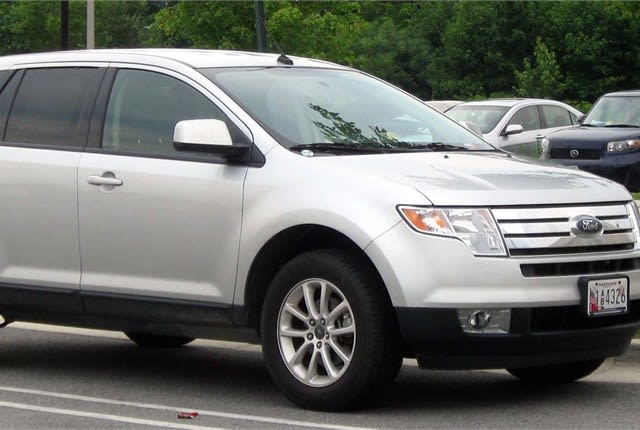
Photo of Ford Edge by IFCAR via Wikimedia Commons.
Ford Motor Co. is recalling 110,636 2009-2010 model-year Ford Edge and Lincoln MKX vehicles in the U.S. so dealers can fix potential fuel tank problems arising from road salt-related corrosion.
Exposure to road salt can result in corrosion under the reinforcement brackets where the fuel tank is mounted to the vehicle.
“This condition might result in a fuel odor, fuel leak or a check engine light,” Ford said in a released statement about the recall. “A fuel leak in the presence of an ignition source could result in a fire.”
Ford, however, noted it isn’t aware of any accidents, injuries or fires related to this condition. Dealers will inspect the fuel tank and either repair or replace it at no cost to the customer.
The recall covers 2009-2010 Ford Edge and Lincoln MKX vehicles built at Ford’s Oakville Assembly Plant from Sept. 11, 2008, through July 1, 2010. These vehicles are currently registered in, or were originally sold in, Connecticut, Delaware, District of Columbia, Illinois, Indiana, Iowa, Kentucky, Maine, Maryland, Massachusetts, Michigan, Minnesota, Missouri, New Hampshire, New Jersey, New York, Ohio, Pennsylvania, Rhode Island, Vermont, West Virginia and Wisconsin.
There are a total of 128,823 vehicles at risk for the problem in North America, including 18,187 in Canada. Ford is also issuing a recall in Canada.
More Safety

Turning Connected Vehicle Data Into Decisions That Matter
Fleet leaders have more data than ever, but turning that data into clear, actionable decisions remains a challenge. This white paper shows how leading organizations are using connected vehicle data to improve safety, reduce costs, and optimize fleet performance. Learn how to turn insight into action across your fleet.
Read More →
Cameras, Safety and Insurance: From Reactive Claims to Real-time Prevention
Commercial auto remains one of the most challenging and costly lines of coverage for fleet operators and insurers alike. Learn more about how to effectively address these issues from Onur Aksan, Enterprise Business Development Executive, Geotab.
Read More →
NAFA Fleet Safety Symposium to Collocate With 2026 Fleet Forward Conference
The daylong certificate program will precede the Fleet Forward Conference at the Gaylord National Harbor in Maryland.
Read More →

The Distractions You Can’t Turn Off: What Drivers Face Outside the Vehicle
Fleet drivers face constant visual, cognitive, and environmental interruptions the moment they hit the road. From roadside chaos to mental fatigue and digital overload, today’s biggest driving risks often come from outside the vehicle itself.
Read More →
FLASH Weather AI Launches First Deep-Learning Hail Prediction Model With High-Resolution Forecasting
FLASH Weather AI has launched a first-of-its-kind hail prediction model capable of forecasting hail size and arrival time at 1-kilometer resolution up to 55 minutes ahead, giving fleets and insurers critical time to prepare for severe storms.
Read More →
How Coca-Cola United Protects Its Fleet from Growing Legal Risk
As litigation risk rises, vehicles are increasingly targeted. This Coca-Cola bottler shares how it’s reducing exposure through driver training, technology, and a proactive risk management approach.
Read More →
How to Speak the Same Language on Fleet Safety
Drivers, supervisors, and data often speak different safety “languages.” Getting on the same page will drive better results.
Read More →
Fleet Cybersecurity 101: What You Need from Your Technology Vendors
From identity management to third-party certifications, the right technology partner should make security easier to manage. Here are the three building blocks that fleet managers need to stay in control as connected systems scale.
Read More →
Reducing Risk by Eliminating Phone Use Behind the Wheel
Distracted driving remains one of the most persistent risks in fleet operations. New approaches focus on removing mobile device use entirely while adding real-time safety support.
Read More →
Distracted Driving in the Age of Smart Tech – Part 2
As distraction risks evolve, fleets are turning to smarter, more connected technologies to better understand what’s happening behind the wheel. Part 2 explores how these tools are helping identify risky behaviors and improve visibility across operations.
Read More →