




Chevrolet Re-Enters Low-Cab Forward Market
In the 2016-CY, Chevrolet will offer six low-cab forward models in the Class 3-5 GVW segments. The models will be procured from Isuzu and badged as Chevrolets.

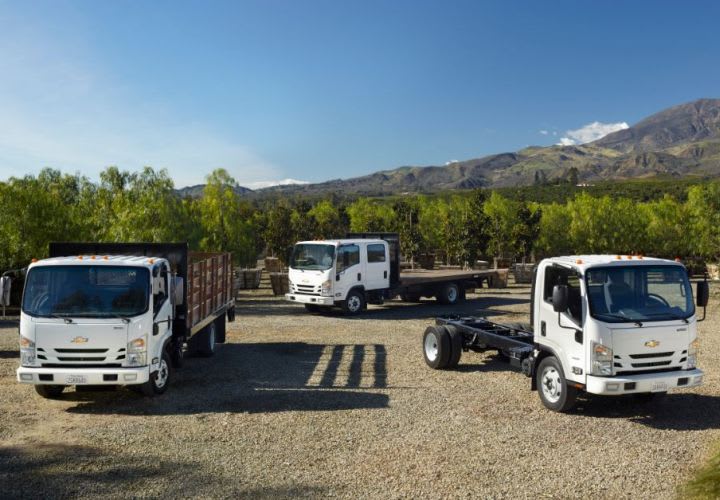
Photo cabover family courtesy of GM.
Photo cabover family courtesy of GM.
Chevrolet will offer low-cab forward medium-duty trucks in the U.S. in calendar-year 2016, the automaker announced at its dealer meeting in Las Vegas on June 15, returning the brand to a growing segment of the commercial vehicle market and expanding choices for fleet and commercial truck customers.
The six new models — Chevrolet 3500, 3500HD, 4500, 4500HD, 5500, and 5500HD — are based on the Isuzu N-Series, which General Motors will procure from Isuzu and distribute through Chevrolet dealers.
The six new models will be branded as Chevrolet Low Cab Forward. According to John Schwegman, director of commercial products for GM Fleet and Commercial Operations, the Low Cab Forward models will fill a product hole in the GM lineup in the Class 3-5 truck segments.
The new trucks will be offered in regular-cab and crew-cab body styles. A General Motors’ sourced 6.0L V-8 gasoline engine and 6-speed automatic transmission, or Isuzu-sourced 3.0L and 5.2L turbodiesel engines, will be available, depending on the model. The gasoline-powered models will be assembled from complete knock down (CKD) kits in the U.S. at the Spartan Motors assembly plant in Charlotte, Mich.
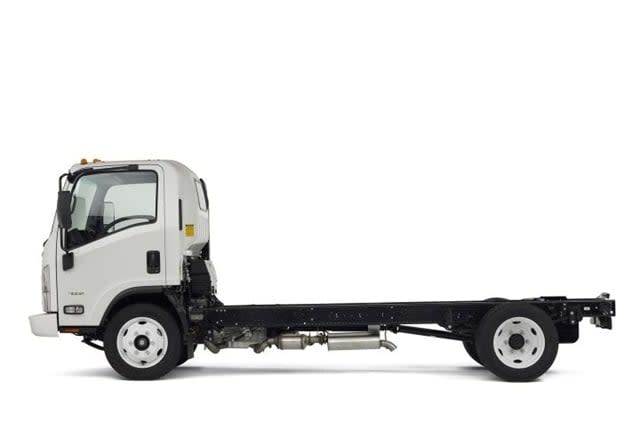
Photo of Chevrolet 4500 cabover courtesy of GM.
Along with the Isuzu-badged versions, the Chevrolet models will be the only low-cab forward trucks in the North American market to offer a gasoline-powered powertrain. Additional features include:
Excellent visibility and maneuverability — especially in urban environments.
Easy driver entry and exit.
Chassis lengths ranging from 109 inches to 212 inches.
Compatibility with a variety of body types, including refrigerated box, stake/flat bed, and service bodies.
Easy-access engine compartment with 45-degree tilting cab.
Additional features and specifications will be available closer to the start of production.
“Bringing low-cab forward trucks back to our portfolio strengthens Chevrolet’s commitment to providing commercial customers with more choices and provides customers with a versatile lineup of trucks, vans, and crossovers,” said Ed Peper, U.S. vice president of GM Fleet and Commercial Sales. “This addition helps our dealers satisfy their commercial customers’ needs all in one place.”
In addition to the new Low-Cab Forward trucks, Chevrolet’s fleet and commercial choices include the full-size Silverado lineup, the Silverado 2500HD and 3500HD full-size chassis cab models, and the mid-size Colorado, which offers a box-delete and seat-delete option, as well as the City Express small van and Express range of full-size vans.
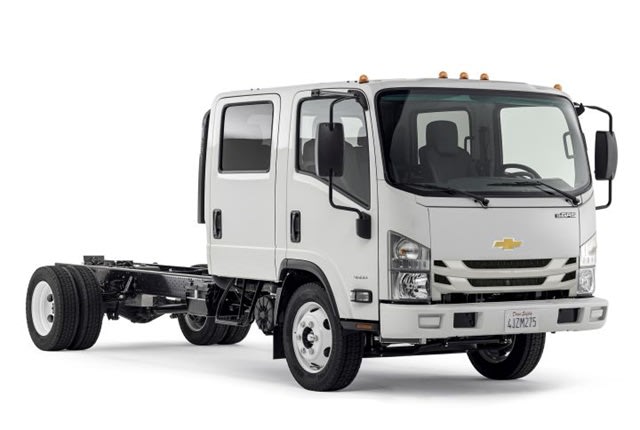
Photo of Chevrolet 4500 cabover courtesy of GM.
According to Peper, key vocational markets being targeted by Chevrolet for the new Low Cab Forward models include refrigerated food delivery, distribution applications, construction industry, landscaping, government, and urban applications.
The vehicle collaboration agreement in the U.S. between General Motors and Isuzu Motors is the latest in a more than 40 year strategic partnership between the two companies that has included other commercial vehicle collaborations throughout the world.
According to both companies, to strengthen the product lineup, GM and Isuzu will explore the use of GM com-mercial vehicle components for Isuzu low-cab forward trucks, and GM will continue to produce and supply the 6.0L V-8 gasoline engine and 6-speed transmission for Isuzu gasoline-powered low-cab forward trucks.
More Operations

Avis Budget Group Deploys Neology Toll Management Technology Across Major Brands
Neology’s neoFleet platform will manage toll transactions and toll-authority operations for vehicles across Avis, Budget, Payless, Budget Truck and Zipcar.
Read More →
Fleet Personal-Use Charges Edge Higher in 2026
Nearly eight in 10 surveyed fleets allow personal use of company vehicles, while just over half of respondents report charging employees for the privilege.
Read More →
The Future of Fleet + What’s Changing Right Now | AF News Recap
Could developments overseas offer a preview of what’s coming for U.S. fleets? This week, we’re looking at the future of AI, autonomy, and electrification, plus Ford Pro’s new certified pre-owned program, smarter vehicle offboarding, and a new way for fleets to manage toll expenses.
Read More →
How to Handle Vehicle Offboarding
What do fleet managers need to do when a driver leaves?
Read More →
Fleet Manager’s Ultimate Playbook: Navigating the New Standard in OEM Connectivity
Rising operating costs, driver safety concerns, and unplanned downtime are putting unprecedented pressure on modern fleets. Discover how fleet managers use embedded OEM connectivity and real-time vehicle data to cut TCO, prevent downtime, and protect drivers without aftermarket telematics hardware.
Read More →
U.S. Bank Adds Verra Mobility Toll Management to Voyager Fleet Platform
The integration allows U.S. Bank Voyager fleet customers to manage toll payments and violations alongside fuel, EV charging and maintenance expenses.
Read More →
ADAS Prevents Crashes. But Repairs Cost More | AF News Recap
ADAS-equipped vehicles may crash less often, but they can cost more when they do. This week, we’re breaking down what that tradeoff means for fleets, plus Subaru’s first Forester Wilderness Hybrid, Nissan’s new e-POWER Rogue, and why Calstart has become Catalyst Mobility.
Read More →
Moventum Fleet Management Names Mark Iorillo Head of Sales
Iorillo brings nearly 20 years of fleet management and sales experience to the role, including previous positions at Element Fleet Management, CEI, Donlen and Ryder.
Read More →
Fleet Has a Talent Pipeline Problem. What Comes Next? | AF News Recap
Where will fleet’s next generation of leaders come from? This week, we’re looking at the industry’s talent pipeline, what certification can add to a fleet career, how to build an award-worthy track record, and the return of Automotive Fleet’s Personal Use Survey.
Read More →
Smith System Launches Driver Risk Management Program
Fleets have more driver data than ever, but identifying risky behavior doesn't necessarily correct it. Smith System's new Driver Risk Management program combines monitoring, training, and follow-up coaching to help fleets connect risk signals with driver intervention.
Read More →