




Analyzing President Obama’s Highway Plan
A “Budget Highlights” document issued by the U.S. Department of Transportation details how the $478 billion apportioned for spending on surface-transportation infrastructure over the next six years would be put to work.
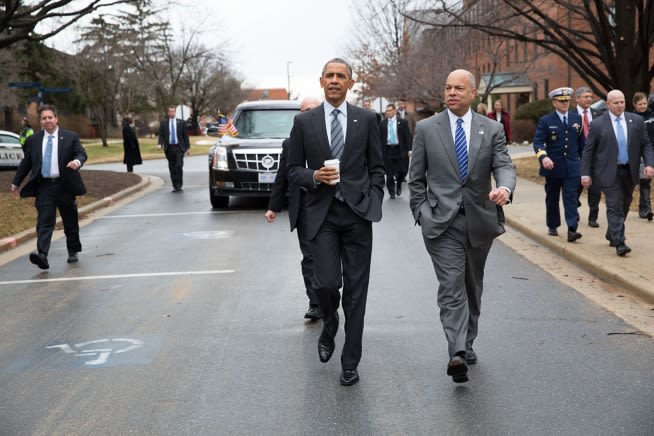
Official White House Photo by Pete Souza.
Official White House Photo by Pete Souza.
A “Budget Highlights” document issued by the U.S. Department of Transportation details how the $478 billion apportioned for spending on surface-transportation infrastructure over the next six years would be put to work — should Congress ultimately sign off on that part of President Obama’s historically gargantuan $4 trillion budget proposal.
The roads-and-bridges reauthorization package will be sent to Capitol Hill “within the coming weeks,” said DOT, as a “resubmission” of the Generating Renewal, Opportunity, and Work with Accelerated Mobility, Efficiency, and Rebuilding of Infrastructure and Communities throughout America (GROW AMERICA) Act that the President originally submitted to Congress last year.
The revamped GROW AMERICA Act calls for spending, again, over a period of six years, in this manner:
$317 billion to improve the nation’s highway system, an amount that DOT said will increase highway funds by an average of nearly 29% above FY 2015 enacted levels, while "emphasizing policies and reforms that prioritize investments for much-needed repairs and improvements."
Nearly $115 billion to enhance transit systems, which would up average transit spending by nearly 76% above FY 2015 enacted levels. This funding would be aimed at projects involving light rail, street car, and bus rapid transit systems
$28.6 billion to fund the development of "high-performance rail and other passenger rail programs as part of an integrated national transportation strategy"
$7.5 billion to "more than double the size of the highly successful" TIGER discretionary grant program that enables DOT “to invest in road, rail, transit and port projects that promise to achieve critical national objectives”
$6 billion to expand financing options under the Transportation Infrastructure Finance and Innovation Act (TIFIA), which DOT noted "leverages Federal dollars by facilitating private participation in transportation projects and encouraging innovative financing mechanisms that help advance projects more quickly"
$18 billion to develop a multi-modal freight program that would "give freight stakeholders a meaningful seat at the table in selecting funded projects" through "better coordination of planning among the Federal Government, States, ports, and local communities to improve decision-making"
$935 million for investing in future vehicle and safety technology, "including the advancement of vehicle automation and vehicle-to-vehicle technologies"
$7.35 billion to improve safety on local rural roads as part of the Critical Immediate Safety Investments Program; per DOT, this funding "will help States improve safety on non-State owned roads that do not often benefit from Federal funding"
$16 billion for the existing Highway Safety Improvement Program, "to save lives and prevent serious injuries for all road users, including pedestrians and bicyclists"
Nearly $6 billion to increase the National Highway Traffic Safety Administration's capability "to ensure that vehicles on the road meet the highest safety standards and that the agency has the personnel and tools to identify vehicle defects early and respond quickly."
More Operations
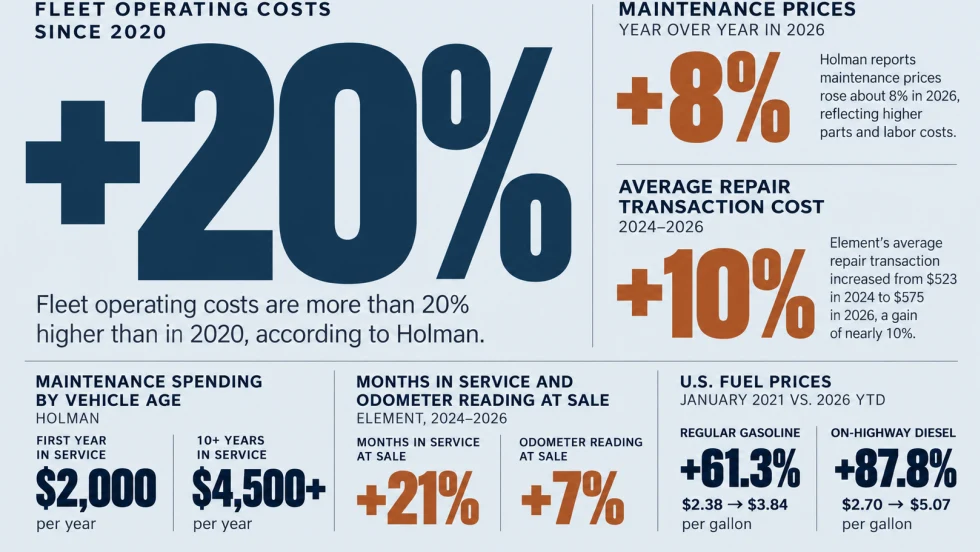
Managing Fleet Costs in an Era of Permanent Volatility
Fleet operating costs have risen more than 20% since 2020, raising a key question: When does extending a vehicle's service life stop making financial sense?
Read More →
The Next Evolution of Fleet Management: Autonomous Operations
This opening keynote session at the Fleet Forward Conference highlights the future of autonomous driving for fleets.
Read More →
How to Reduce the Total Cost of Risk From Catalytic Converter Theft
A stolen catalytic converter can cost fleets far more in downtime and lost productivity than in repairs. A total-cost-of-risk approach can help fleet managers quantify their exposure and prioritize theft prevention.
Read More →

Personal-Use Charges Rise as Vehicle Values Fall | AF News Recap
Personal-use charges are climbing, wholesale used-vehicle values are declining, and commercial fleet sales growth is slowing. This week, we're breaking down the latest fleet data, plus how Element Fleet Management is helping Waymo prepare for its first Canadian robotaxi market.
Read More →
Here's When You Should Make an Exception to Fleet Policy
Fleet policies are designed to create consistency, but not every driver or situation fits neatly within standard rules.
Read More →
AI-Native or AI-Acquired: What Should Fleet Managers Look for in an AI Platform?
Six questions can help fleet managers look beyond AI marketing claims to evaluate integration, data access, and real-world operational performance.
Read More →
A buyer's guide to fleet management software in 2027
Buying fleet management software in 2027 means looking beyond features and price. As fleet operations, technology and expectations evolve, this guide explores what today’s fleet professionals should consider when choosing a system that can deliver value now and adapt to what comes next.
Read More →
What Will Shape the Next Era of Fleet Management?
EVs, AI, and autonomous vehicles are reshaping fleet management. Discover what’s ahead—and how fleet leaders can prepare for the next era.
Read More →
How Fleets Can Recruit and Train Veterans for Technician Roles
Here's how the technician shortage has affected uptime for fleets, and what to do about it.
Read More →
Avis Budget Group Deploys Neology Toll Management Technology Across Major Brands
Neology’s neoFleet platform will manage toll transactions and toll-authority operations for vehicles across Avis, Budget, Payless, Budget Truck and Zipcar.
Read More →