




First Aluminum F-150 Rolls off Assembly Line
Ford has built its first aluminum-body 2015 F-150 pickup truck, and production of the vehicle is now underway at the 100-year-old Ford Rouge Center in Dearborn, Mich., an event marked by the appearance of Bill Ford and other dignitaries.

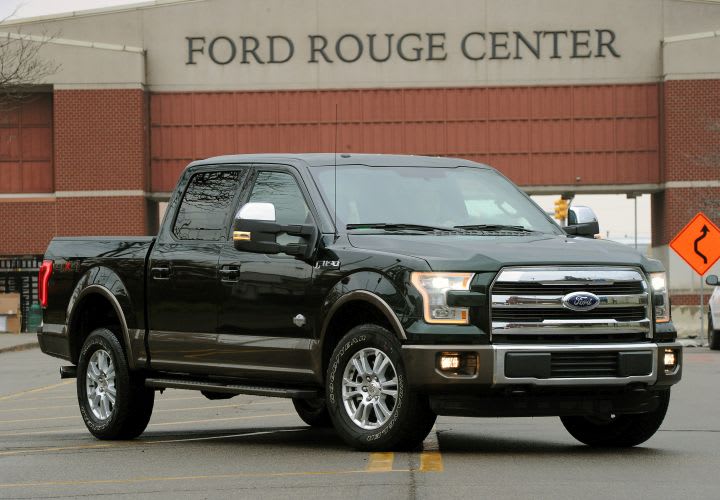
Photo of F-150 courtesy of Ford.
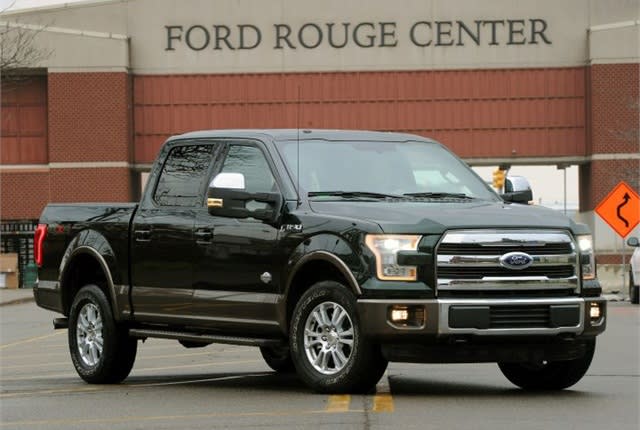
Photo of F-150 courtesy of Ford.
Ford has built its first aluminum-body 2015 F-150 pickup truck, and production of the vehicle is now underway at the 100-year-old Ford Rouge Center in Dearborn, Mich., an event marked by the appearance of Bill Ford and other dignitaries.
Ford plans to deliver the 2015 F-150 to dealers in December in the U.S. It will go on sale in 90 global markets in 2015. Fleets with special orders will get their trucks in February.
The start of production was marked with a media event, which was presided over by Bill Ford, Ford’s executive chairman and great-grandson of company founder Henry Ford. The Nov. 11 event attended by Work Truck drew hundreds of employees, senior executives, and local political leaders. Ford described the Rouge plant as “the heart of Ford, and the F-150 is the centerpiece of Rouge.”
Enthusiasm was high from executives and employees alike, when Plant Manager Brad Huff and Jimmy Settles, the plant’s UAW leader, drove the first aluminum F-150 off the assembly line.
Much has been made of Ford's gamble to revamp its top-selling vehicle, and the nation's top-selling truck for nearly four decades, with an aluminum body that reduces weight by about 700 pounds. Yet early driving impressions have been favorable, and the move is expected to significantly improve fuel economy.
When asked later about the risks of using aluminum in the body in the F-150, Ford said, “Yes, it’s a risk, but it’s a risk worth taking. You can tell the difference in the handling and performance.”
Ford noted that the use aluminum, a sustainable material, is also part of a Ford Motors tradition. Ford related how his great-grandfather reused the wood from the packing crates for the raw steel used in the early vehicles for running boards and other wooden parts.
Ford has lightened the weight of the truck and increased its capabilities over the 2014 model. The 2015 F-150 can tow up to 1,100 more pounds and haul up to 530 more pounds in payload, according to Ford.
Truck Communications Manager Mike Levine echoed Ford by noting that “the all-new F-150 is the best F-150 we’ve ever made. It’s tougher, more capable, and more efficient.”
For instance, the aluminum alloy is more dent and ding resistant and if paint is chipped away, it will not form red rust. Even in these days of falling fuel prices, fleets will be able to improve mpg by 5 to 20 percent, according to Levine.
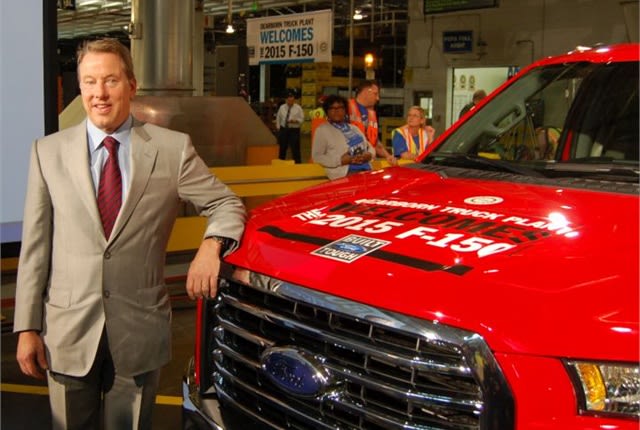
Photo of Bill Ford with 2015 F-150 by Chris Wolski.
Fleet interest in the new F-150 is high, according to Levine. But, beyond delivering power, efficiency, and capability, the transformation of both the Rouge plant and the F-150 speaks to a more fundamental success.
“This transformation shows the strength of the 1 Ford Plan,” said CEO Mark Fields during the launch ceremony.
Prices will rise modestly for the 2015-MY F-150 by at least $395 and as much as $3,615 depending on the model.
The all-new iteration of the 60-year-old truck is the result of a $359 million retooling of the Dearborn Truck Plant, which will also be built at the Kansas City Assembly Plant starting in early 2015.
By Chris Wolski
More Operations

Here's When You Should Make an Exception to Fleet Policy
Fleet policies are designed to create consistency, but not every driver or situation fits neatly within standard rules.
Read More →
AI-Native or AI-Acquired: What Should Fleet Managers Look for in an AI Platform?
Six questions can help fleet managers look beyond AI marketing claims to evaluate integration, data access, and real-world operational performance.
Read More →
A buyer's guide to fleet management software in 2027
Buying fleet management software in 2027 means looking beyond features and price. As fleet operations, technology and expectations evolve, this guide explores what today’s fleet professionals should consider when choosing a system that can deliver value now and adapt to what comes next.
Read More →

What Will Shape the Next Era of Fleet Management?
EVs, AI, and autonomous vehicles are reshaping fleet management. Discover what’s ahead—and how fleet leaders can prepare for the next era.
Read More →
How Fleets Can Recruit and Train Veterans for Technician Roles
Here's how the technician shortage has affected uptime for fleets, and what to do about it.
Read More →
Avis Budget Group Deploys Neology Toll Management Technology Across Major Brands
Neology’s neoFleet platform will manage toll transactions and toll-authority operations for vehicles across Avis, Budget, Payless, Budget Truck and Zipcar.
Read More →
Fleet Personal-Use Charges Edge Higher in 2026
Nearly eight in 10 surveyed fleets allow personal use of company vehicles, while just over half of respondents report charging employees for the privilege.
Read More →
The Future of Fleet + What’s Changing Right Now | AF News Recap
Could developments overseas offer a preview of what’s coming for U.S. fleets? This week, we’re looking at the future of AI, autonomy, and electrification, plus Ford Pro’s new certified pre-owned program, smarter vehicle offboarding, and a new way for fleets to manage toll expenses.
Read More →
How to Handle Vehicle Offboarding
What do fleet managers need to do when a driver leaves?
Read More →
Fleet Manager’s Ultimate Playbook: Navigating the New Standard in OEM Connectivity
Rising operating costs, driver safety concerns, and unplanned downtime are putting unprecedented pressure on modern fleets. Discover how fleet managers use embedded OEM connectivity and real-time vehicle data to cut TCO, prevent downtime, and protect drivers without aftermarket telematics hardware.
Read More →