




Toyota Camry Gets 'Sweeping Redesign'
Toyota is giving its top-selling U.S. passenger car a makeover for the 2015 model year, introducing the 2015 Camry at the New York International Auto Show.
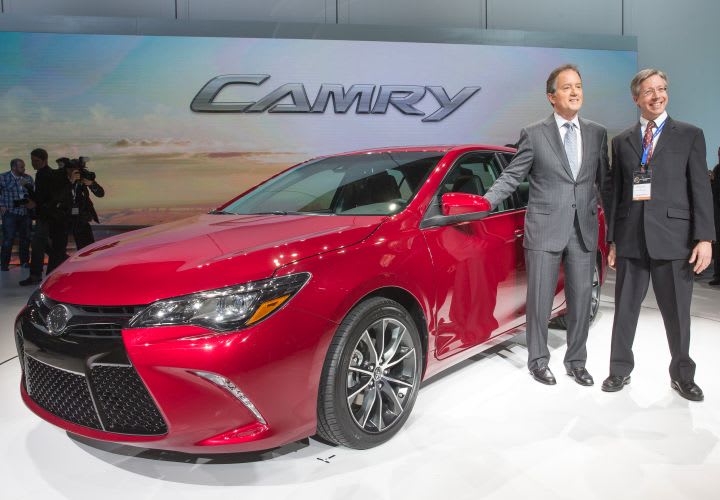
Toyota's Vice President and General Manager Bill Fay and Camry Chief Engineer Monte Kaehr with the 2015 Camry. Photo by Joe Polimeni.
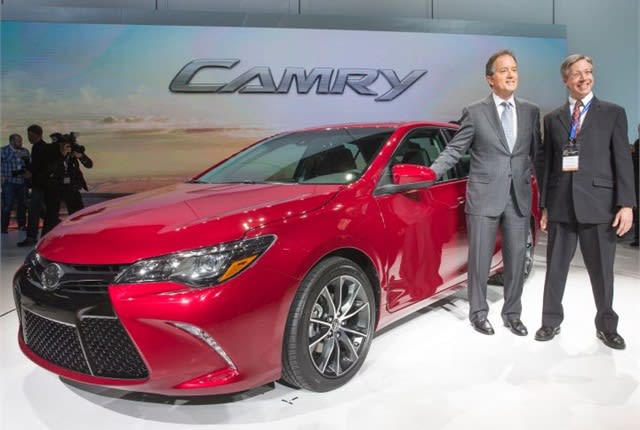
Toyota's Vice President and General Manager Bill Fay and Camry Chief Engineer Monte Kaehr with the 2015 Camry. Photo by Joe Polimeni.
Toyota is giving its top-selling U.S. passenger car a makeover for the 2015 model year, introducing the 2015 Camry at the New York International Auto Show.
For the "sweeping redesign" of the mid-size sedan, Toyota engineers "stripped it down to its chassis and rebuilt it from the ground up," the automaker said about the 2015 Camry.
Toyota is giving the 2015 Camry's exterior a sportier look with a wider, more prominent trapezoidal grille. The sedan has been lengthened by 1.8 inches and widened by 0.4 inches.
Engine options carry over from the 2014 model, including the 2.5L four-cylinder engine or 3.5L V-6 gasoline engine paired with a six-speed automatic transmission. The Camry Hybrid's 2.5L Atkinson Cycle engine returns with Hybrid Synergy drive paired with electronic continuously variable transmission.
The 2015 Camry's interior gets several upgrades, including a new 4.2 TFT screen and three-dimensional Optitron gauges on SE, XLE, and XSE trim levels. Toyota's array of standard safety features includes a lane departure alert, blind spot monitor, and a rear cross traffic alert.
In 2012, commercial fleets registered 4,155 Camry sedans, while rental operators added 52,768 vehicles. Fleet sales made up 16.1 percent of total Camry sales that year.
More Green Fleet

New Propane Autogas Program Offers Fleet Compensation
Qualified commercial fleets can receive $7,500 per eligible propane autogas vehicle and up to $10,000 for new refueling site prep. Learn how the program works and see whether your fleet qualifies.
Read More →
EV Charging Use Is Outpacing Infrastructure Growth
ChargePoint’s 2026 Charging Forward Report points to rising charger use, higher-powered charging, commercial vehicle electrification, and energy-management technology. Here’s what fleets should know.
Read More →
Merchants Fleet Reports 290M EV Miles as Fleets Navigate Changing Electrification Market
From millions in operating savings to hundreds of millions of EV miles, Merchants Fleet’s latest report reveals what’s working and what’s changing in fleet electrification.
Read More →

The EV Breakdown Nobody's Talking About: Why Most Electric Vehicle Roadside Calls Aren't Mechanical Failures
Here's why EV breakdowns are widely misunderstood.
Read More →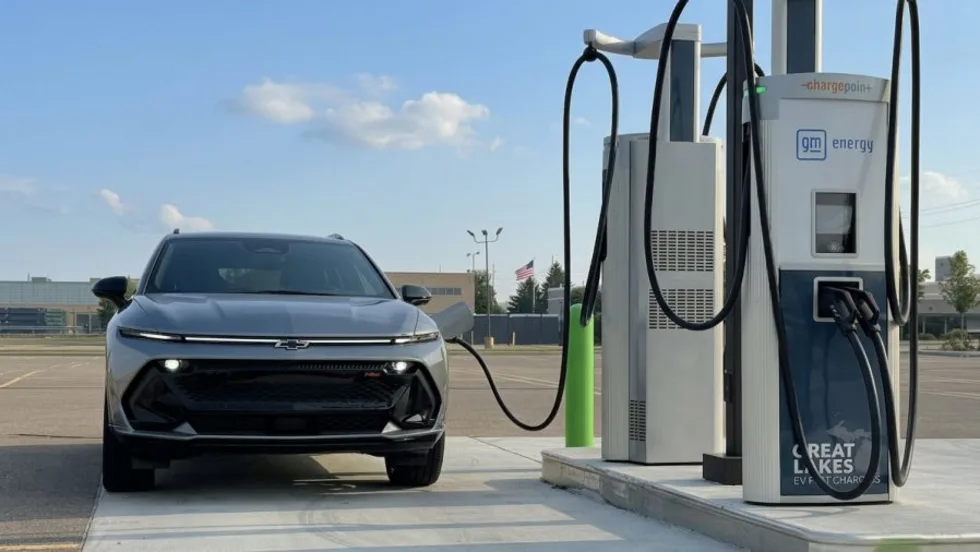
ChargePoint Now Available in Energy Pass
ChargePoint and additional planned charging network integrations were added to GM's Energy Pass.
Read More →

First Look: Slate Auto's Electric Fleet Pickup
Could an affordable, modular EV pickup make electrification more practical for fleets?
Read More →
Slate Debuts Colorful, Unique EV Models
A recent media and client event, studded with electric vehicles dressed up on platforms, planted a new position for the manufacturer in the wider EV market. Fleets will find cost-saving advantages.
Read More →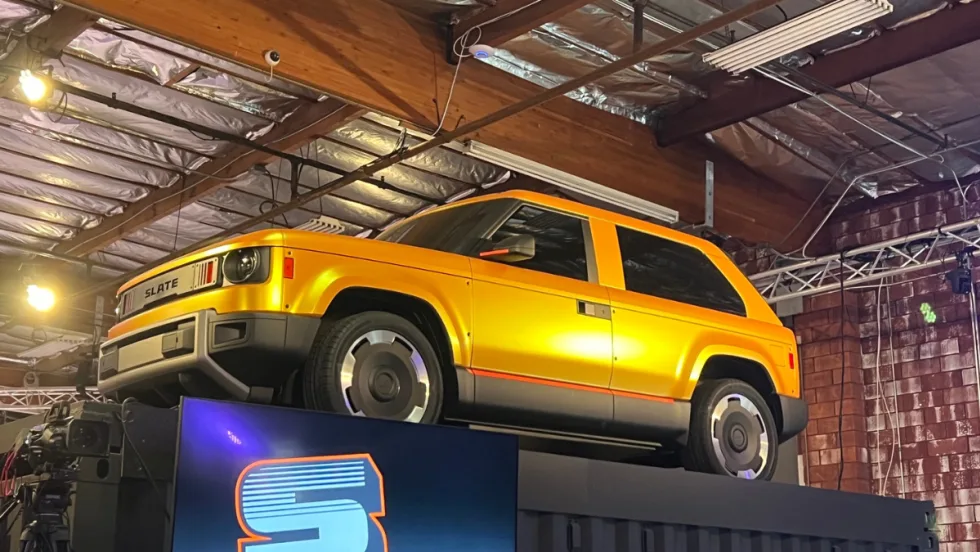
Slate Electric SUV, Pickup Switchable Model Aims For Light-Duty Fleets
Everything about this EV is counterintuitive and understated, making it stand out from the crowd.
Read More →
Inspiration Mobility Acquires Key Electrada Assets
Inspiration Mobility Group has acquired select assets of Electrada, adding the fleet electrification provider's team, technology, and charging infrastructure development capabilities to its energy management business.
Read More →